
Please remember that you can click on a photo to see a larger version, and that highlighted text is linked to additional information.
Please click here for Part Three
A Golden Opportunity
It was time to start back toward home and bring our time in Wyoming to a close. We made plans as we were camped beside the Green River.
“I’d really like a good hike,” the Lady stated.
“Well then,” I pondered. “How ‘bout this? We could hike up to a high alpine lake in the Sawtooths and combine hiking with fly fishing for golden trout.”
“Oh, boy! I’d like that,” the Lady was on board.
“But,” I added. “That would be a long drive tomorrow. We need to know how many miles and then if we’d want to do it.”
“Deploy Stinky?” the Lady asked.
With Internet access, we learned the distance was 400 miles, an eight-hour drive. We needed to purchase a one-day non-resident fishing license and time at day’s end to find a campsite. An early start was required and then just keep rolling down the road until the drive was completed.
We survived the drive and were in Stanley at 1430 hrs. We found the tiny campground at the trailhead less than half full - a real surprise. This allowed us to keep the camper set up and hike from camp. We could - we hoped - tolerate campground life for that convenience.
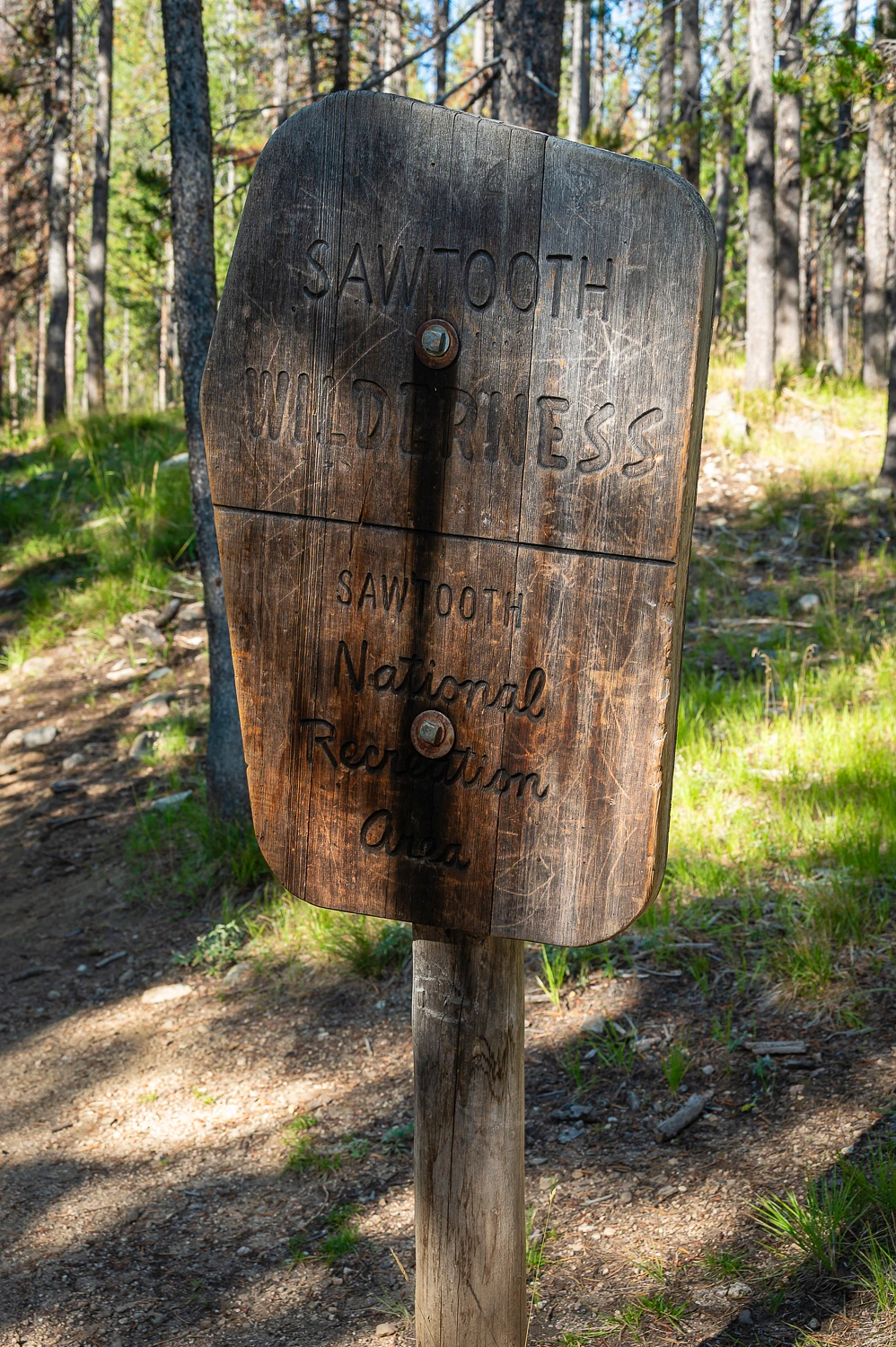
The next morning, we pulled on our packs, started up the trail, and entered the Sawtooth Wilderness. We’ve hiked up this trail many times over the years.
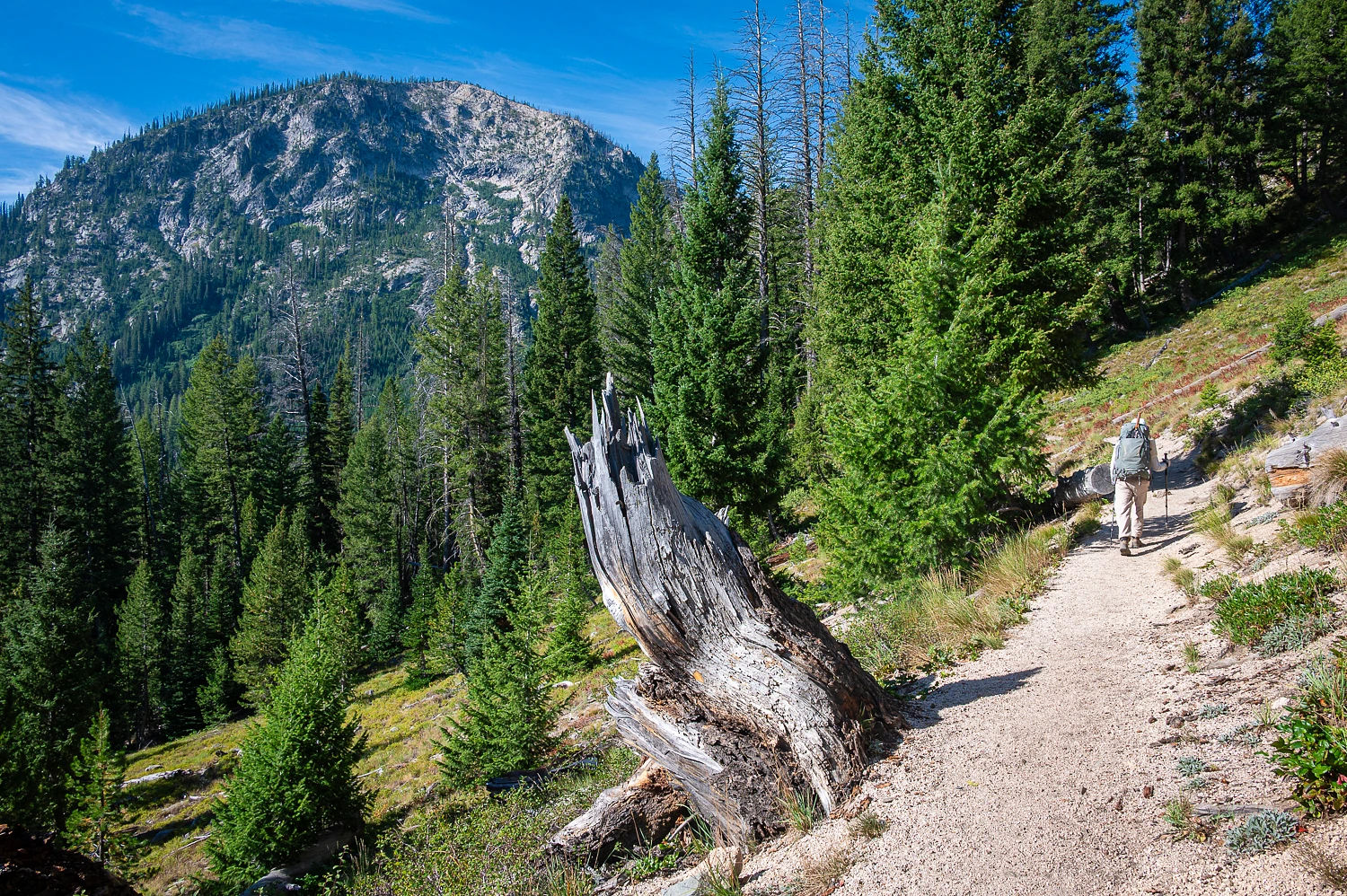
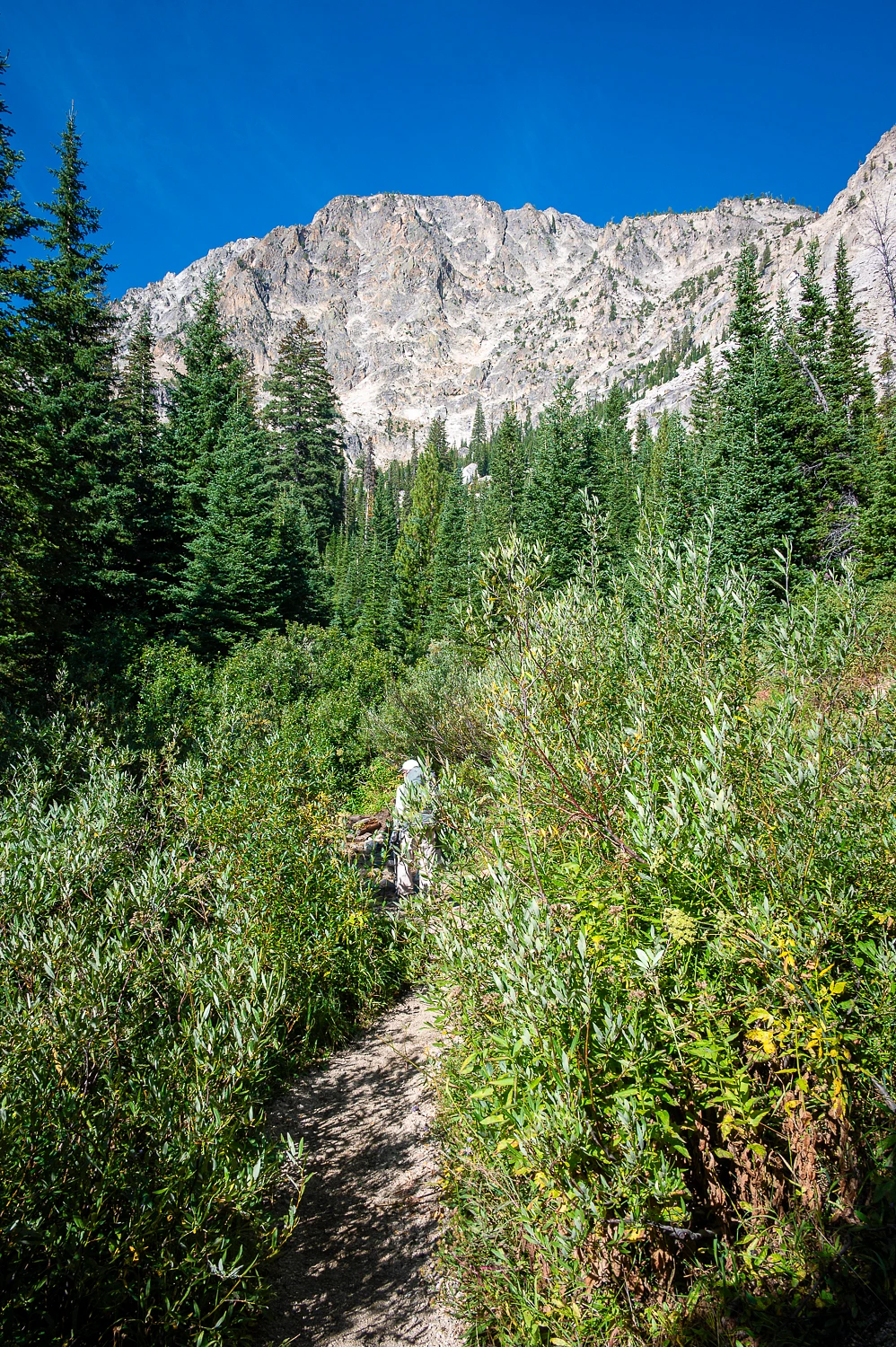
The soaring granite is magical.
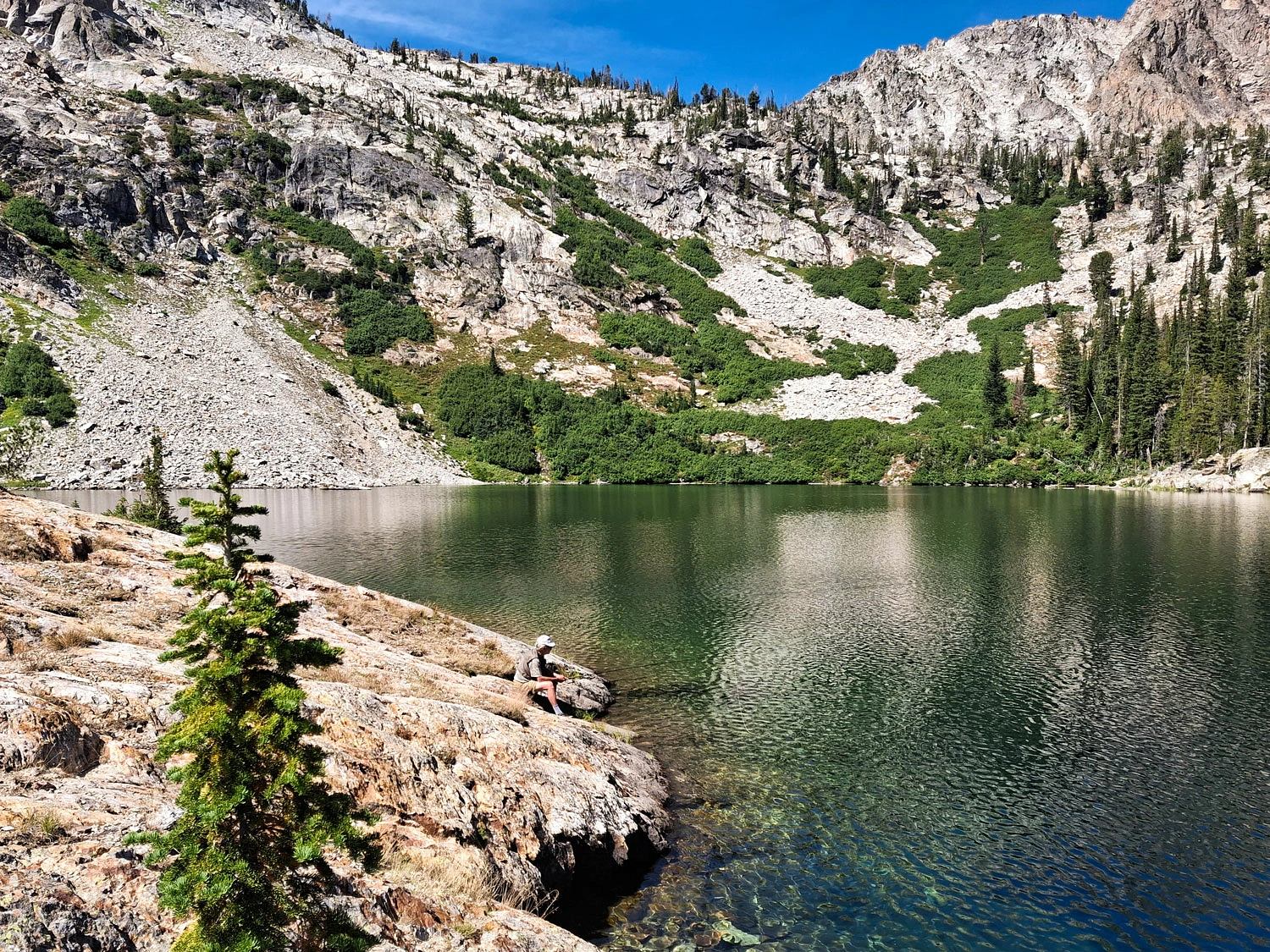
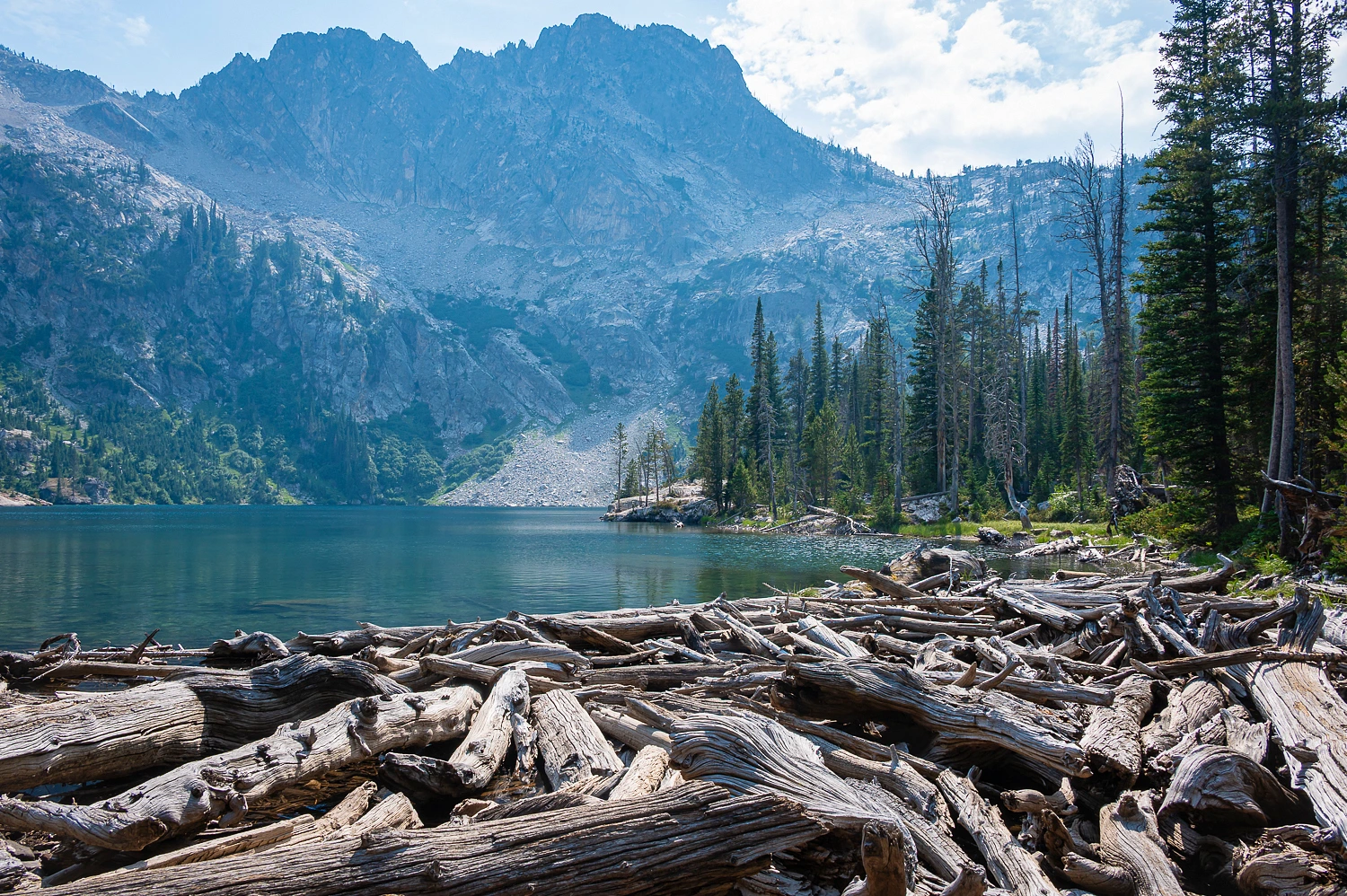
We arrived at the lake.
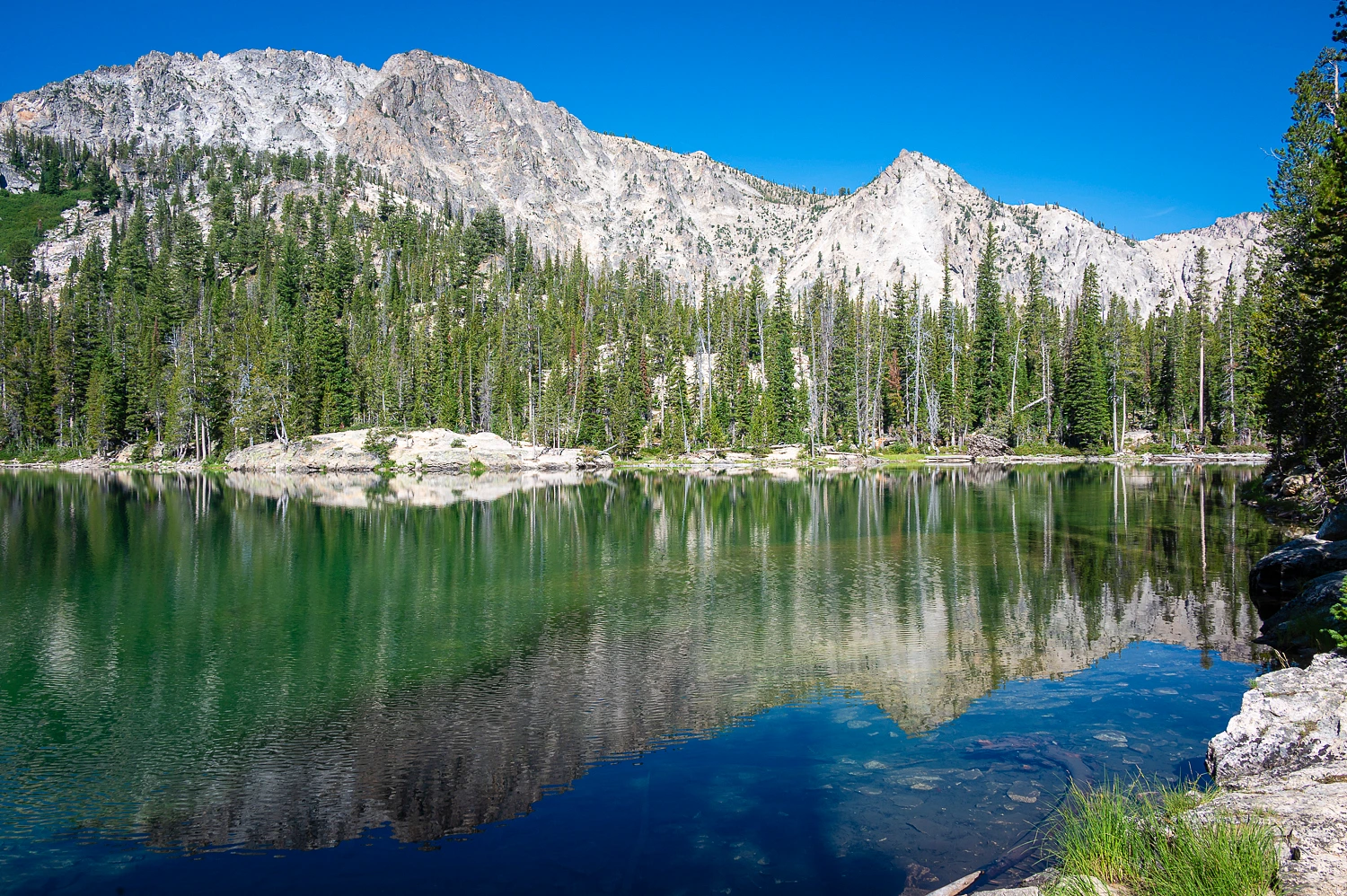
We fly fished here in August of 2025 and caught very nice golden trout. Native to California’s Sierra Nevada, the golden trout in this lake are translocated outside of their endemic range. Most alpine lakes throughout the west were historically fishless due barriers - waterfalls, cascades, and such - that prohibited fish from reaching their waters. Idaho Fish & Game created this fishery.
Here is Idaho’s information on - Alpine Lake
The Lady immediately went into trout hunting mode, climbed to a high point, and looked for cruising trout. Trout were not cruising near shore as we’d seen last year. I’d fished mostly with terrestrial dry fly patterns then, casting into areas where the wind concentrated the windblown insects against the opposite shoreline. It worked, but with many more refusals than takes. I decided to try a different tactic this time. First, I went with a long - six feet - 6x tippet and tied on a size 16 renegade dry. I’ve learned over the years at alpine lakes, when faced with refusals, to go with a long fine tippet and a smaller fly. I stood with the Lady and we watched the water, finally seeing a few rises in deep water out from shore.
“You’ll have to make long casts,” my little fly-fishing guide directed.
I made a long cast to a rise. I was surprised the take was almost instant. It was a heavy fish. It took to the air and danced on the surface with its tail. It went deep and pulled out line. It slashed the line back and forth across the surface. It made a run straight at me with me desperately pulling in line to maintain tension. It was magnificent. Finally, I was able to slide this exquisite trout into the Lady’s net.
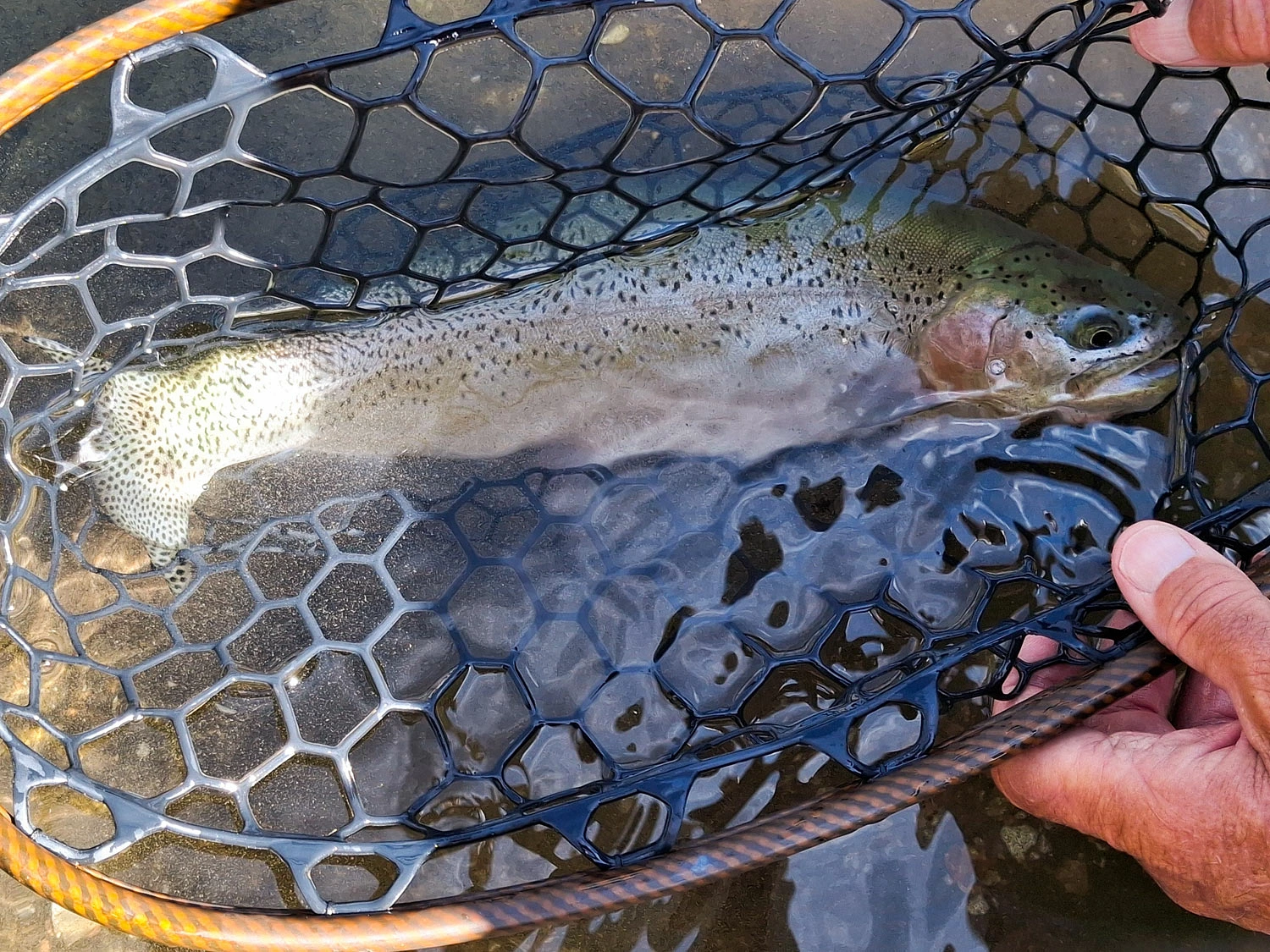
We were surprised its appearance lacked some striking golden trout characteristics. But we didn’t get much of a chance to examine it. It jumped out of the net and was gone.
This is an incredible place to fly fish.
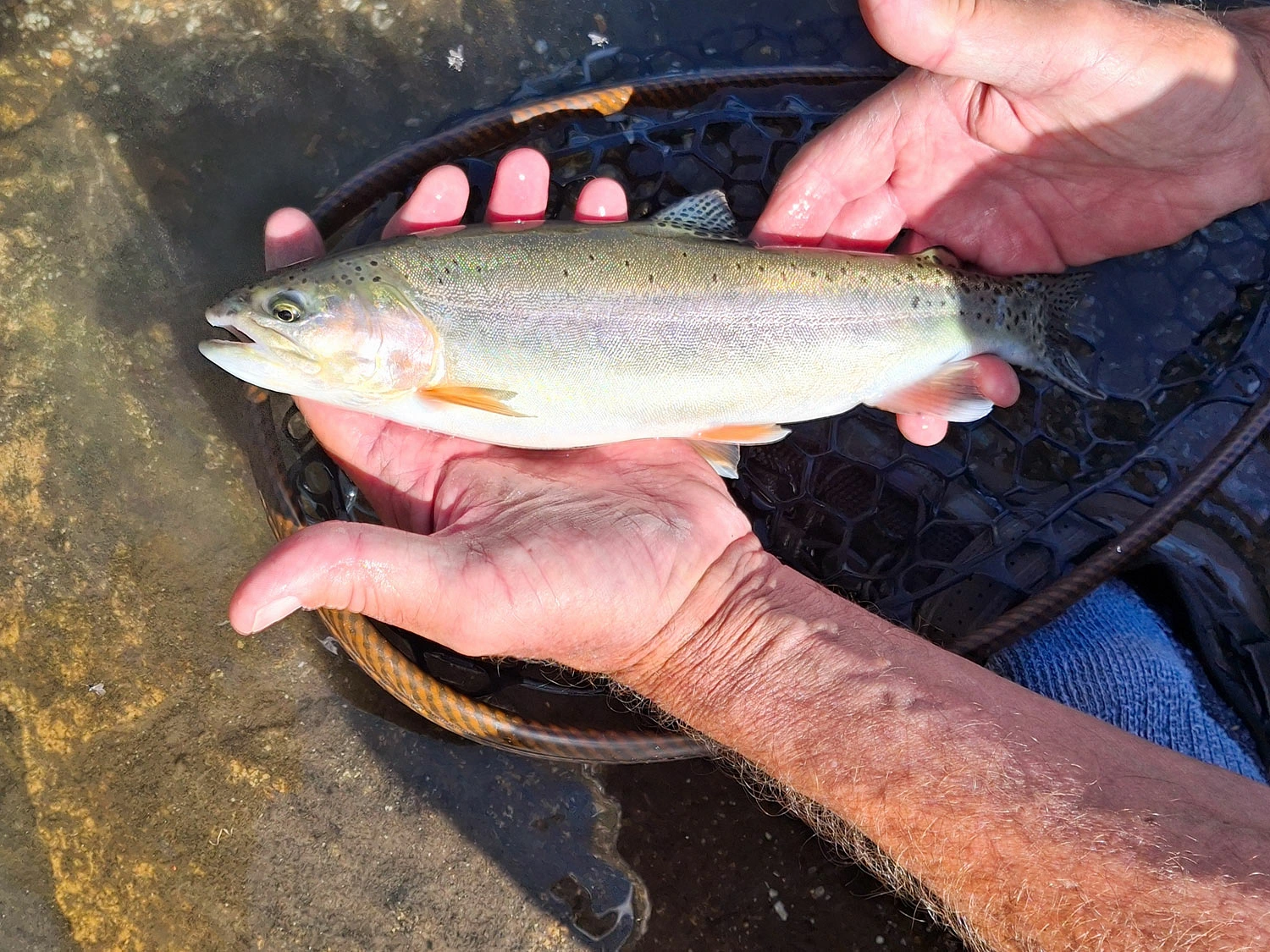
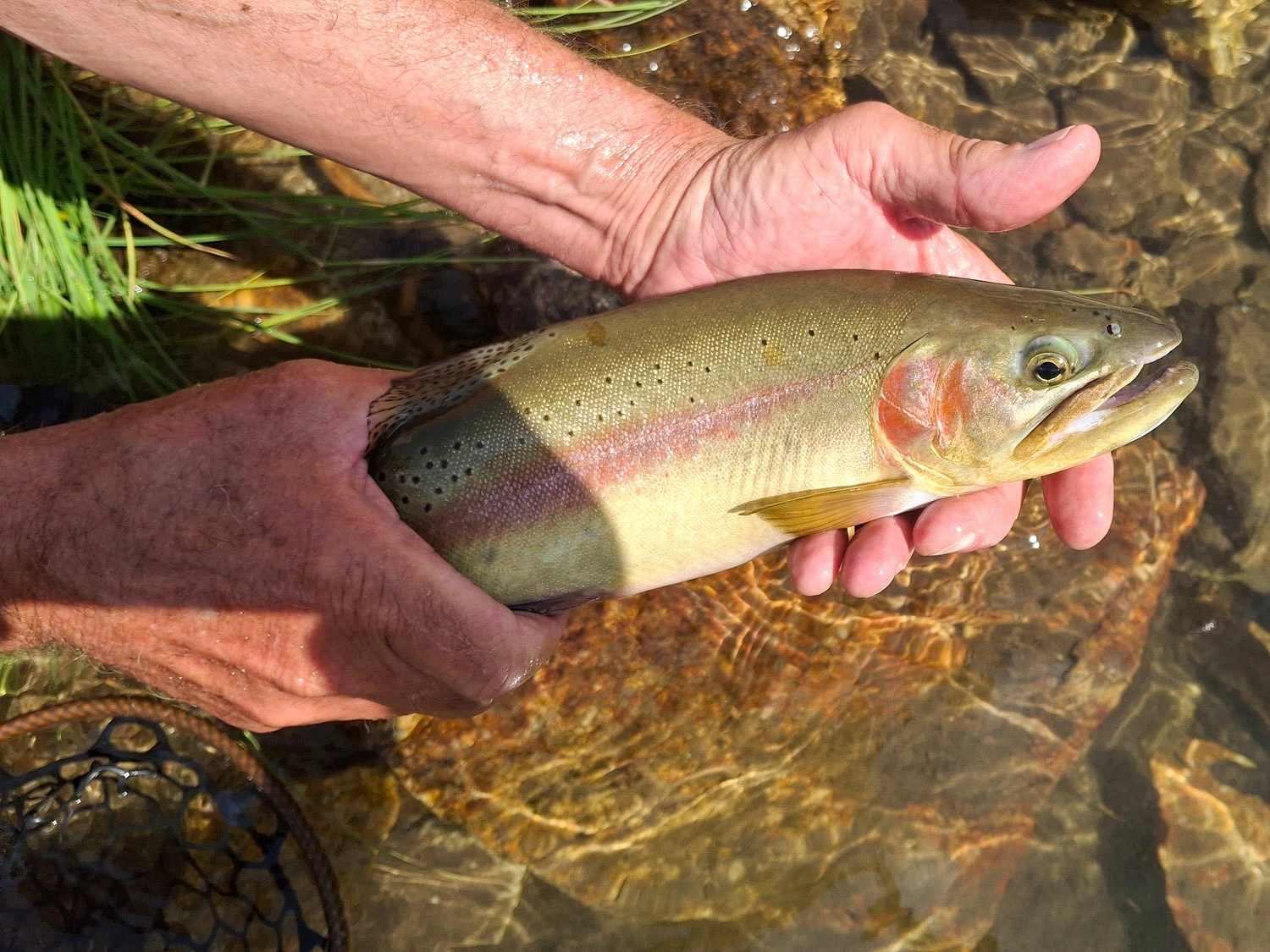
The next trout was smaller, but hefty and fat. It had definite golden characteristics.
The wind picked up making it difficult to see in the water and to cast. It swirled and changed directions and caught the fly line as I attempted those long casts as my guide directed. I wrapped line around the fly rod. I wrapped line around me. I wrapped line around the Lady. I wrapped line and snagged the fly in the small fir trees. The Lady patiently and repeatedly freed it as needed. She wanted another golden.
I put my back to the wind. We spotted a large golden against a submerged point of rocks. The fly landed right where I wanted. My guide started to say, “Good cast!”
I interrupted with, “Fish on!”
The fuse was lit. The golden went into rocket mode. It was in the air. It ran deep and pulled out line. It ran directly at me. Over and over and over. What a ride. And then the fly came loose.
“Rodeo rules?” I asked the Lady.
“Only in the net counts!”
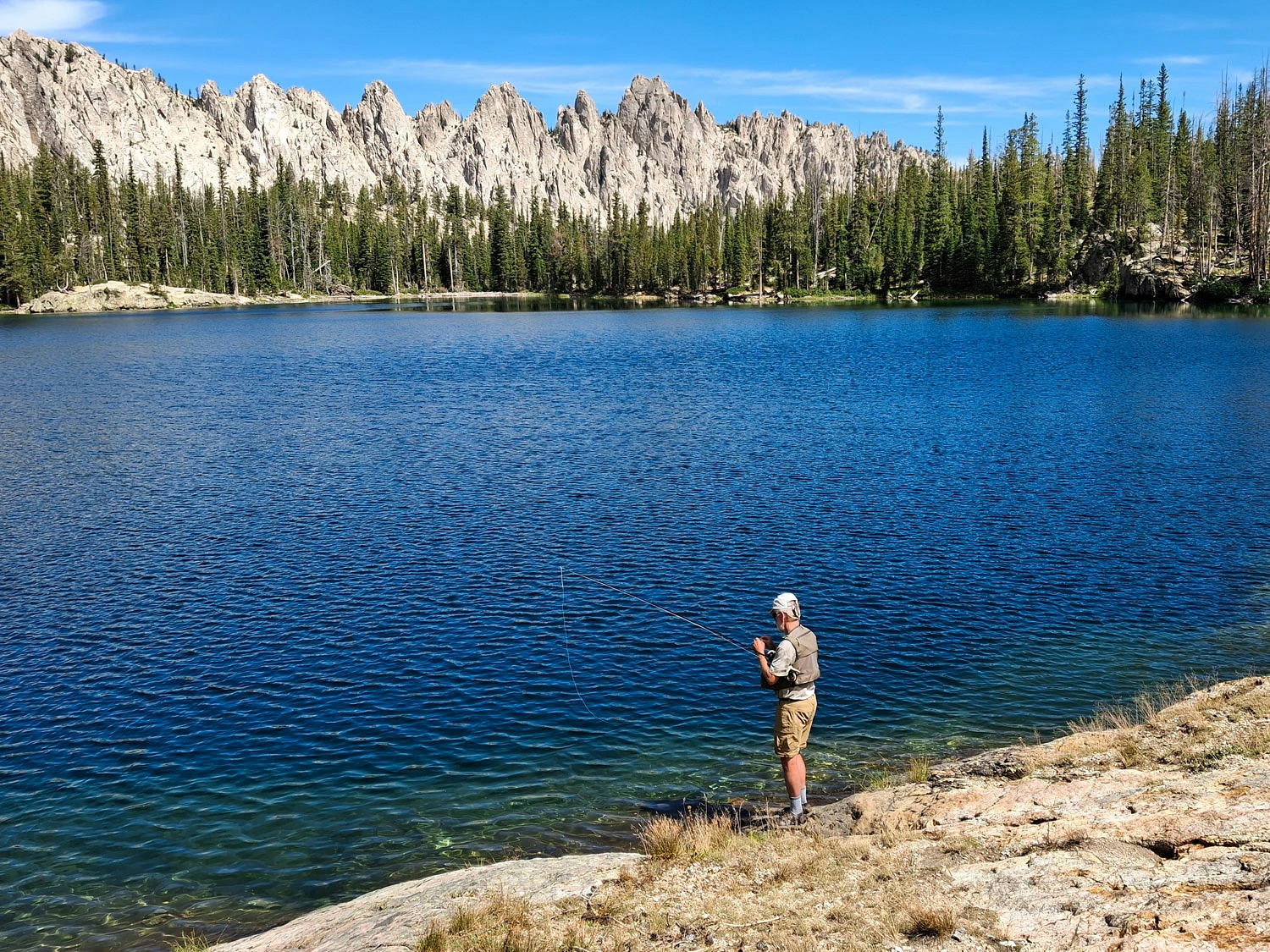
This happened five more times. It was exciting, so exciting it never got frustrating.
“Why is it coming loose?” the Lady asked.
Each time I checked the hook. Saw nothing wrong and the hook was sharp.
“I can guess that with all the pulls and turns and airborne aerobatics, this little hook works its way loose.”
“A trout only counts when it slides into the net. No rodeo rules!” the Lady admonished. “We’re not going until another big golden is in the net and released.”
I had my orders from a damn tough little fly-fishing guide.
Note: rodeo rules as in bronc riding - eight seconds on.
After three or four more shifts in wind direction, I put a long cast and the fly right next to a ring.
“Fish on!”
“Please, let’s land this one! Don’t come off!” the Lady almost pleaded.
It was a repeat performance. What a ride! But the fly stayed attached. The Lady dropped off the rocks into knee deep water and moved quickly out into deeper water, holding the net out as far as she could. She wanted this trout.
“Stop moving,” I asked. “I’ll bring the trout to you. You don’t need to swim out and get it.”
It was the golden trout of the day.
It was late afternoon. We put our gear back together for the four-mile hike out. Smoke had drifted into the cirque.
Fire on the Mountain
We had a very kind invitation to return to Fort Sagebrush in Oregon. The reason? To help Sagebrush and his bride celebrate their wedding anniversary. And they insisted, also celebrate ours that was coming in a month.
In route we spent the night at the historic Three Island Crossing of the Snake River on the Oregon Trail. We arrived in the late afternoon at our reserved campsite. The temperature was 107°. At 2130 hrs, when we climbed up in the bunk, it was 92°. At dawn it was 78°. I believe these are the highest temperatures we’ve experienced with the camper thus far.
We picked up fresh sweet corn at a farm stand outside of Nampa - 12 ears for $6.00 - for this evening’s feast.
After we arrived at Fort Sagebrush, a thunderstorm rolled through in the afternoon - thunder, lightning, big spats of rain, and wind. The Elkhorns took the brunt of the storm and about an hour later, smoke from lightning fire starts were visible over the crest.
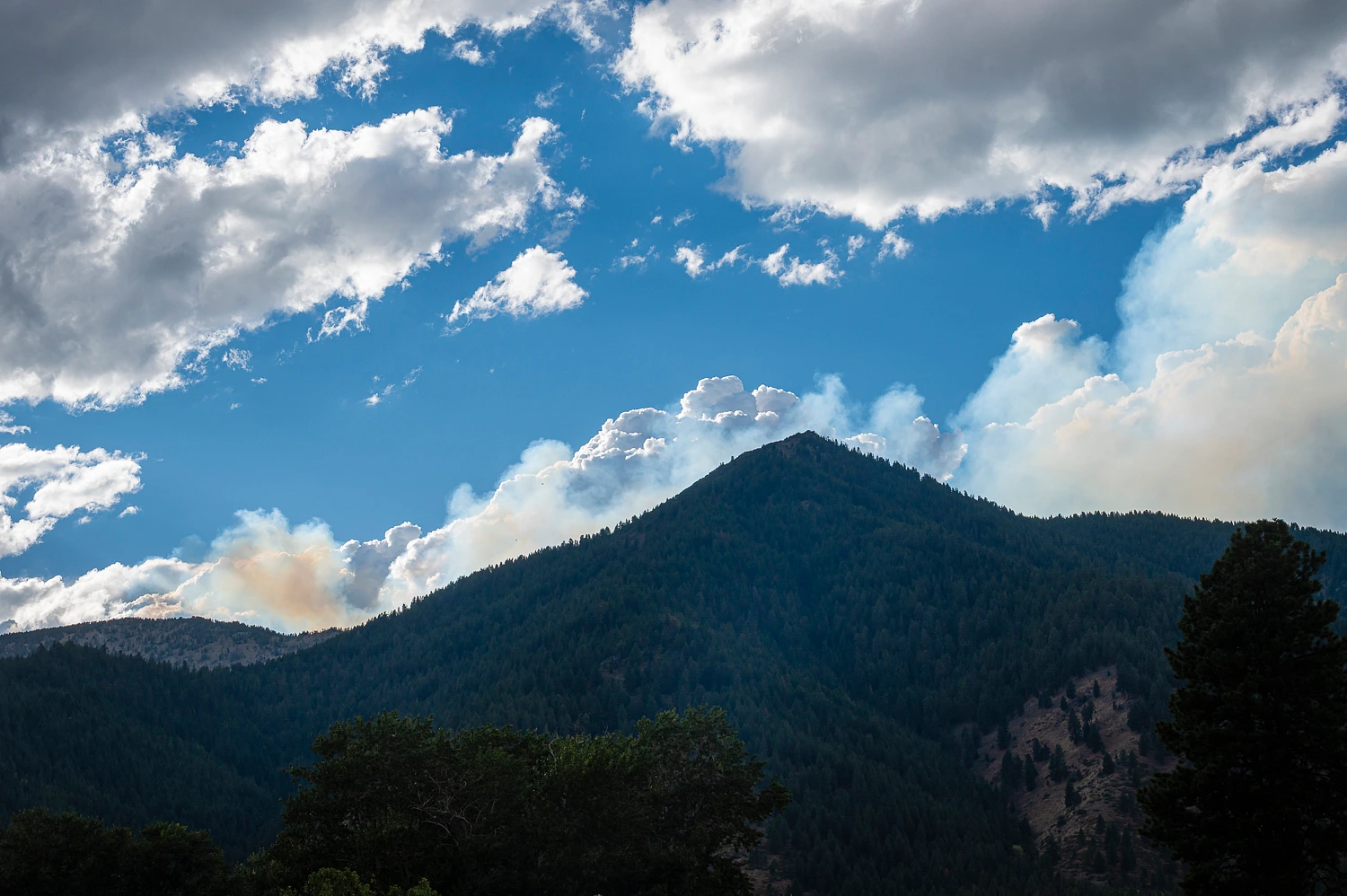
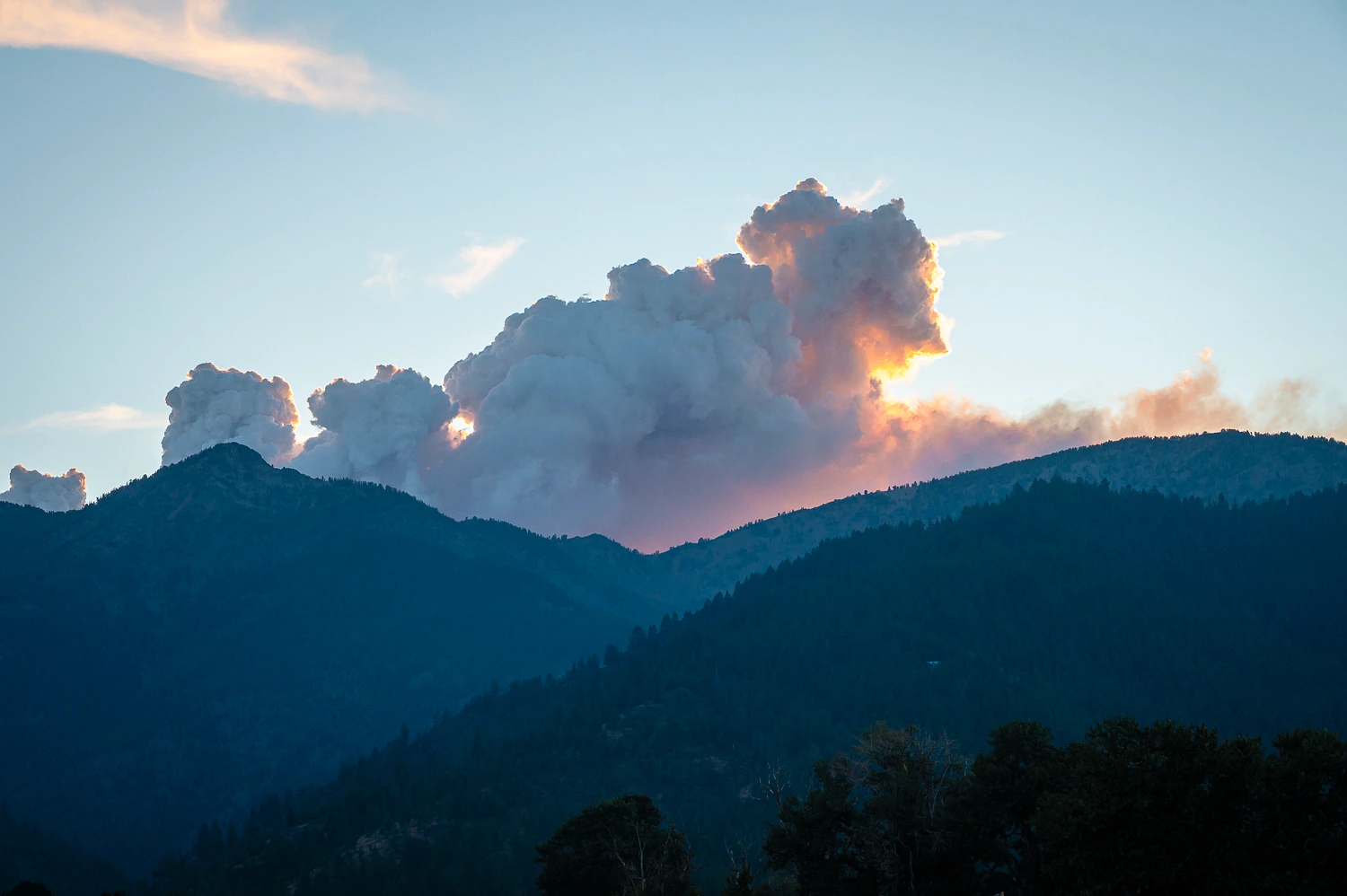
This was the start of the North Pole and McCully Fires. It was hard to relax and checking on the fire was near constant. Stage One evacuation orders were only a mile away. The Sagebrushers prepared - we helped - by packing and hooking up their two travel trailers. We were all ready to go if necessary.
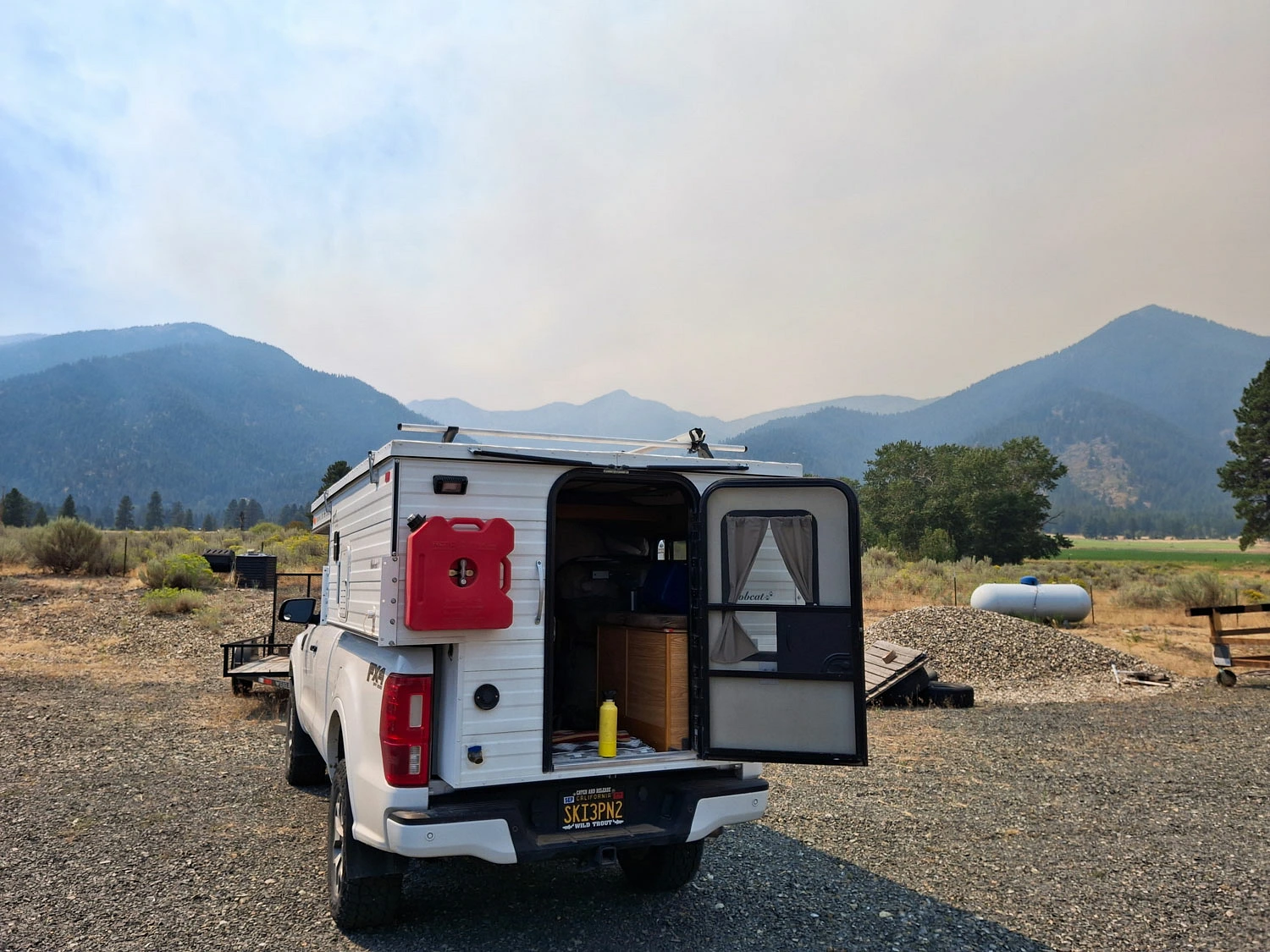
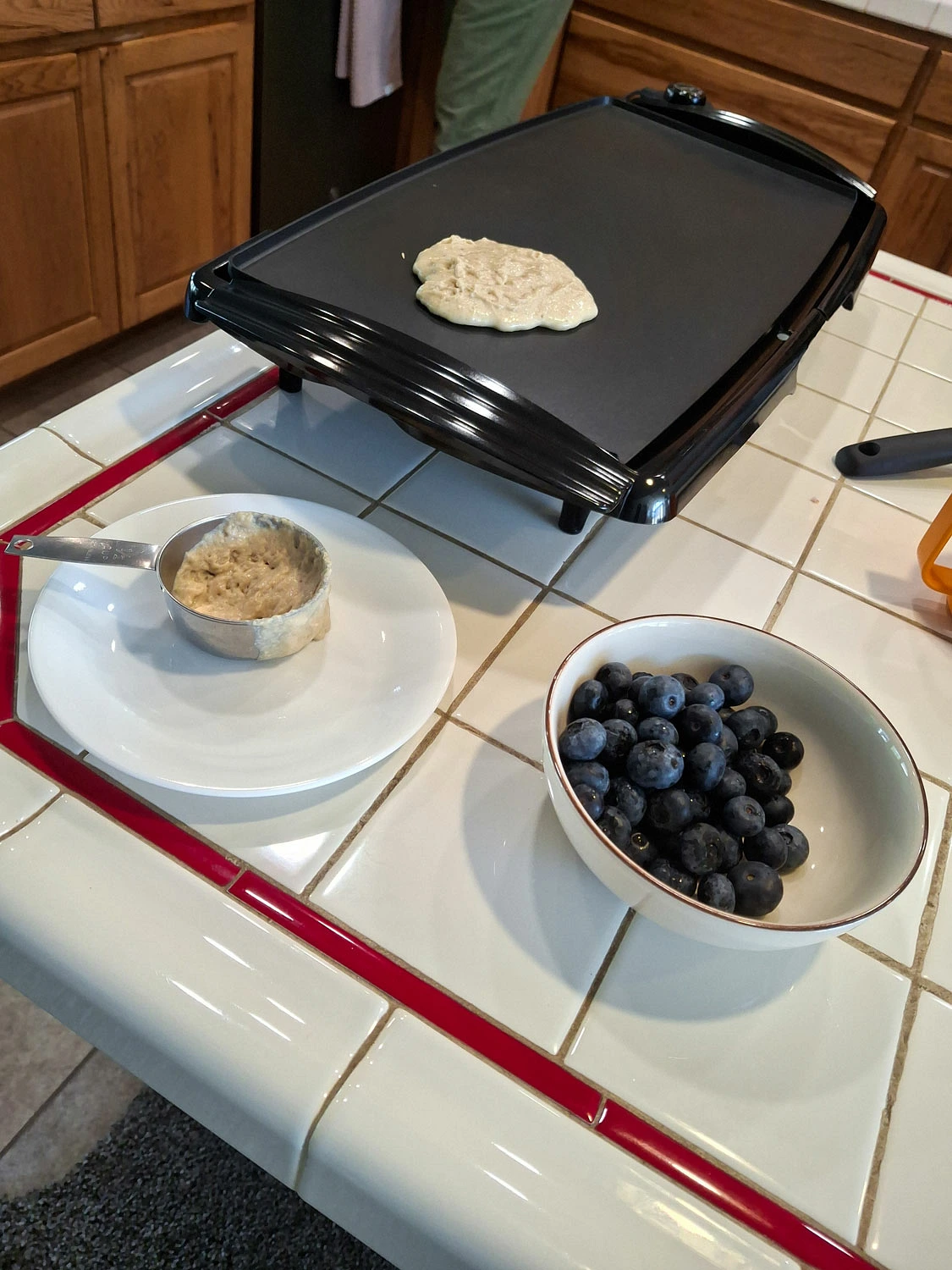
To keep ourselves busy we cooked and ate. To stay honest here, our hosts did a great job cooking, as always, and we all ate well.
Sourdough pancakes in the morning.
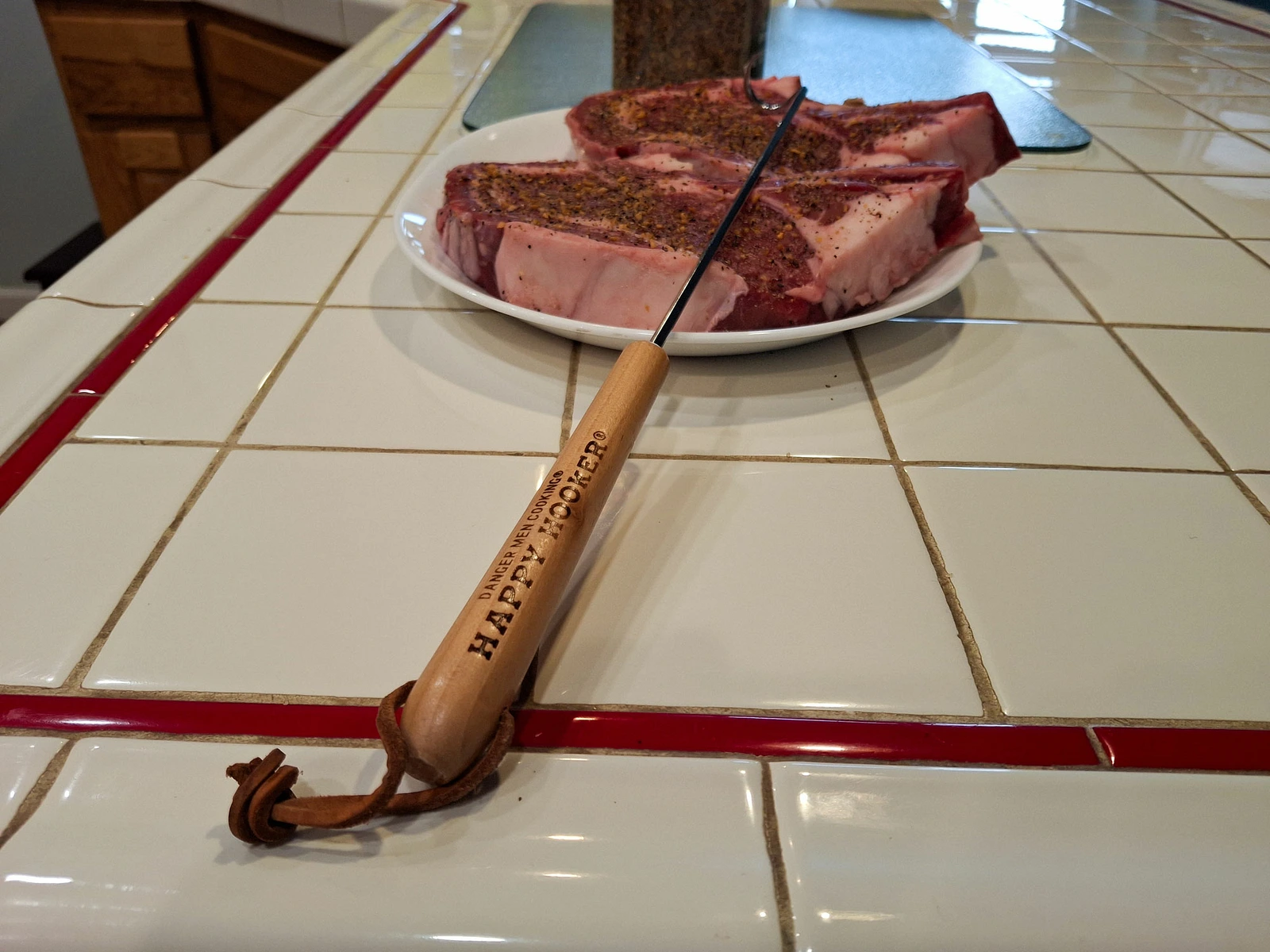
And steaks for dinner. You can hear Sam Elliott say, “Beef, it’s what's for supper,”can't you?
The Idaho corn on the cob went with the beef and it was superb.
It was scary as we kept watching the fire.
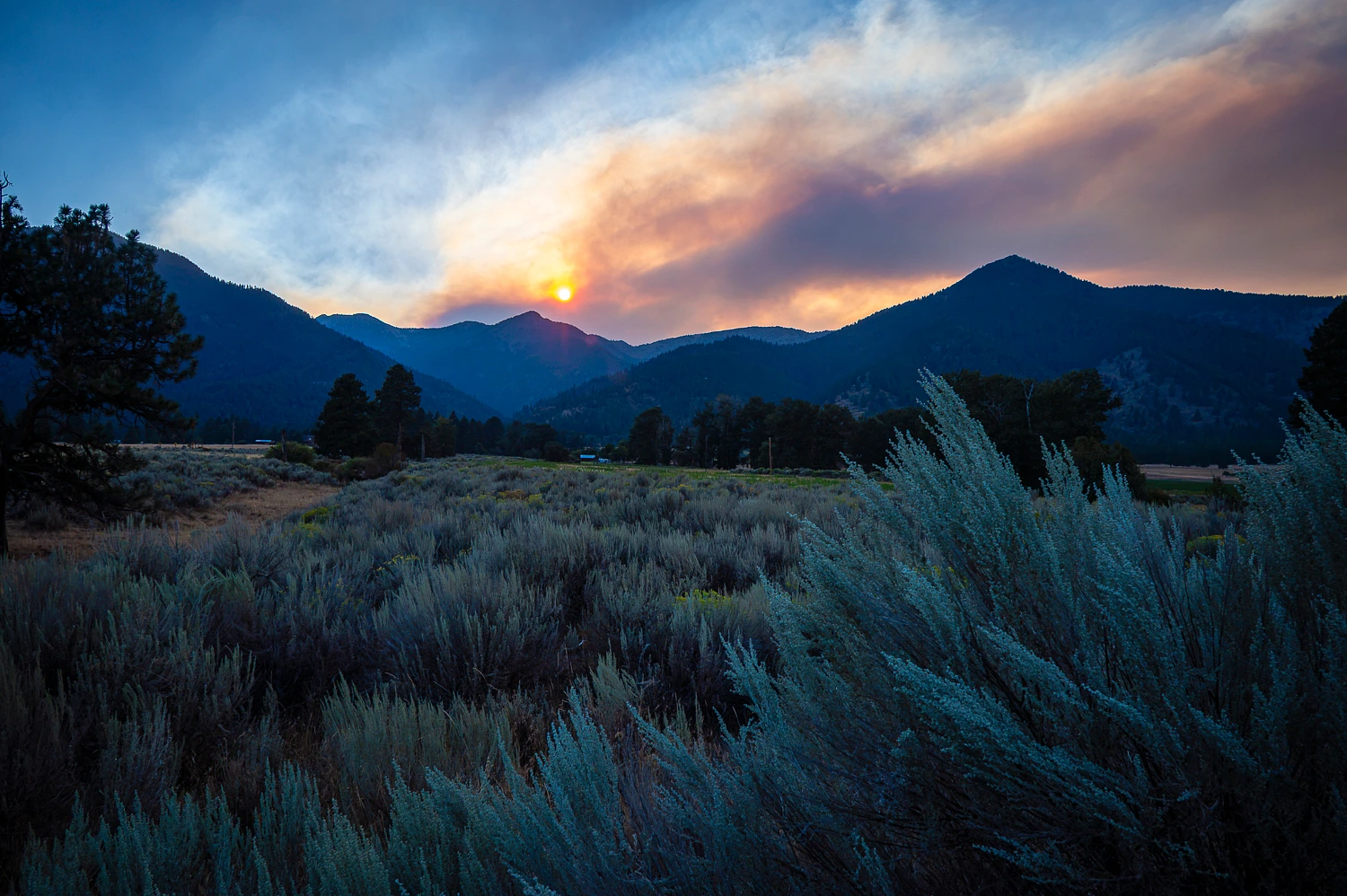
The fire did not explode, thank goodness, and stayed on the west side of the Elkhorn crest. Things looked much better on the morning of our departure.
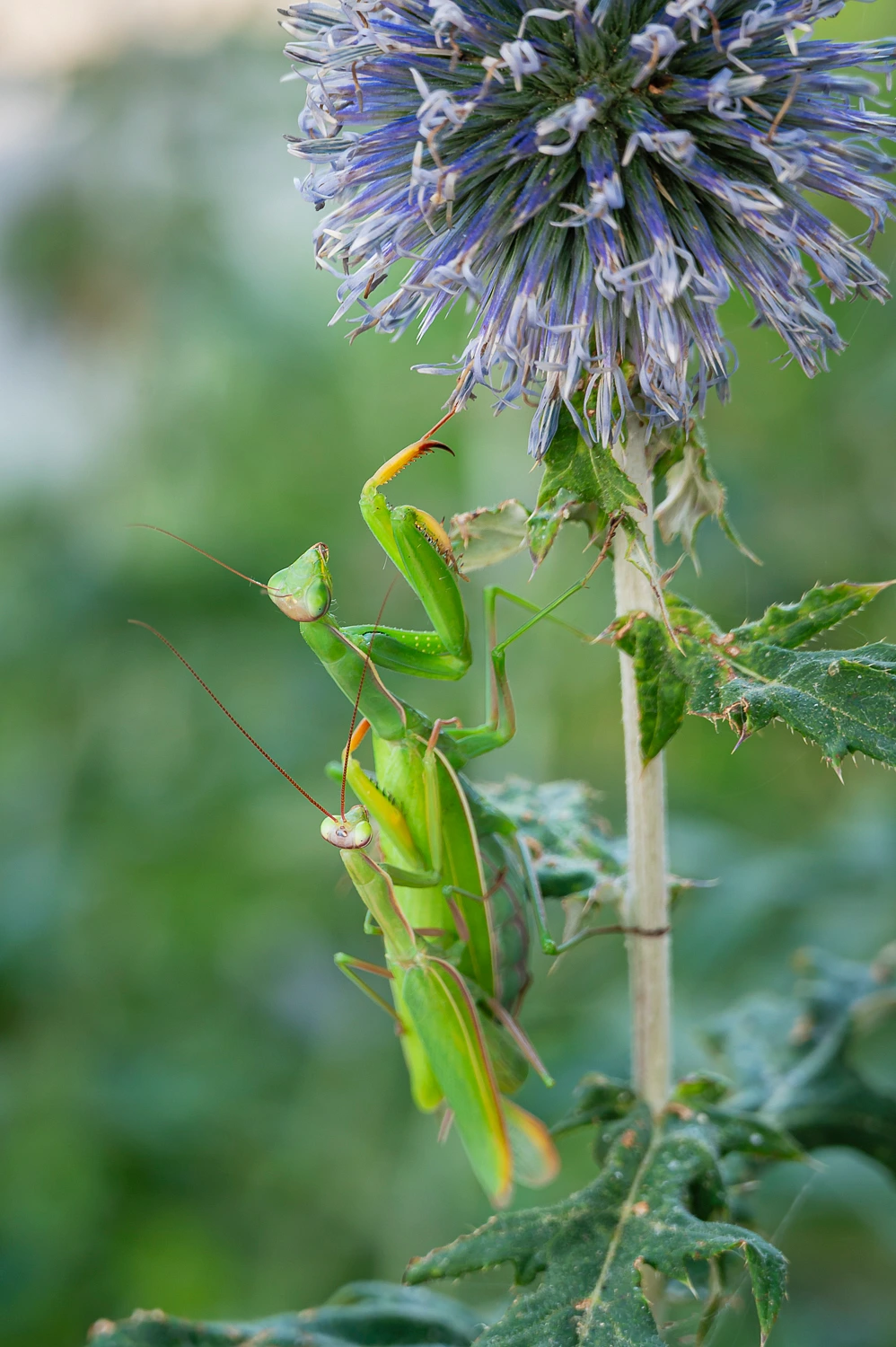
We noticed critters in the garden at the Fort. One poor fellow was about to get his head chewed off.
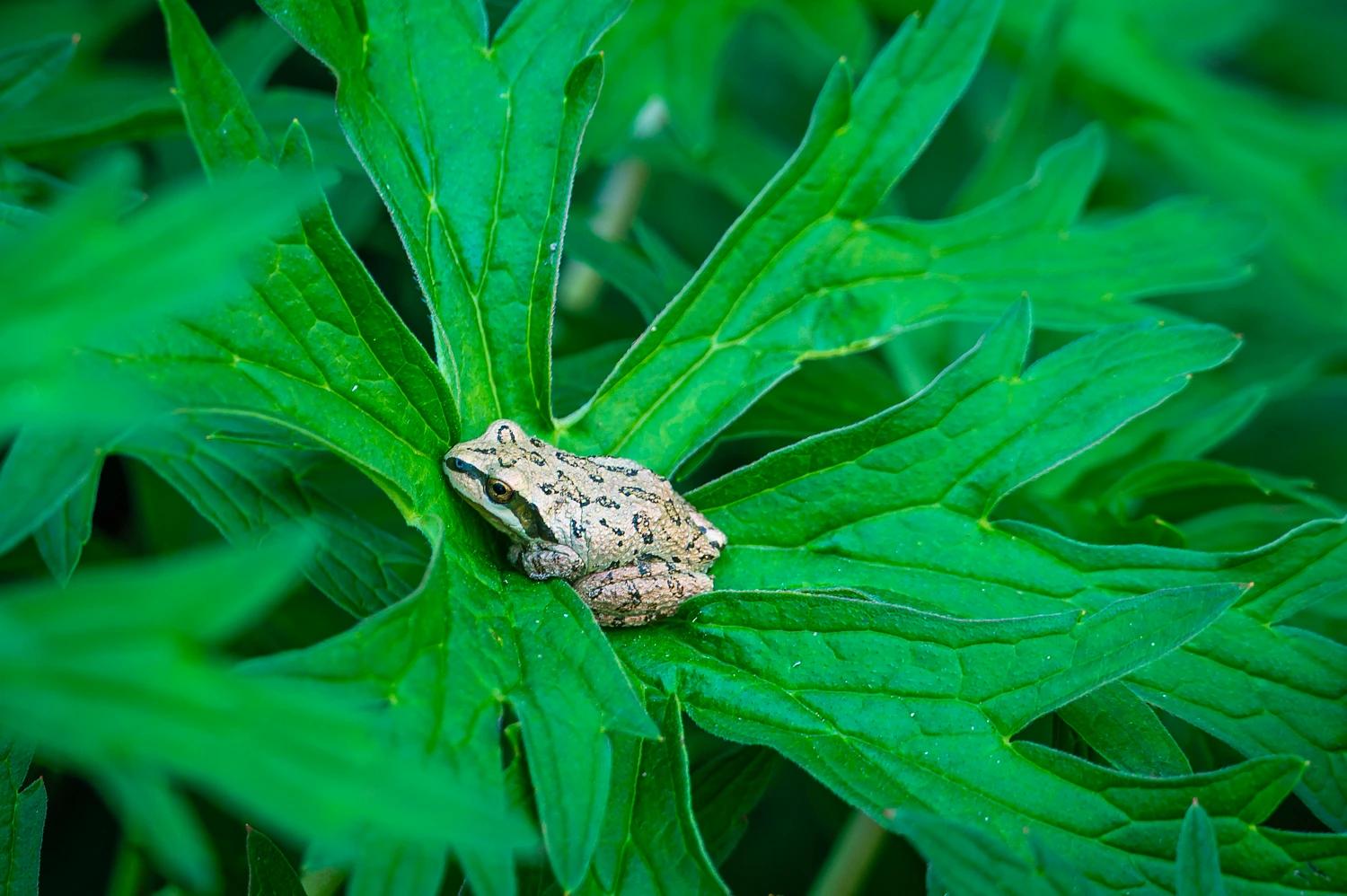
And this small tree frog make itself at home on this leaf.
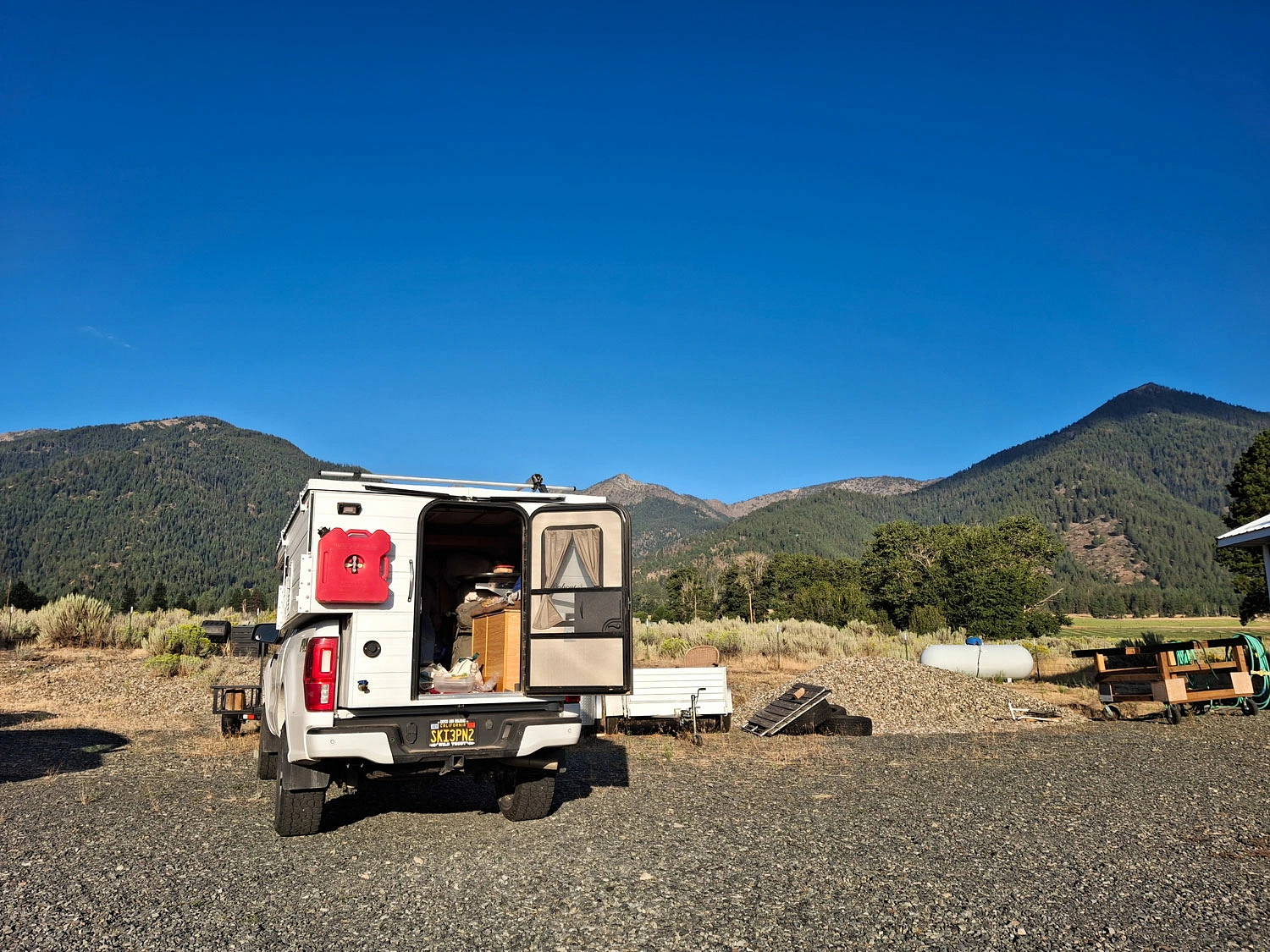
It was a treat to celebrate anniversaries with our friends and a great big thank you for your generous hospitality and friendship!
Mermaids and Cutthroats
This one was the Lady’s suggestion, a stop at Steens Mountain and spend a day fly fishing the mermaid pond.
We were completely alone at Jackman Park, another nice surprise.
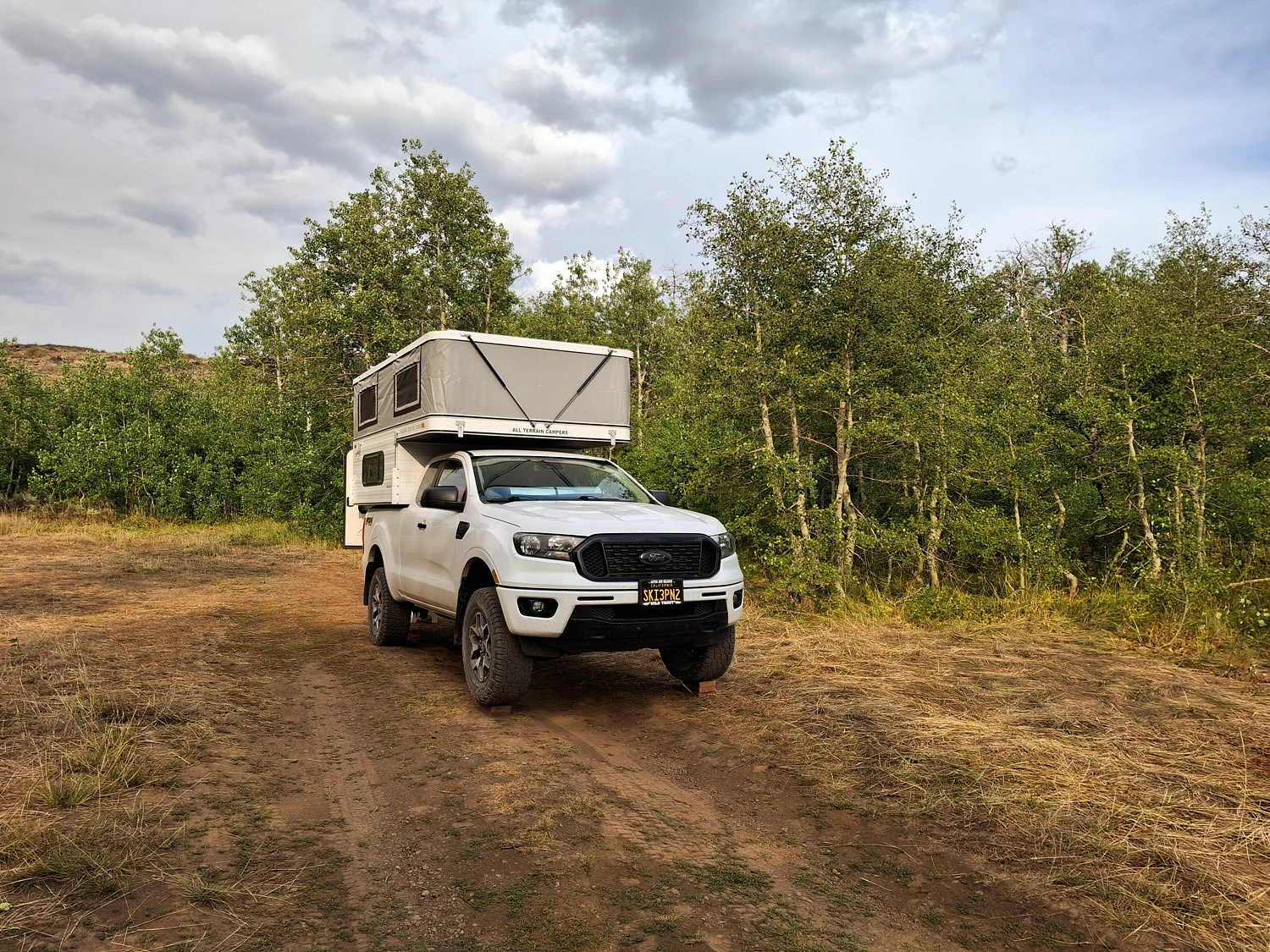
We’d been in and out of rain on our drive to Steens. Clouds broke up in the evening, but wildfire smoke hung in the canyons.
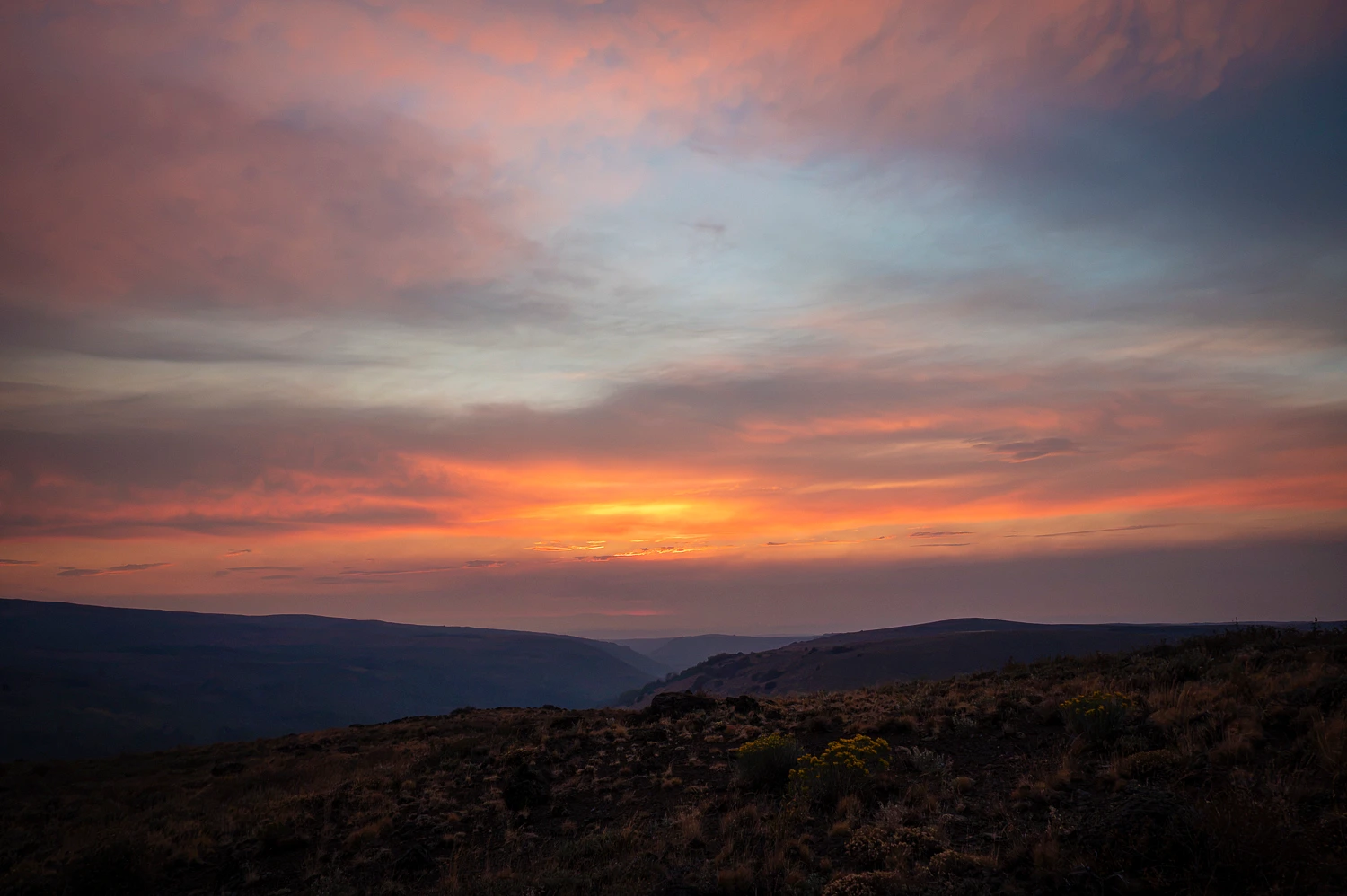
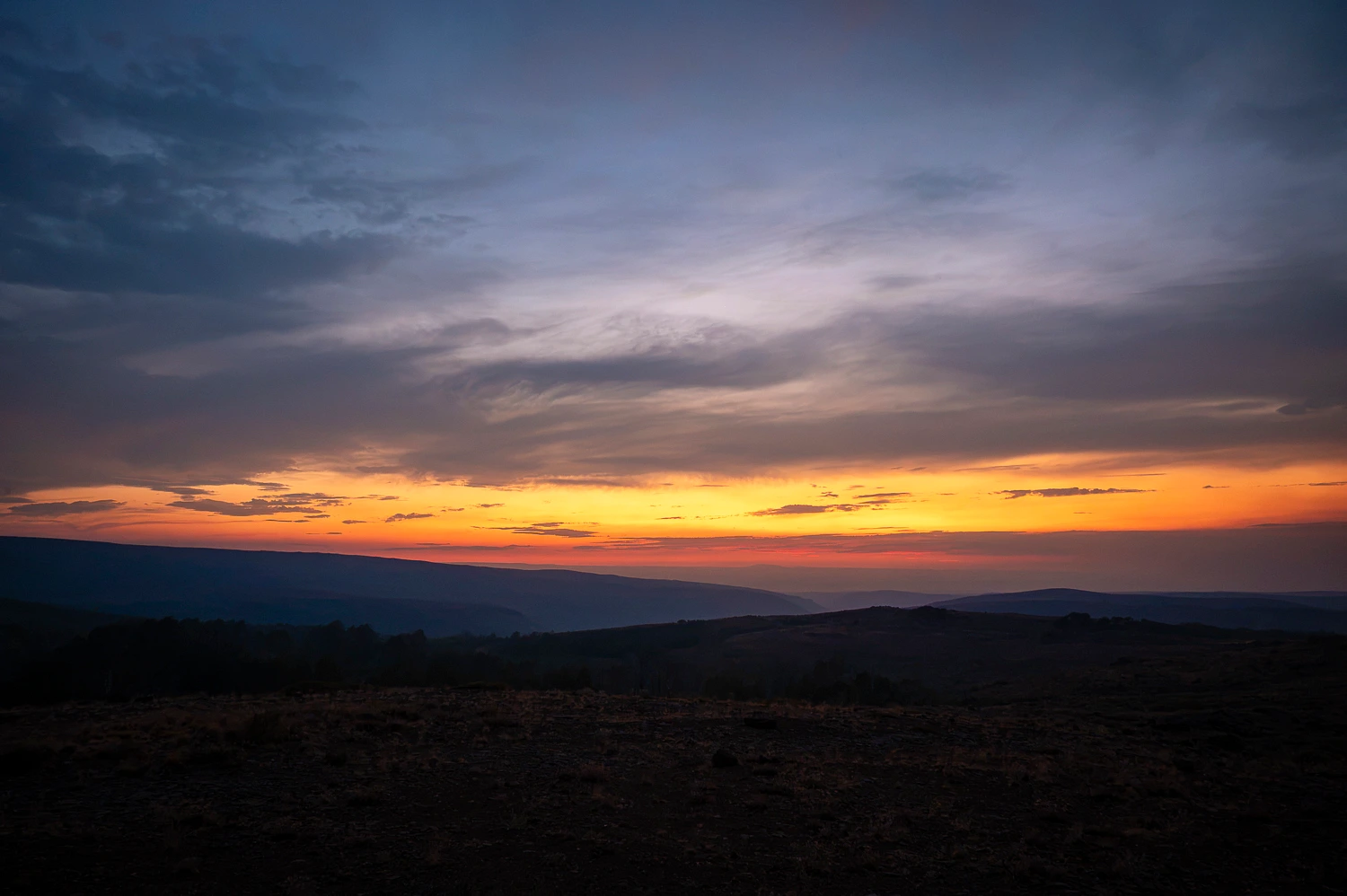
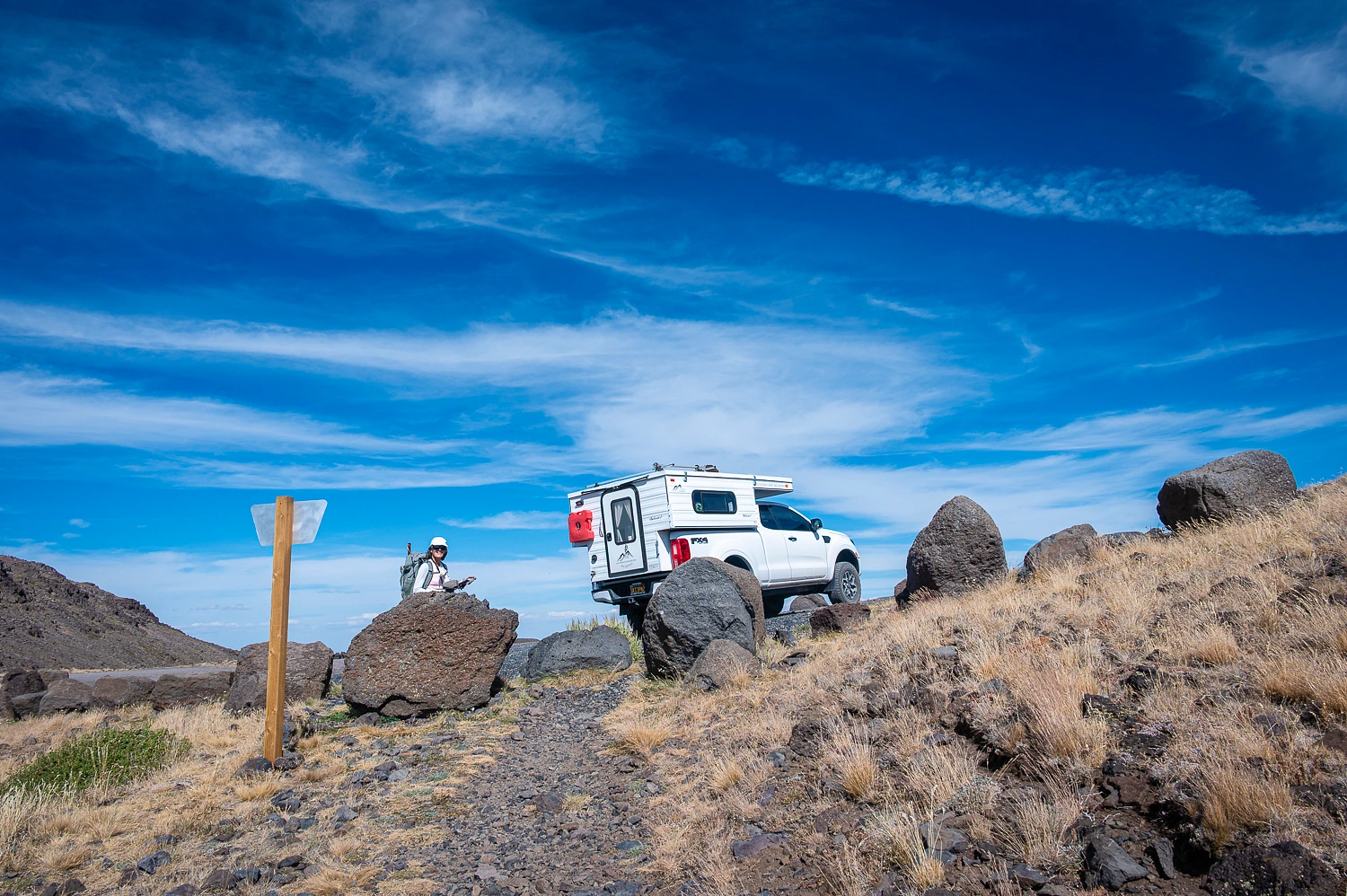
It was clear the next morning, but the wind was strong. We started out at the trailhead just below the summit of Steens Mountain - a short walk up the gated road.
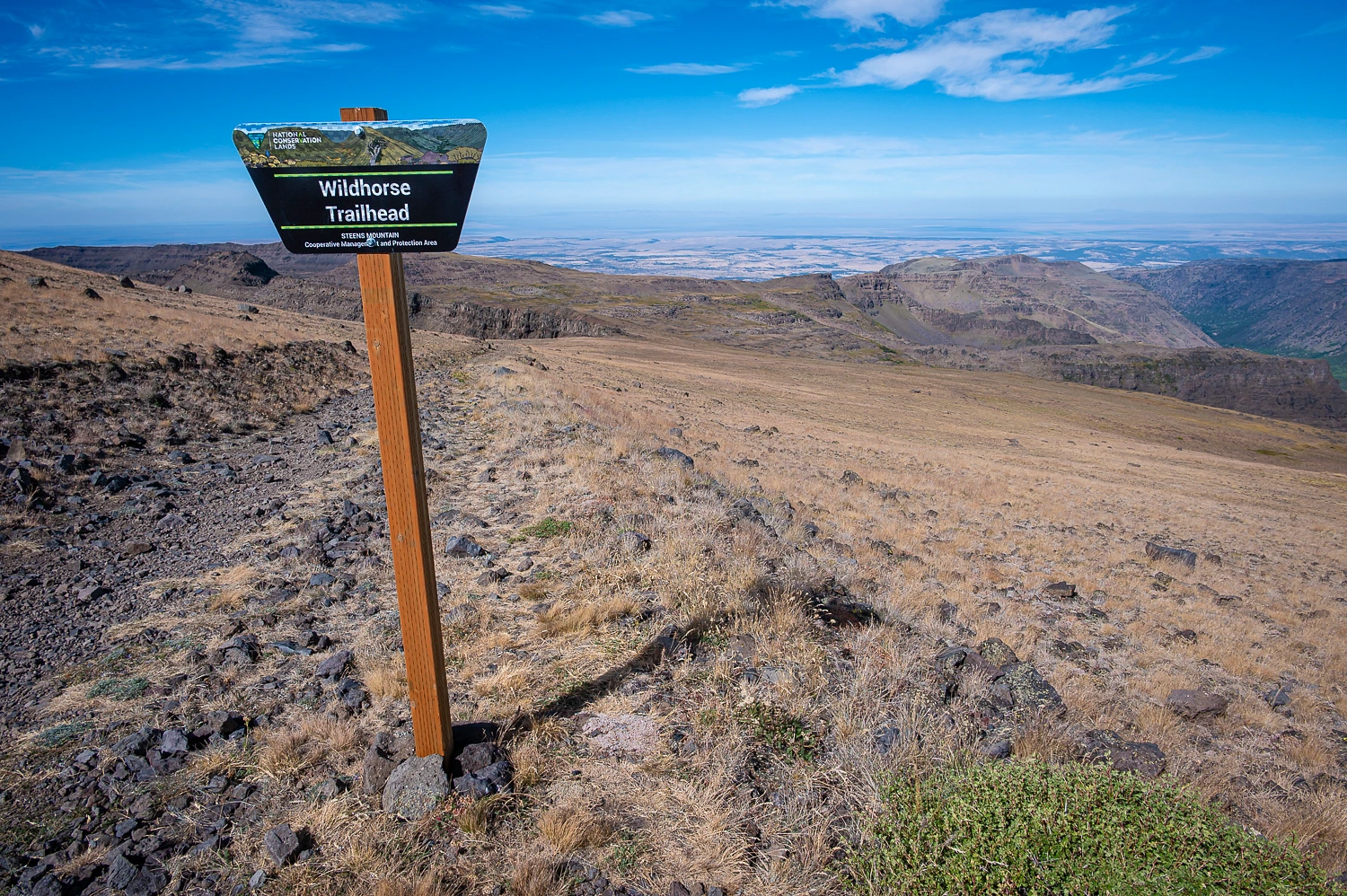
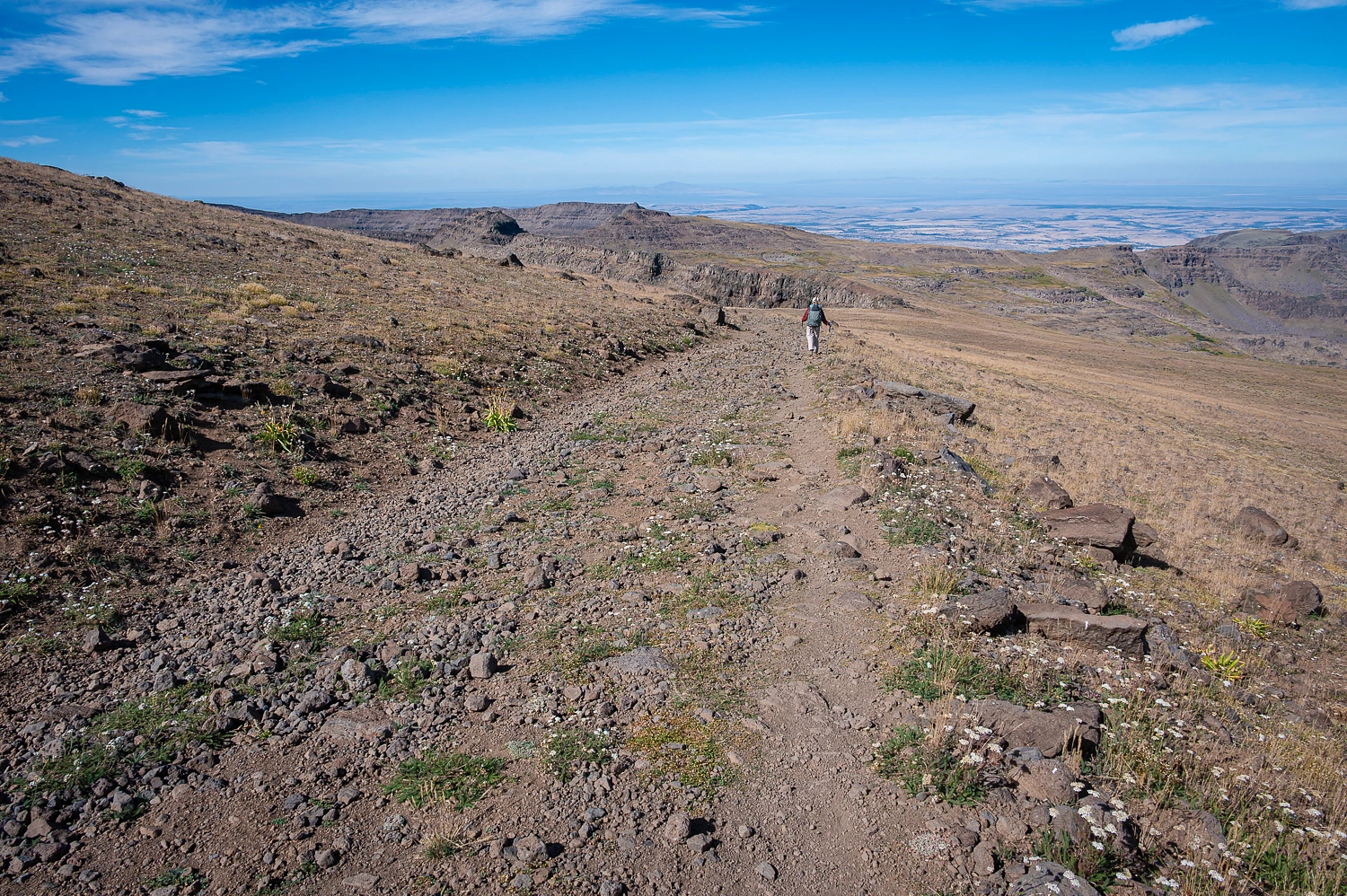
This was our first visit here in the late summer and we were surprised how dry and brown it was.
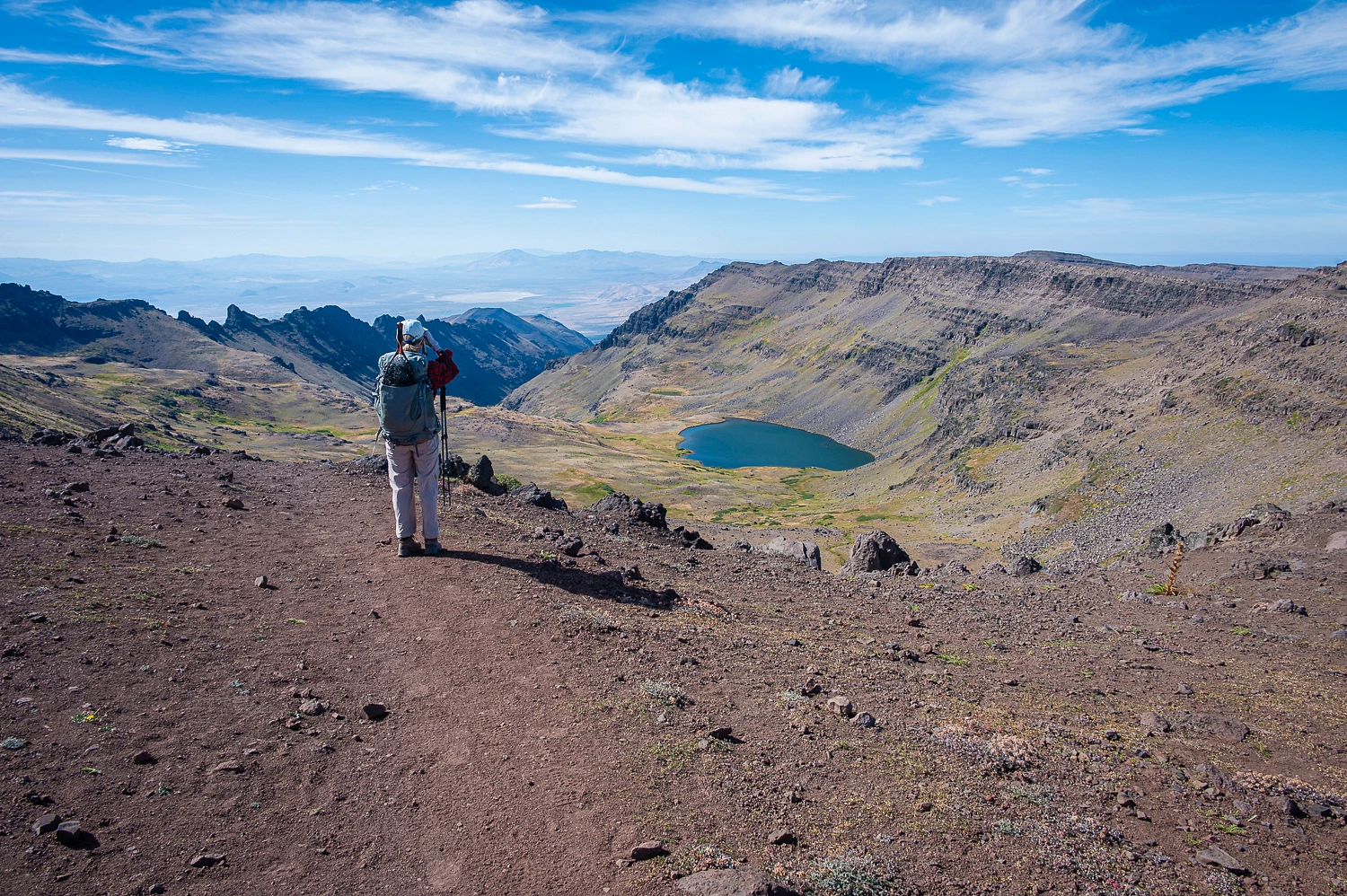
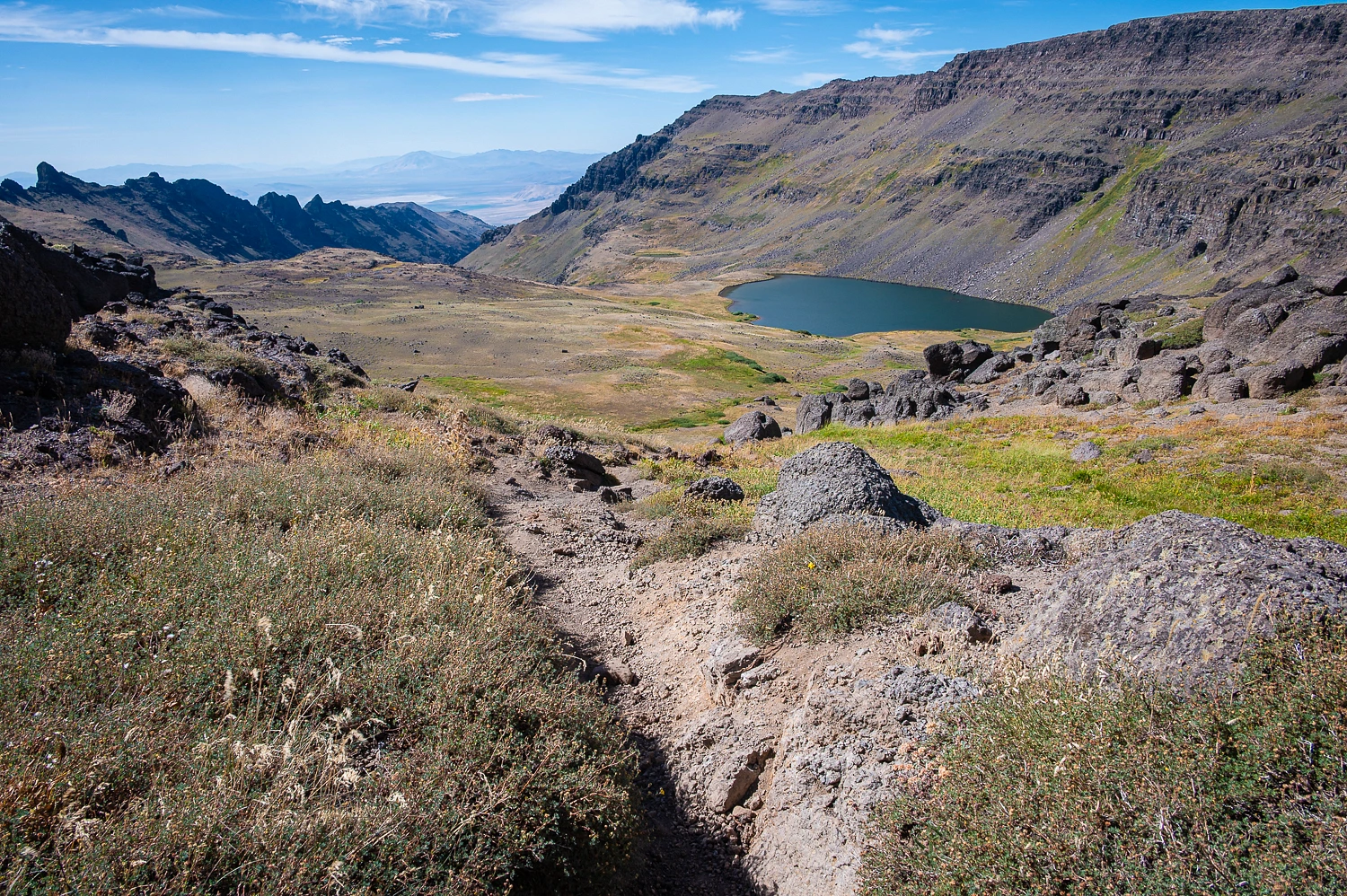
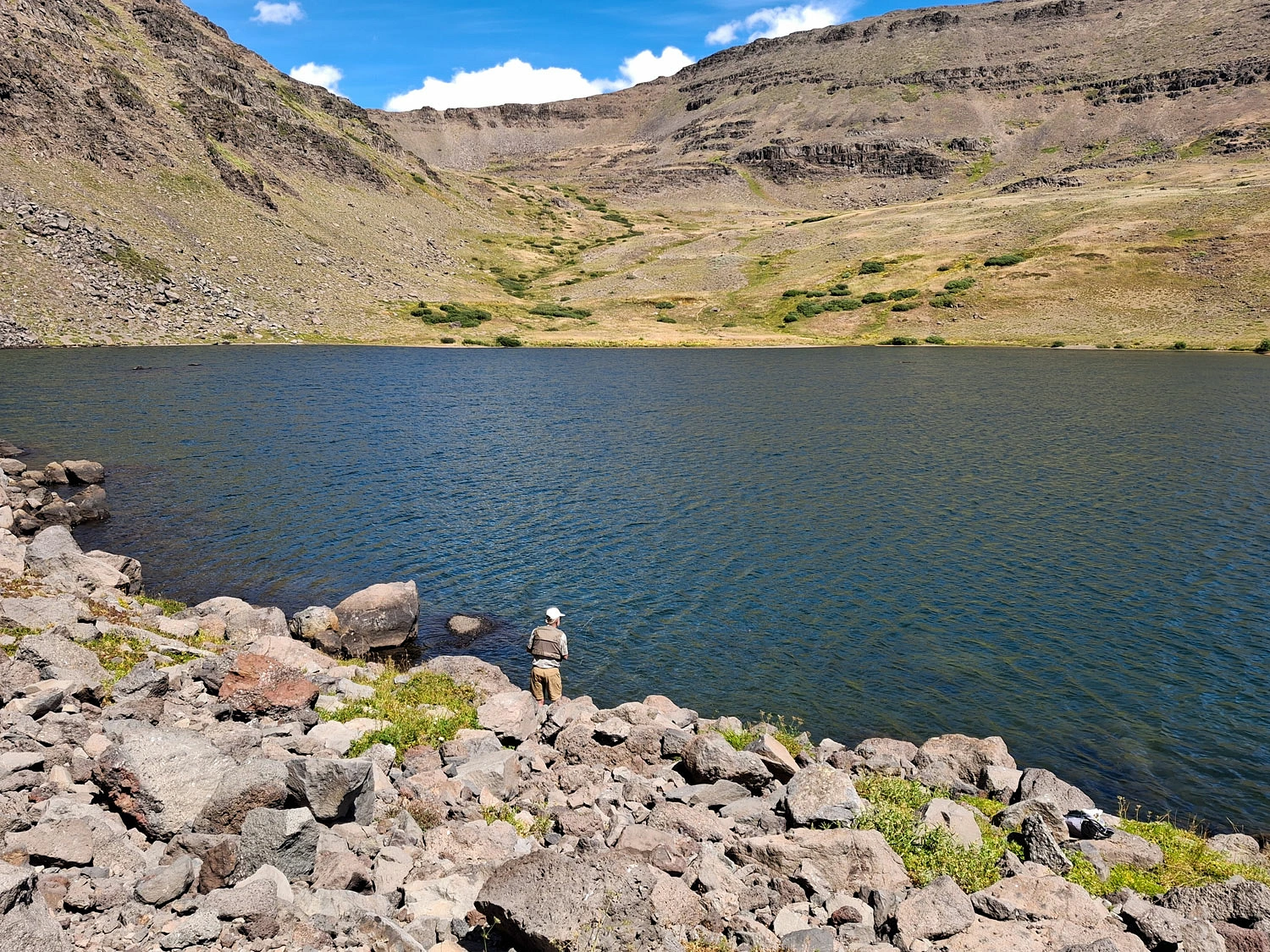
We were back at Wildhorse Lake - the Mermaid Pond.
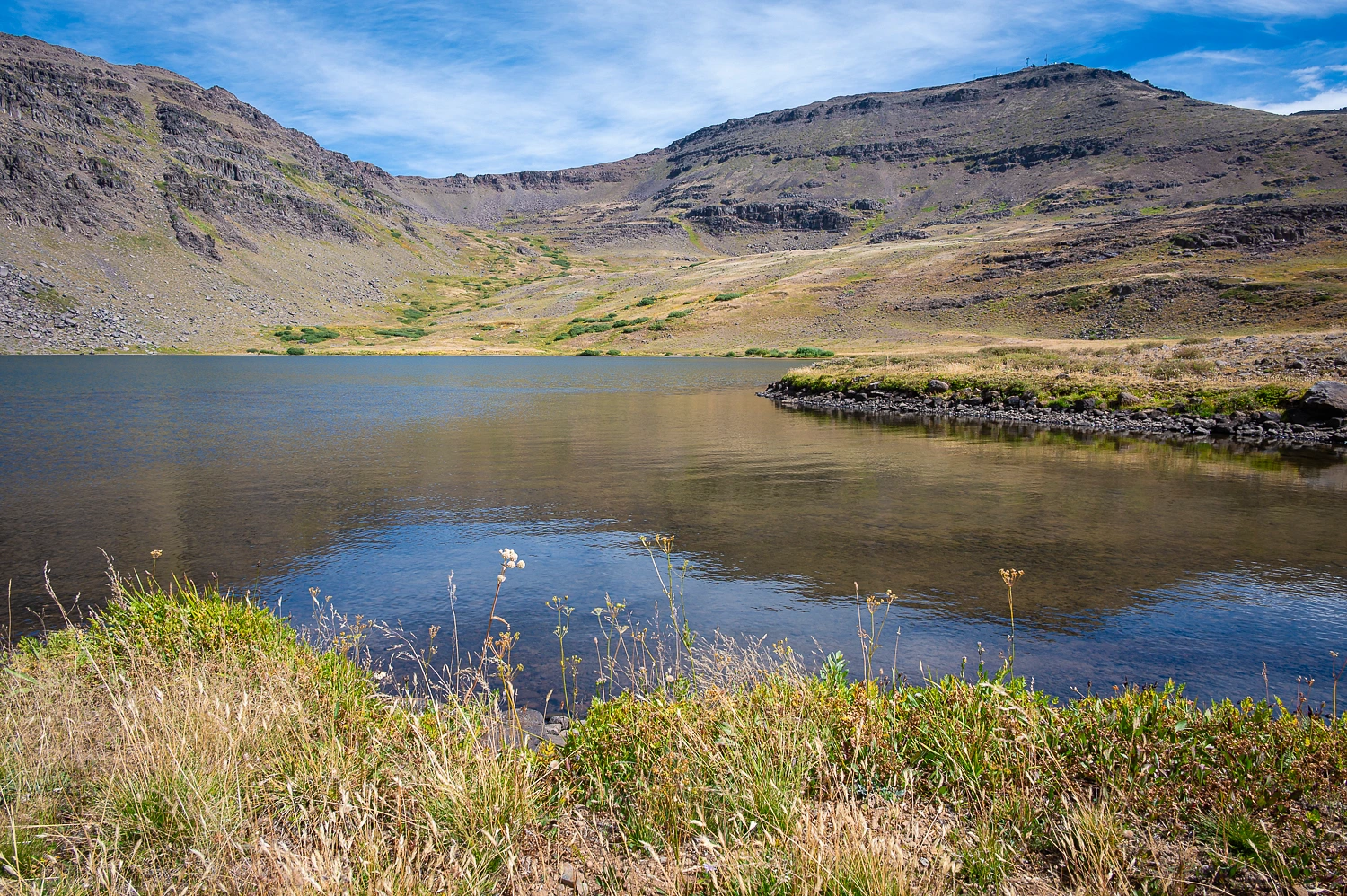
We saw a mermaid in Wildhorse Lake on a hike here in July 2022. It was an experience we will never forget.
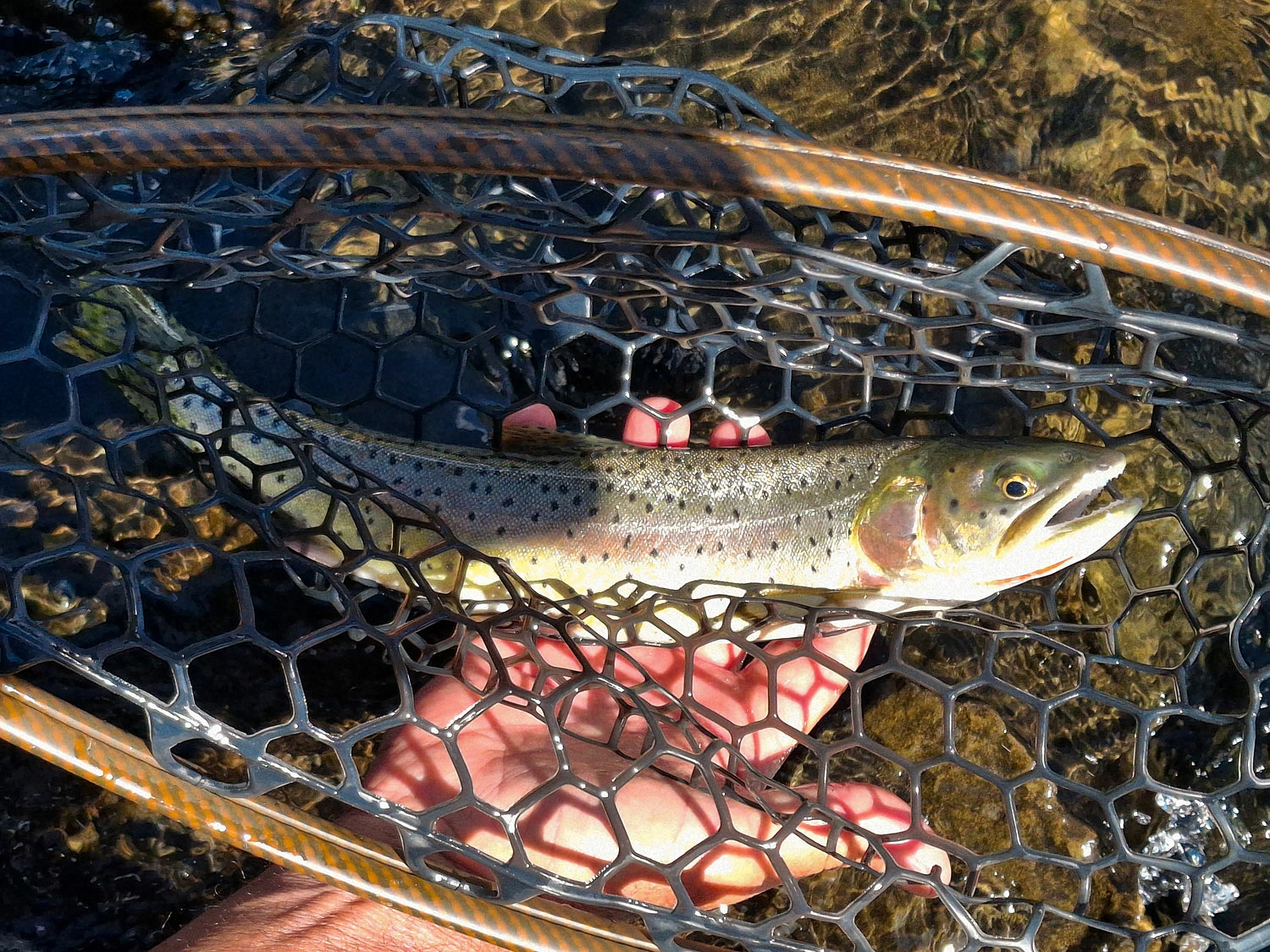
We did not see any cruising Lahontan Cutthroat Trout. This was odd as we’ve always seen trout cruising along the shore on all our previous times fishing here. The wind was awful; many times putting white caps on the lake. Fly casting was a challenge. I first tried several different dry flies. Late in the season is a good time for hoppers. No action and we still did not see any fish. I switched to a nymph pattern several feet under a strike indicator. I worked that tactic for close to an hour when, suddenly, the indicator dropped under the surface, I raised the rod, and a fish was on.
Did I say the wind was awful? Yes, I did. I’d take advantage of any lull in the wind and make a roll cast back out to deep water.
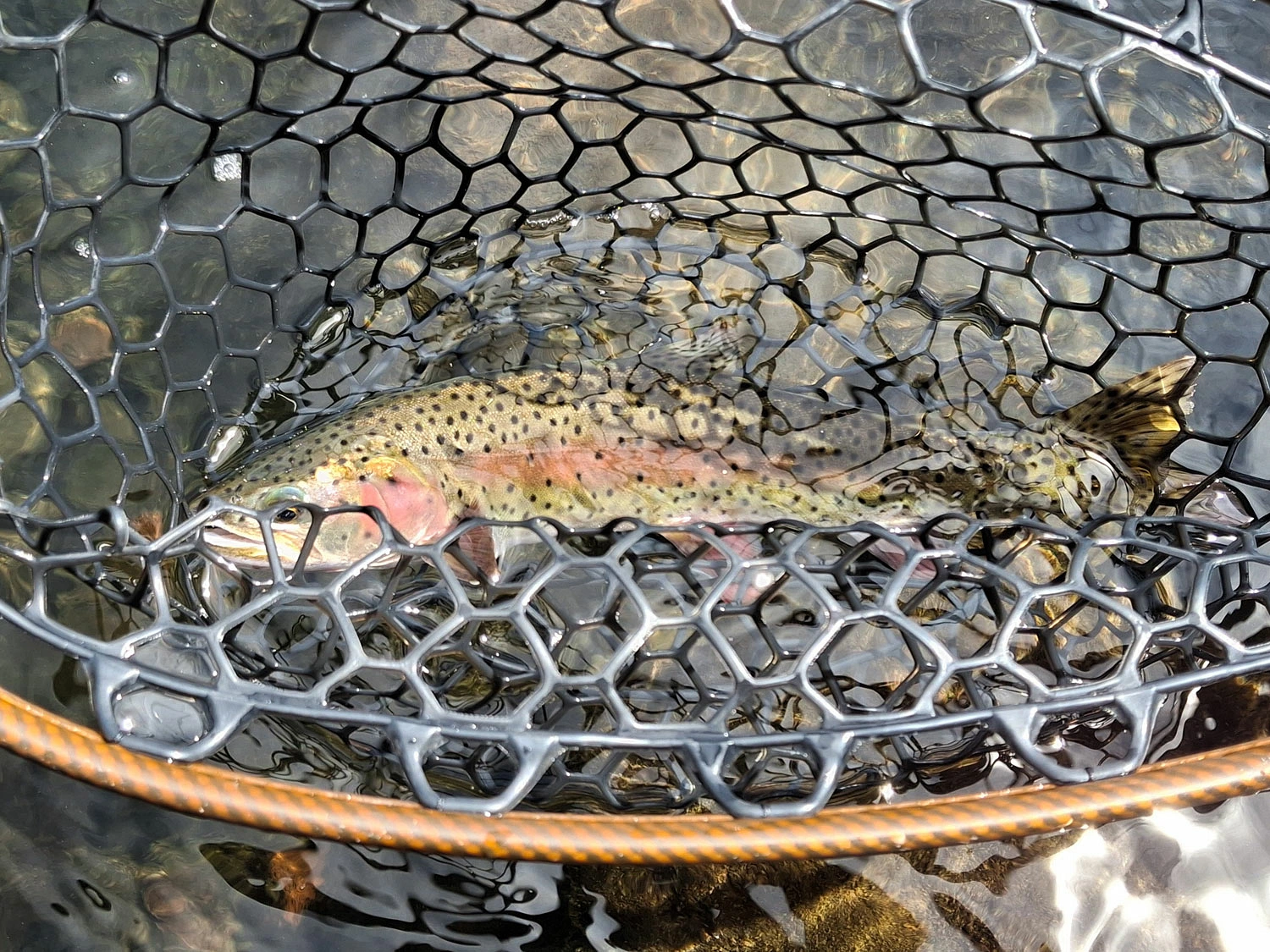
We brought five colorful cutthroats to the Lady’s net. It ended up being a successful day even with the challenges.
A definite bonus was that no mermaids were sighted, or heard.
Here’s where the Lady always says, “Forty minutes to the truck!”
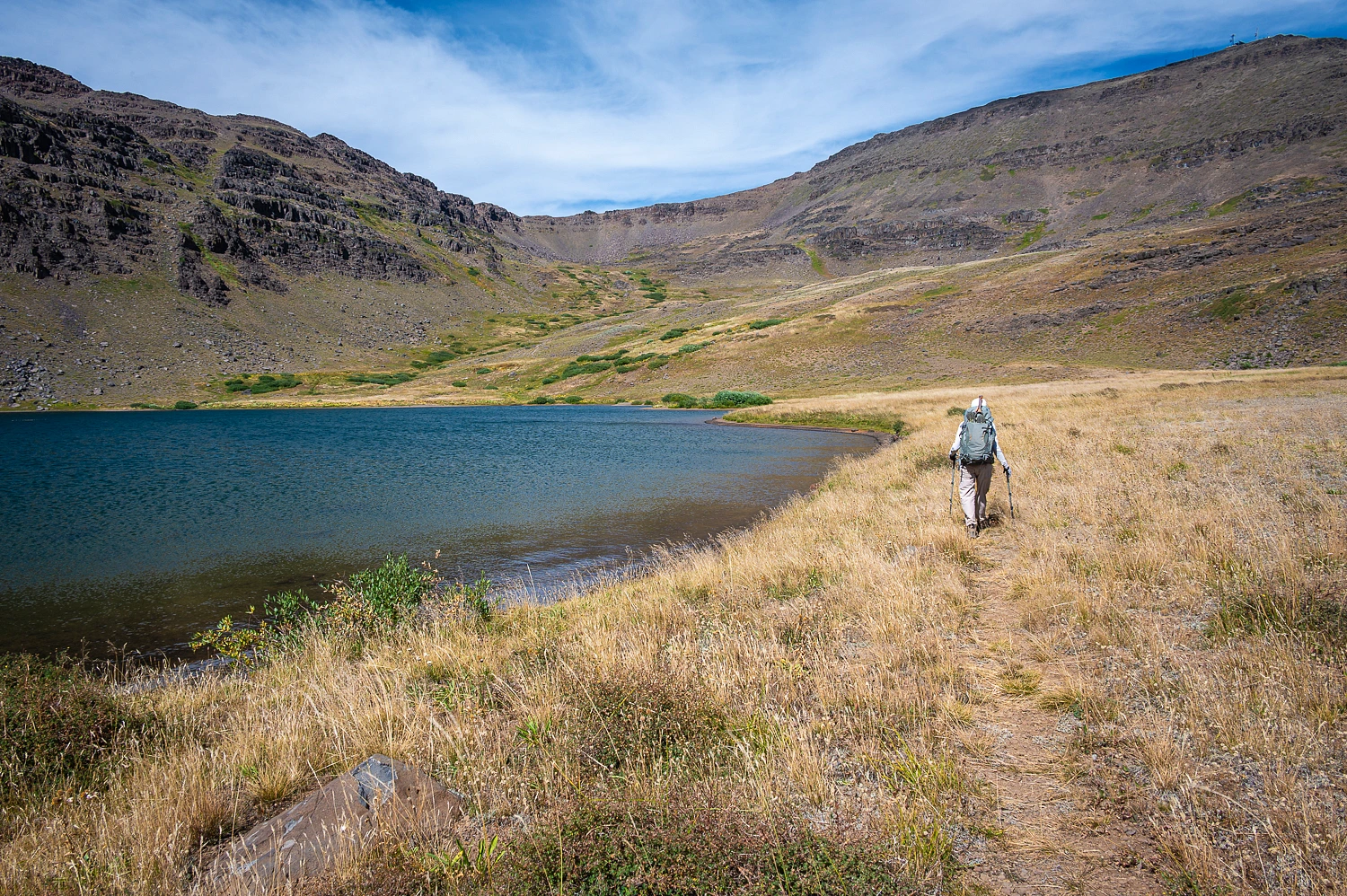
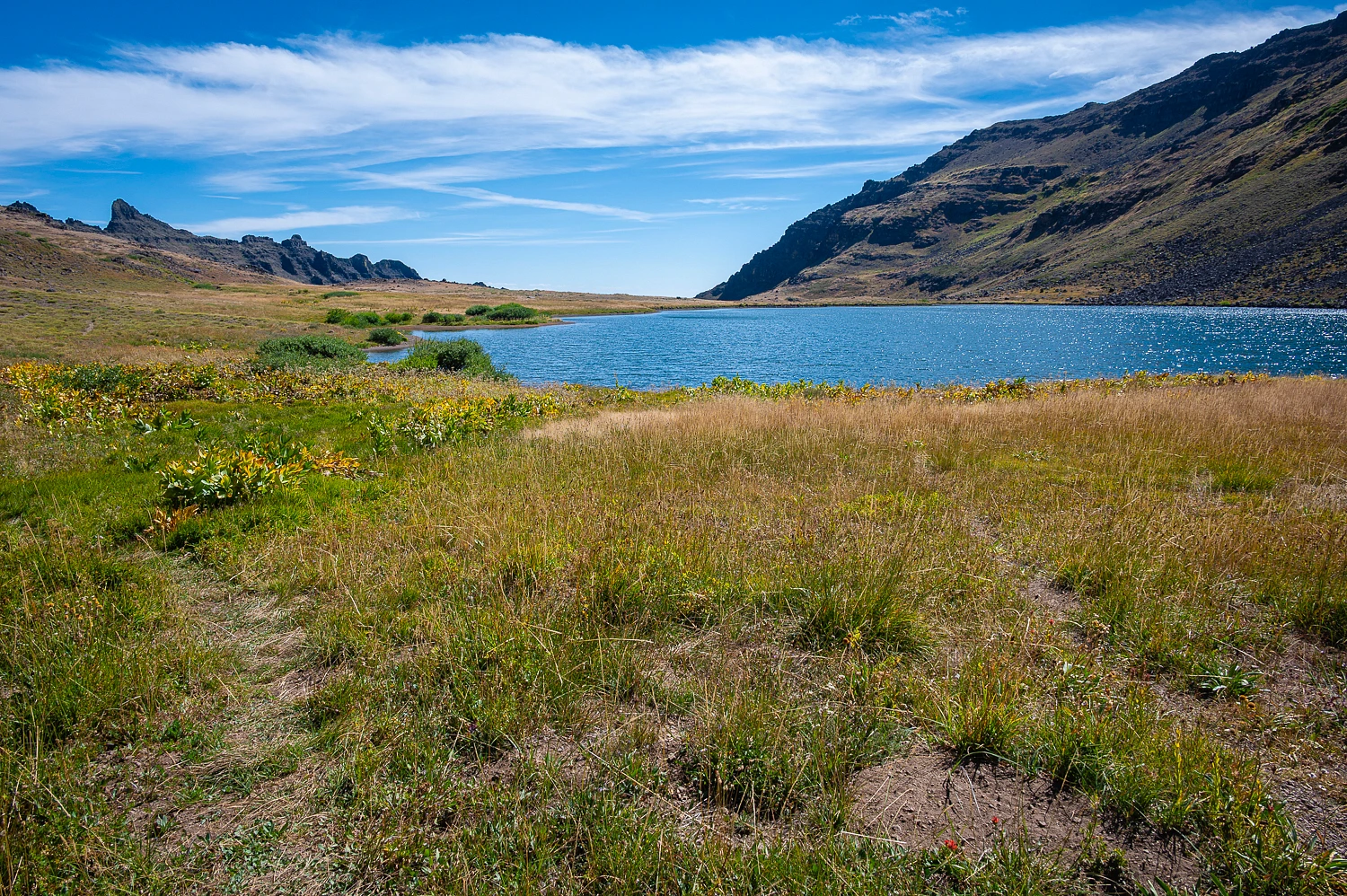
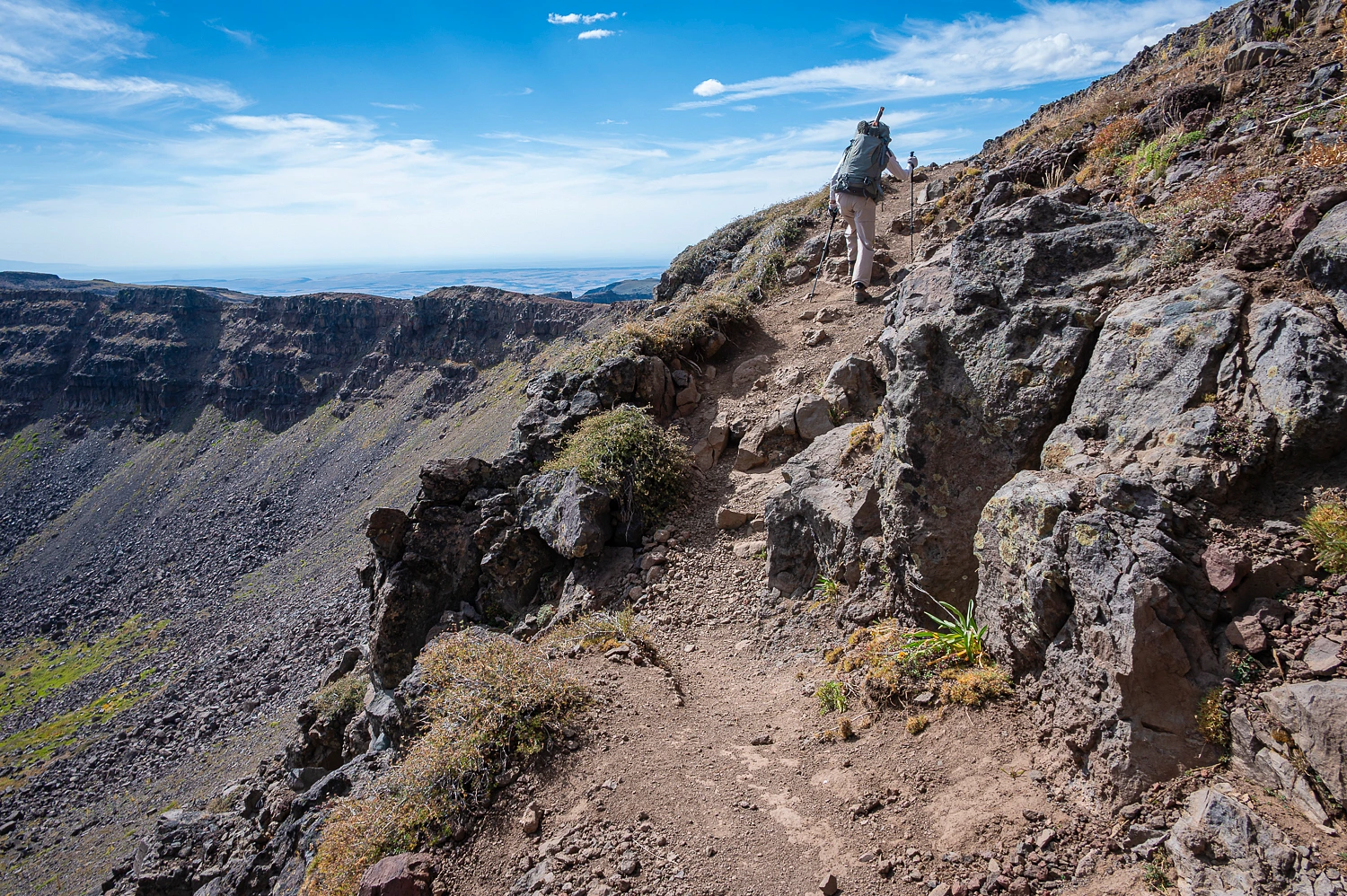
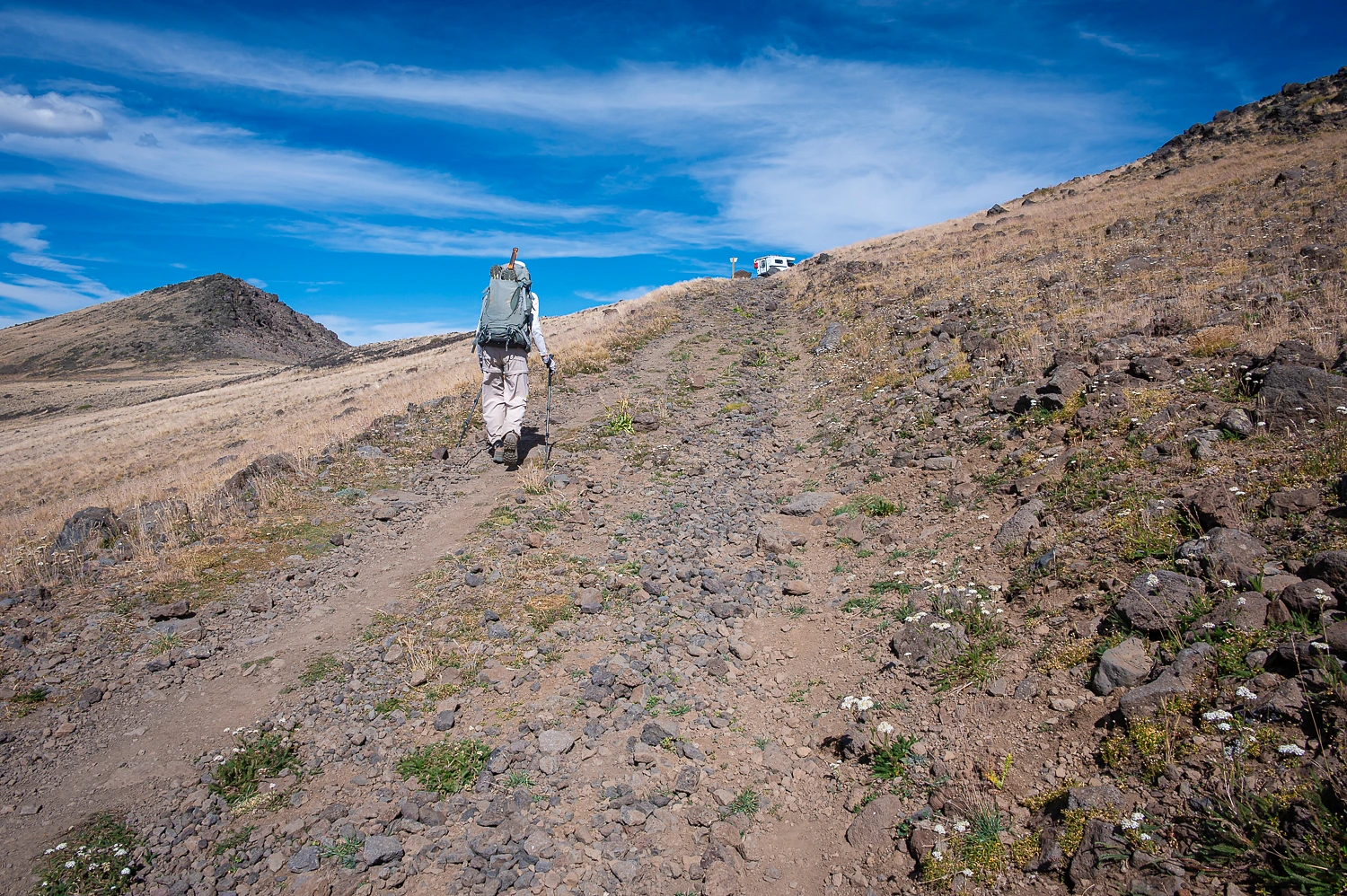
Forty minutes.
We drove down to South Steens Campground to spend the night. Only one other campsite was taken.
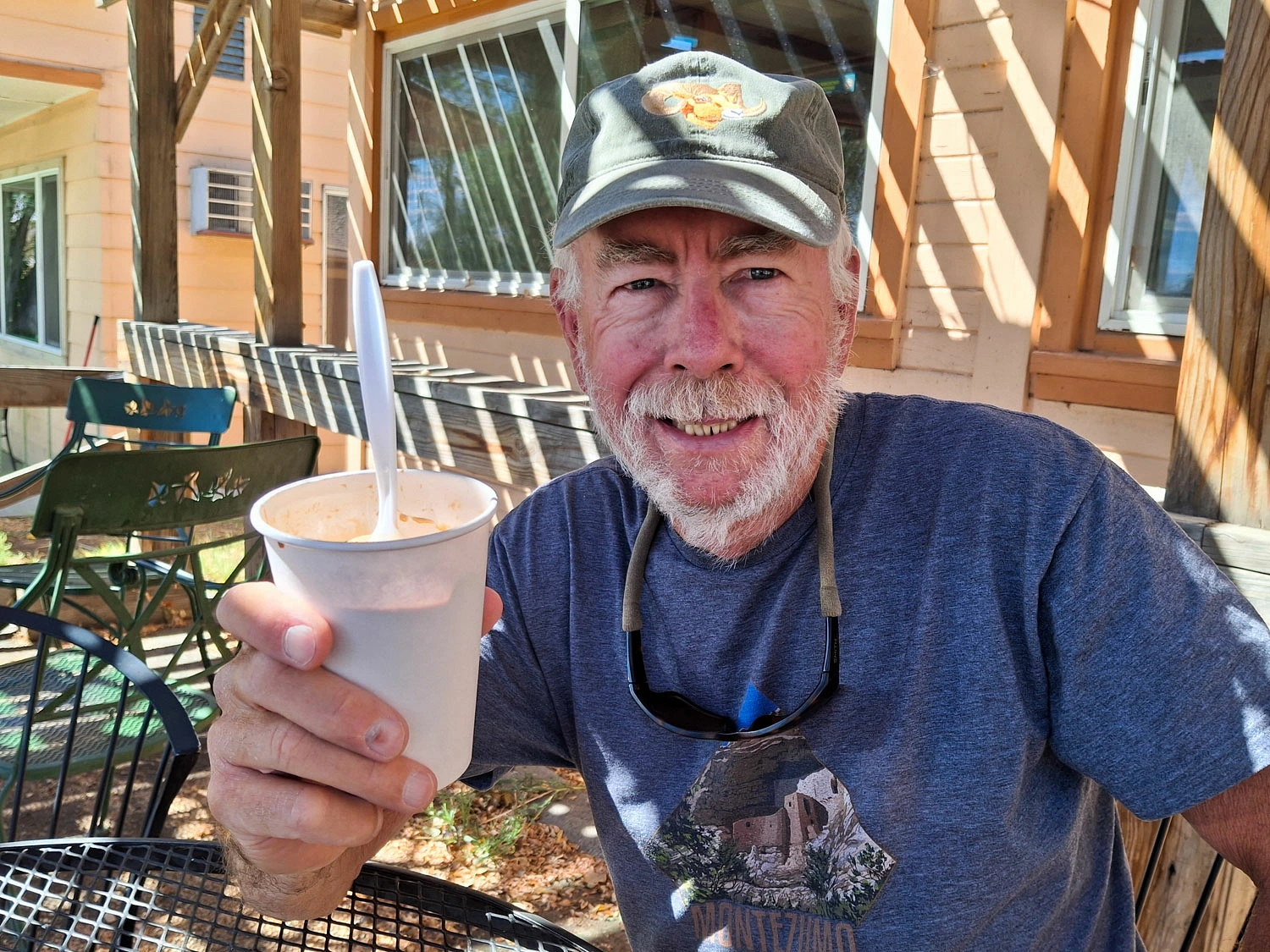
We wanted to be back at the house before the Labor Day Weekend and the crowds heading out on trips. Unfortunately, we needed to dodge the wildfires burning in western Nevada and planned a more roundabout route. We left Steens the next morning. 1030 hrs is not too early for a milkshake at Fields Station, is it?”
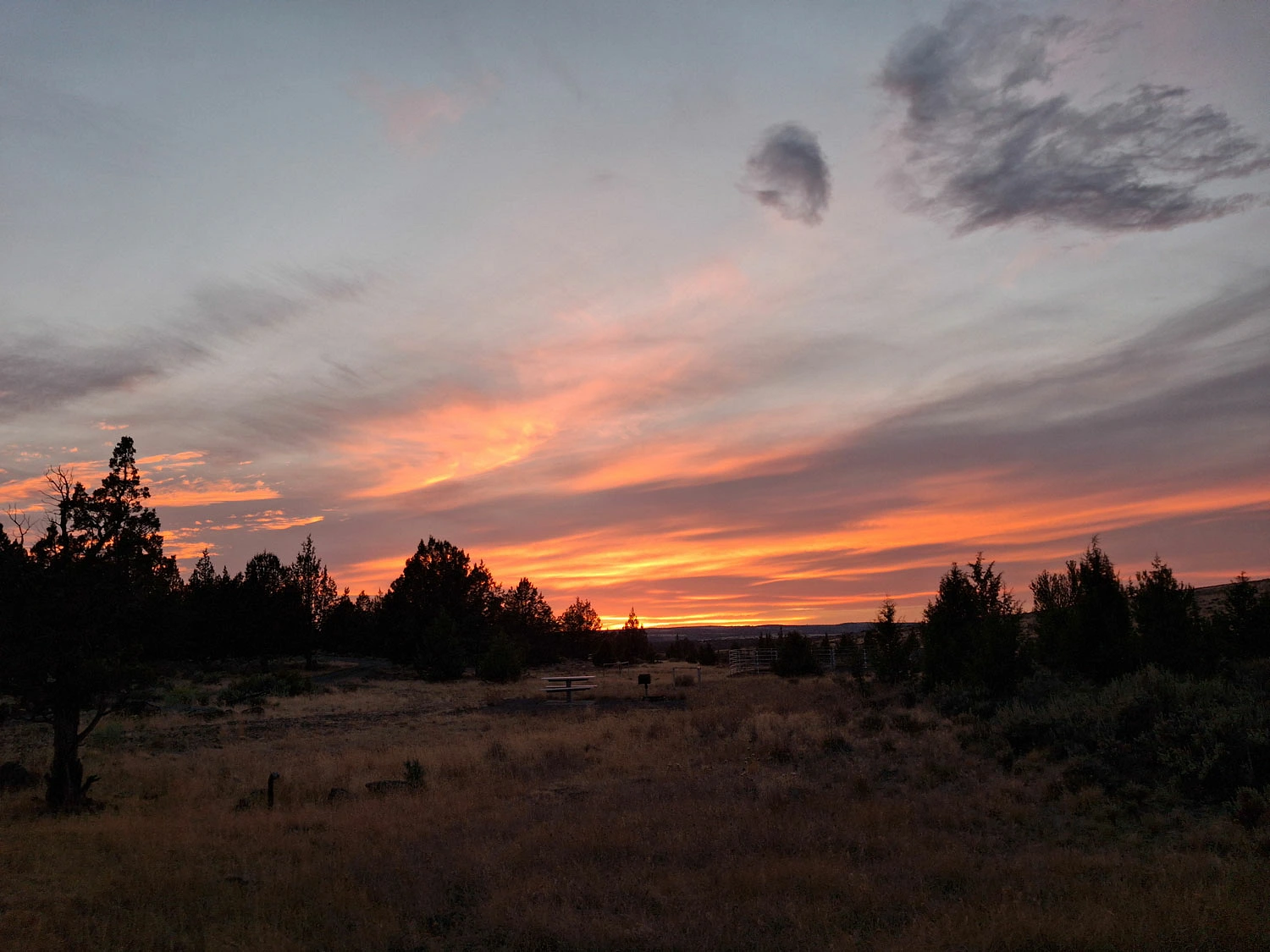
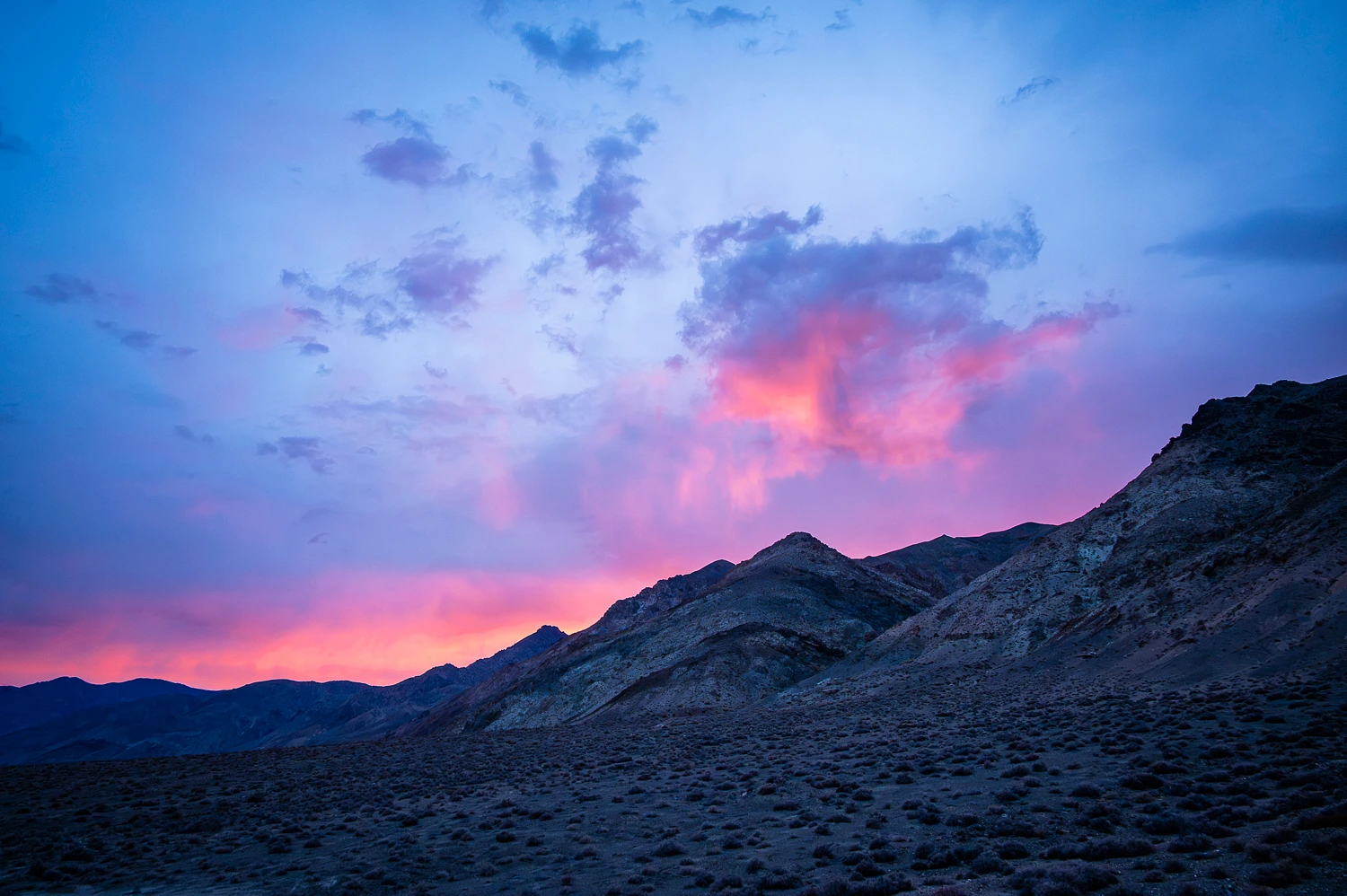
Thunderstorms and rain were the themes on our return. A break in the storm in Dixie Valley on our last night gave us a quick hit of evening color.
That’s it. The tale is told. It was a adventure and we remain on our mission - before it is gone.

Where do I start? I guess it’s with the Rodeo Rules, which in our book is referred to as the LLR or Long Line Release. One doesn’t have to wait no stinkin 8 seconds. Of the fish you brought to net, all were beautiful, but the big Lahontan was my favorite. Of all the cutthroat species, the Lahontan is the fish I am most partial to.
ReplyDeleteIt was a delight to have you join us for anniversary celebrations here at Fort Sagebrush. We enjoy your friendship ship… not to forget we ate rather well. The only less than stellar part was the lightning caused fires that threatened to roll over the top of the divide and down the east side. The last published report said containment was at 91%, with mop up of hotspots proceeding. Wildfires, in particular, nearby wildfires are a cause of severe rectal twitch.
For the record, 10:30 AM is not too early for a milkshake at Fields Station. There is no time that it’s too early for a Fields milkshake. I’m hoping they get blueberry or huckleberry back in stock.
I forgot to mention how weapons grade beautiful those alpine lakes were, I have neglected my duties for not immediately doing so.
Lastly, Happy Anniversary Monte and Julie!