
Please remember that you can click on a photo to see a larger version, and that highlighted text is linked to additional information.
No Secrets & the Fly Fishing Guide
We were on our way to Wyoming, but we had to travel through Nevada, Oregon, and Idaho. I had heard about the tailwater fishery on the Owyhee River below the Wild Horse Dam. The intel spoke of large native Redband Trout. We needed a place to stay for the night, so why not investigate?
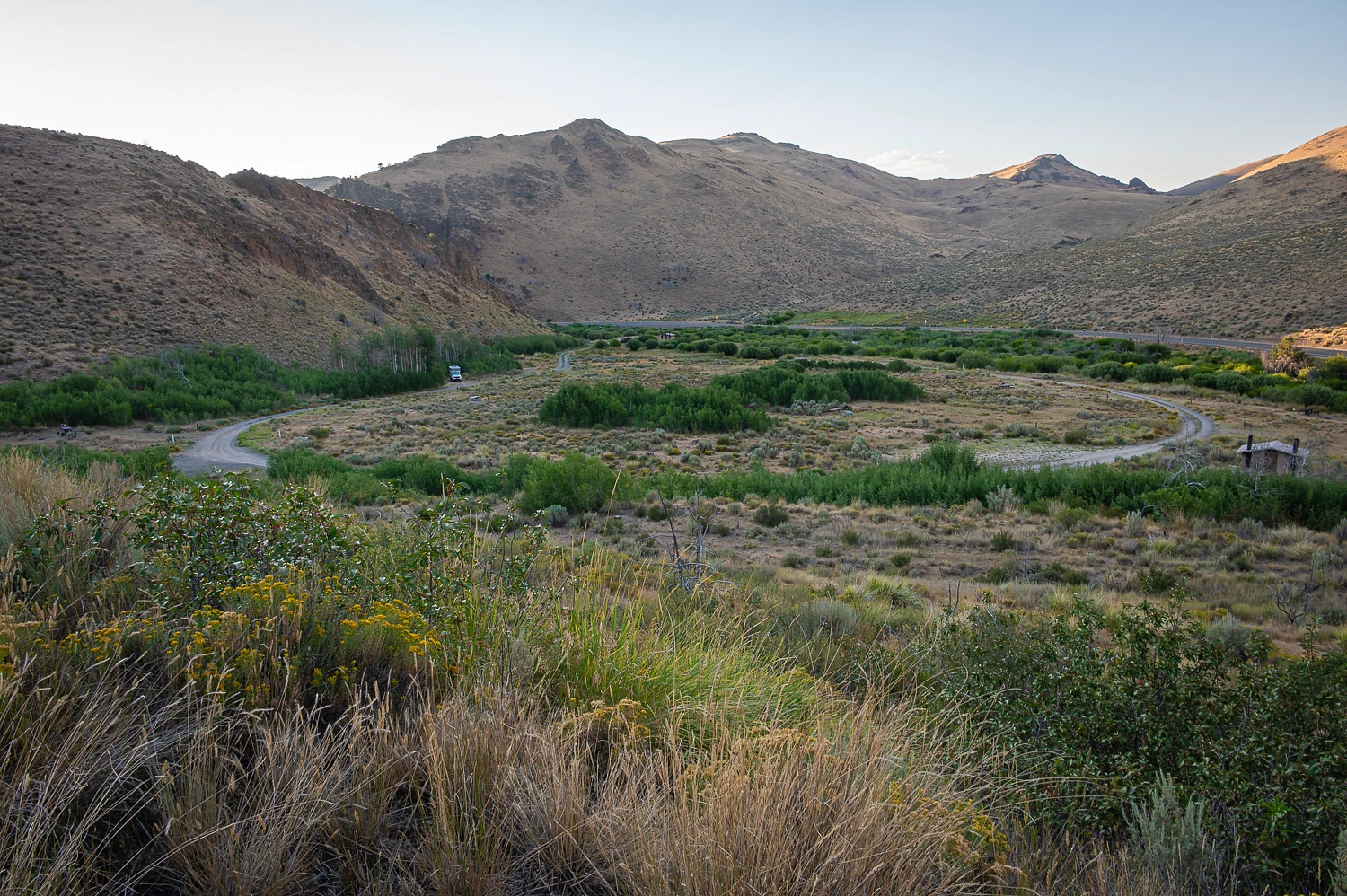
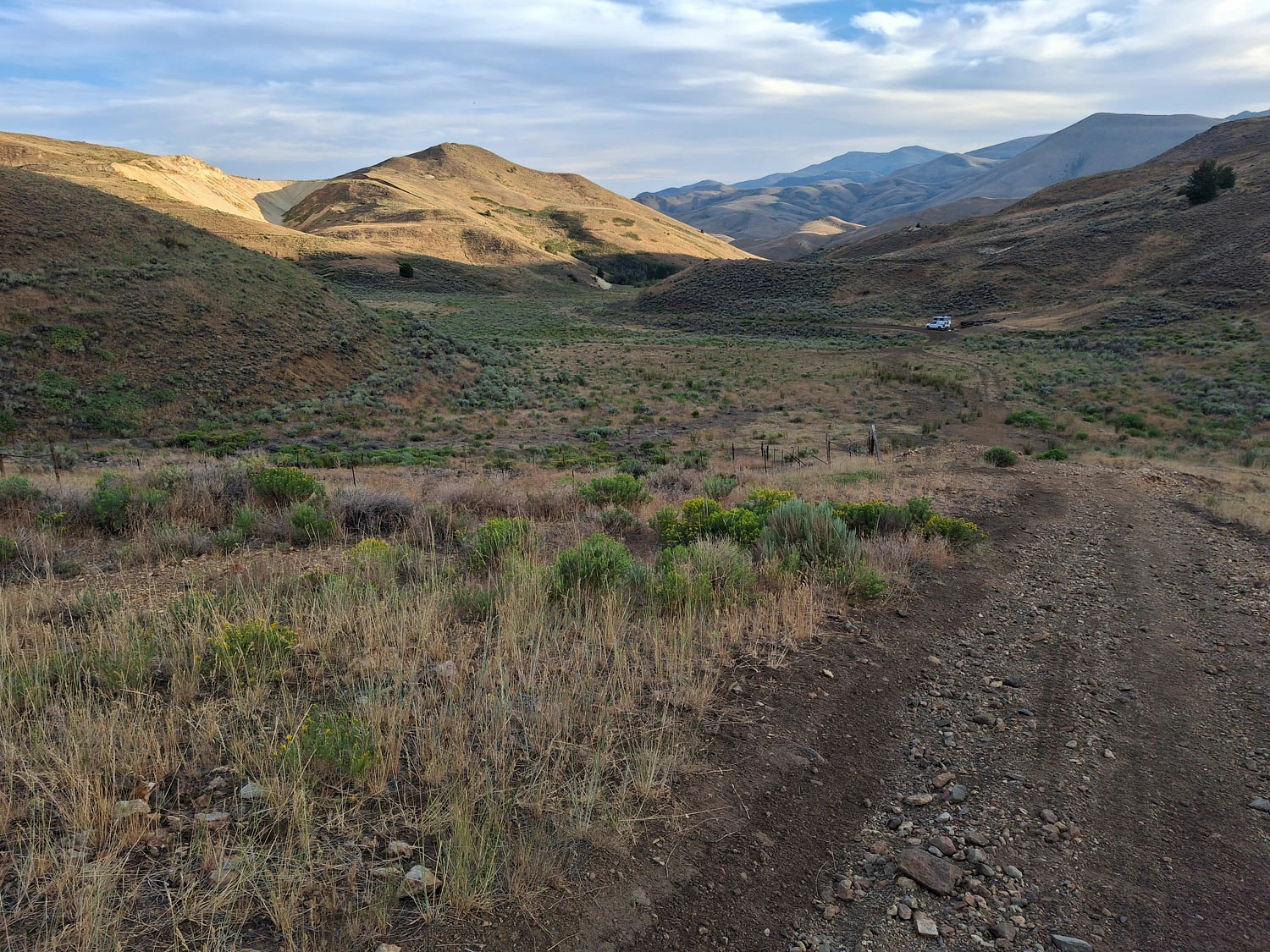
The campground was empty, probably from a combination of the season, midweek, and the hot temperatures. We did not mind being alone here, especially with the aspen providing shade at the campsite we selected. It cooled in the evening, we walked, and took in the play of light across the land.
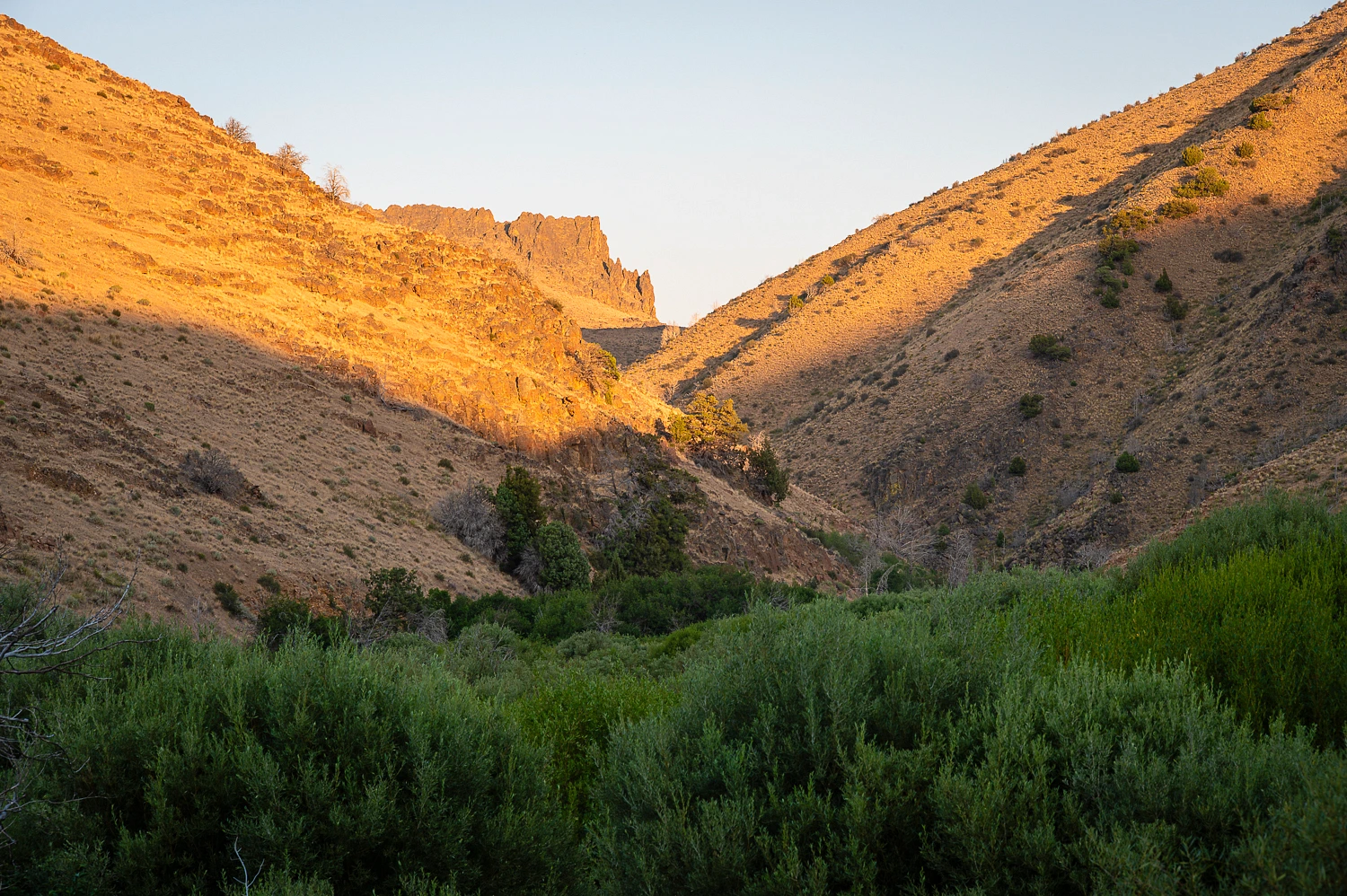
We fly fished in the morning until about noon.
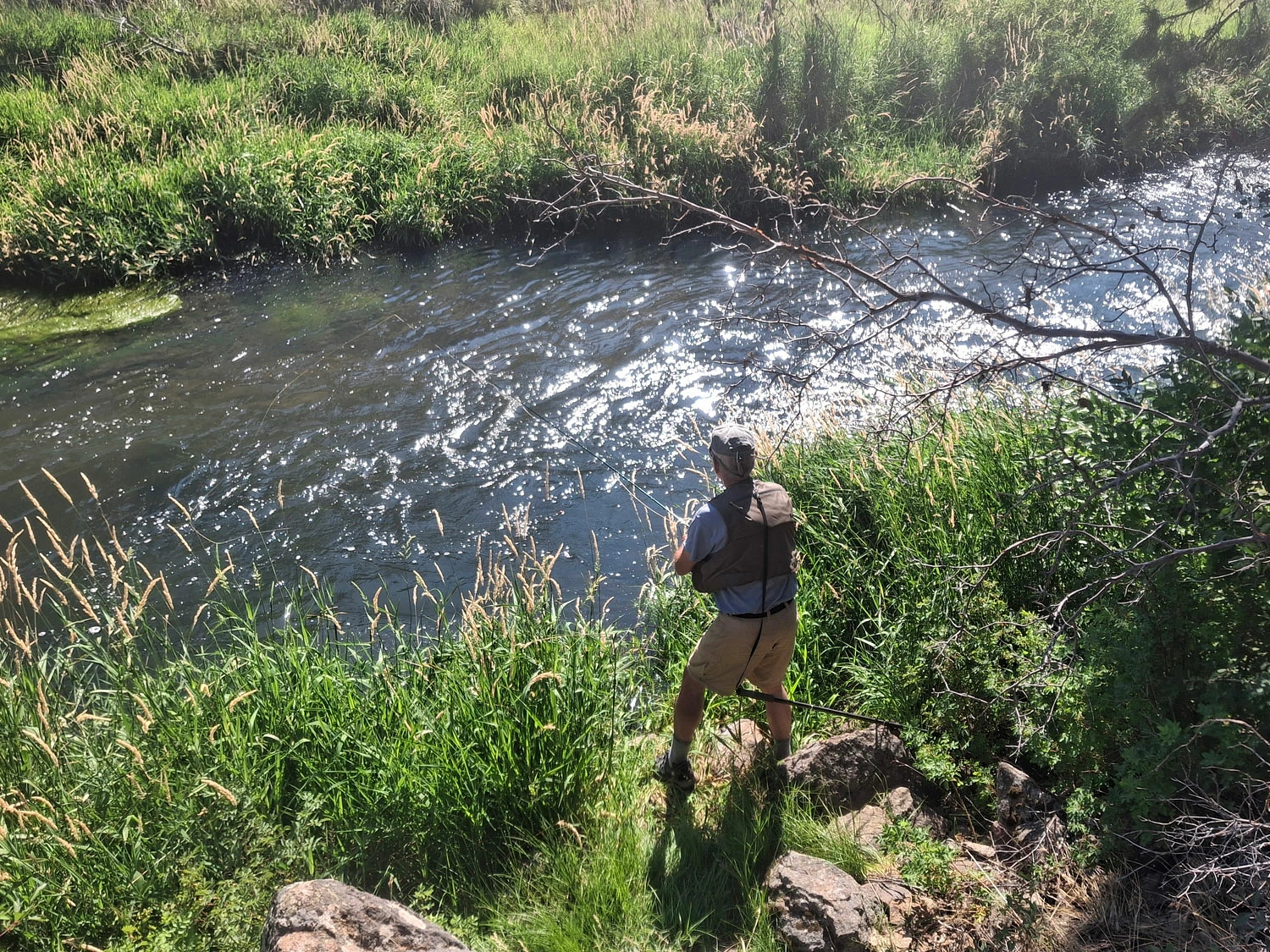
It was difficult conditions with thick vegetation hiding steep drops into the water and brush limiting casting. No success, but this was also a reconnaissance mission. We took another hour driving and discovering other access points. I believe it will be worthwhile to return.
Our next stop was Oregon because of the incident that occurred on the first night of this trip.
It sounded like a rifle shot as I stepped up to enter the camper. Our step of choice provides a comfortable entrance platform and is easy to store flat just inside the camper door. It cracked around the stem that slides into the receiver. This was the rifle shot. We cannot complain at all about it breaking. We’d been using it for 16 years and it would be near impossible to count how many times we’ve climbed in and out of the camper in all kinds of weather. Well, that damn StarStink proved to be handy again and in a few minutes a replacement was ordered and to be shipped to - with permission - Fort Sagebrush near Baker City.
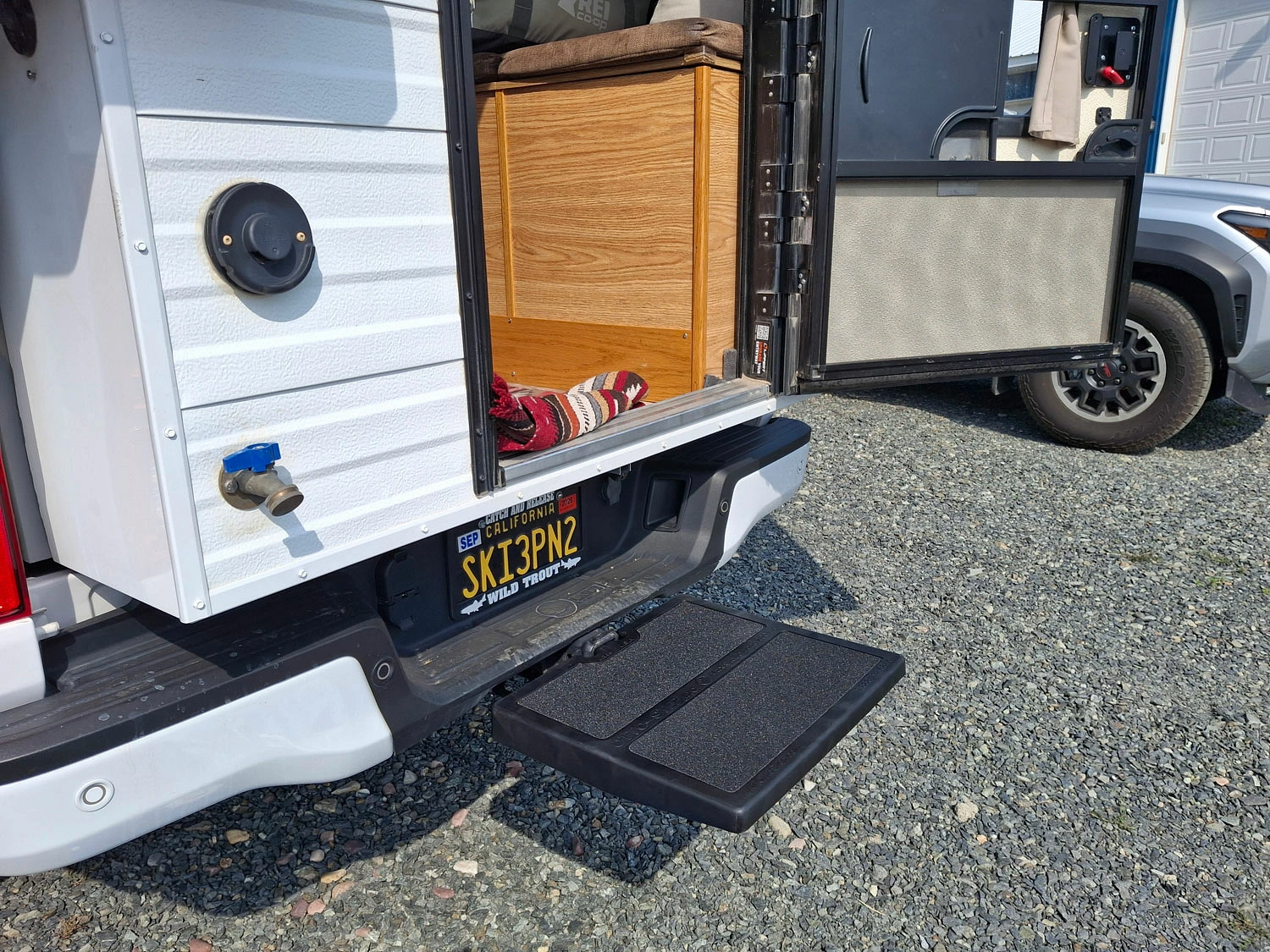
We’re confident we’ll get 16 years of service from our new step and it is refreshing to order and buy from a genuine quality small business.
In route to Wyoming we overnighted at a favorite dispersed spot northeast of Craters of the Moon National Monument.
“Can you suggest streamers for the Greys River? I want to work on my streamer techniques.” I asked Lizzy, the shop manager at Greys River Sports in Alpine, Wyoming. We walked over to the streamer fly section of the small shop.
“I like this one,” she picked up one and handed it to me. “It works and I think it’s pretty.”
“Pretty helps?” I asked with a smile.
“Pretty always helps,” she answered and continued. “The Greys fishing well. It’s busy up there but the fishing gets better the further up you go.”
“Do you carry any clothing?” the Lady asked.
“No, but what do do need?”
“A bra or a swimming suit top. I don’t like the old sports bra I brought along. I just want something to put on if I want to swim and there’s people around. I don’t want to scare them. Any other shop in Alpine I can try?”
“None I can think of.”
“I’ll just go naked then.”
“Naked works.” Lizzy agreed.
We settled up at the counter. The Lady watched Lizzy’s hands as she sorted through the merchandise.
“Do you wear all those rings when you fly fish?” the Lady asked. Rings were on most every finger.
“Yes, I do. I like rings.”
“Please be careful wearing rings,” the Lady cautioned the young woman and showed Lizzy her left hand. “I don’t like rings.”
“Oh, wow.” Lizzy’s eyes were wide.
“I don’t wear one either.” I added.
The Greys River was not on our list of water we planned to fish, but we were here and it’s a beautiful river. A tributary to the Snake River, it is said to still have the native Cutthroat Trout subspecies, the Snake River Fine-spotted Cutthroat.
My god, this area is busy. The graded dirt Greys River Road is a tunnel of fine gray dust from continuous travel. This being a Sunday worked as we found a nice, private dispersed campsite about 13 miles up river. It was far enough from the road to lower the traffic noise, except for the loud atvs racing back and forth. We picked the campsite because it was close to a nice section of river.
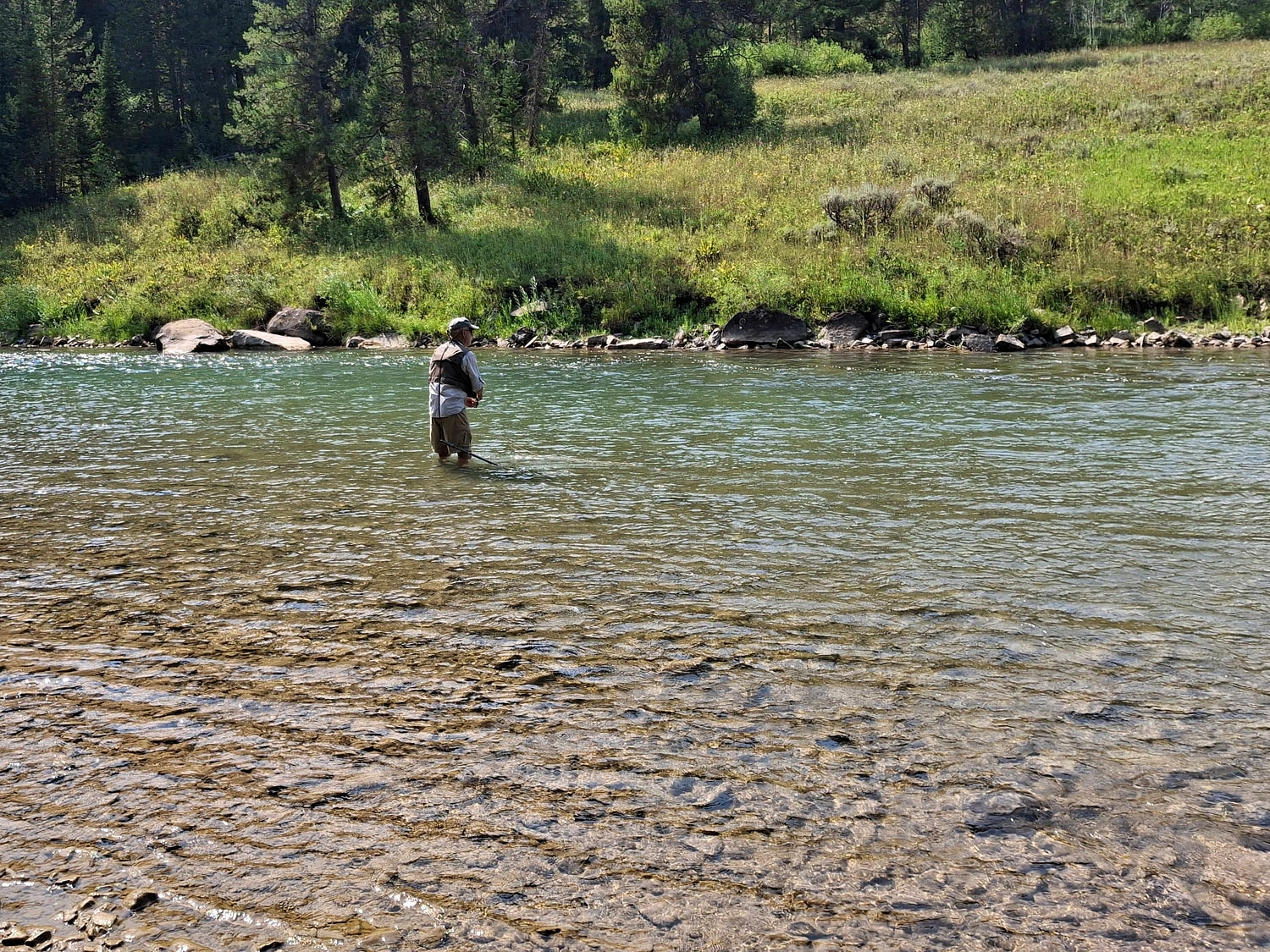
We were both surprised we did not see any insect or fish activity. I drifted dries and nymphs through this run without success. I then tied on the “pretty” streamer and it got no interest. We moved to the next run downstream.
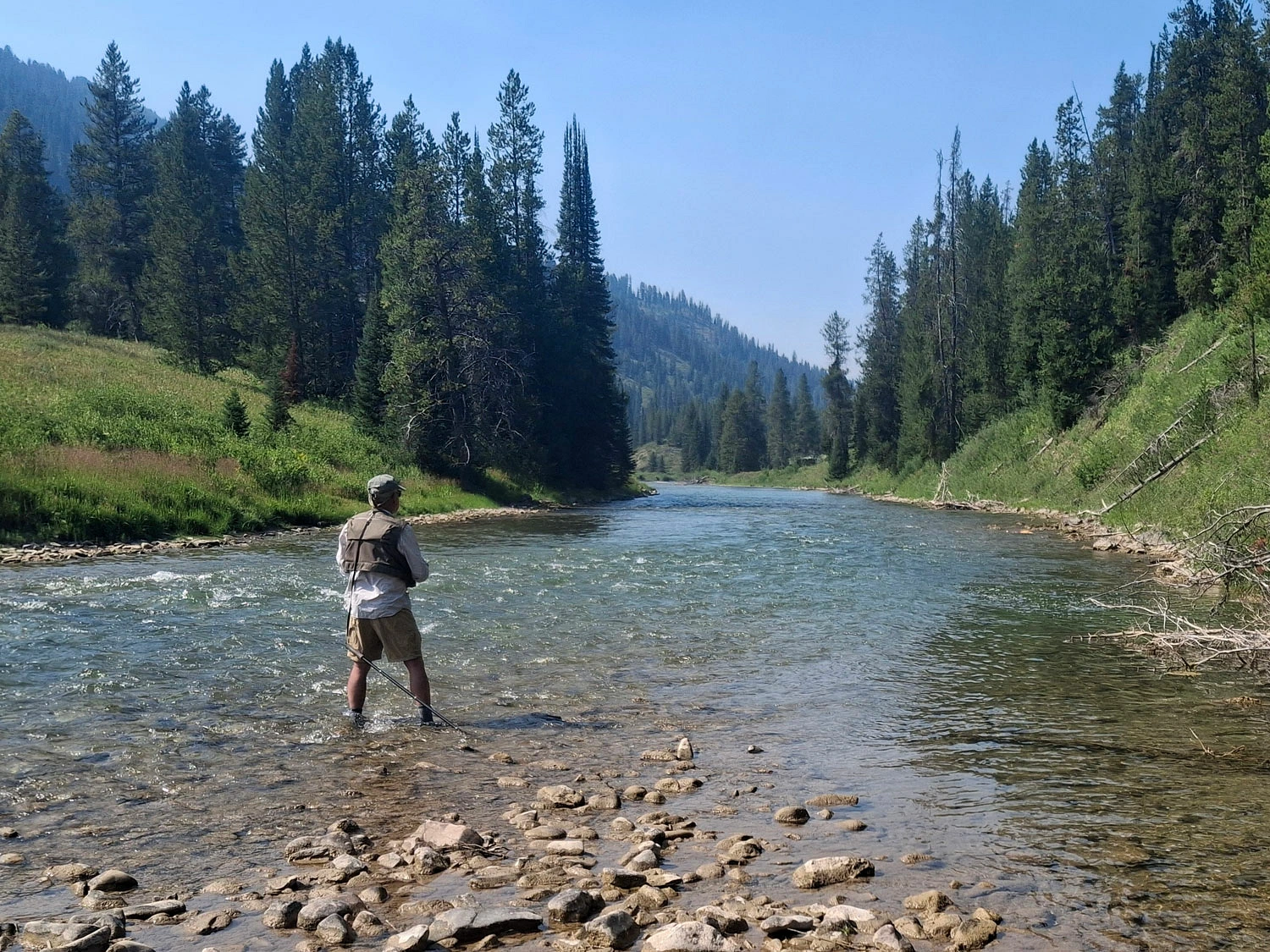
After no success with the “pretty” streamer, I tied on my choice, a big ugly streamer pattern. I cast downstream and then allowed the current to carry it further. I had three quarters of my fly line out before I began slowly working the streamer back upstream with short pulls and then a rest. The take was vicious. The surface boiled with bright flashes of gold and yellow.
“This fish is really big!” I called to the Lady. “Be ready with the net but this will take some time.”
The trout moved into the heavy current and lay still, daring me to try to move it. I waited for the fish to make a move while I held the pulsating fly rod. Suddenly it ran and took the line into the backing. And then the hook came loose. The line snapped all the way back and wrapped around the Lady, holding her net, so anxious to land this monster.
“Damn!” was all I could say. What a fish.
We fly fished these holes and more the next day without any action. Every couple of hours the Lady insisted we try for the big fish again. “It’ll take the streamer again,” she said. “You have to try!” She wanted this trout. We fished into the evening watching for insects and rise forms. No luck. There are beautiful runs on this river.
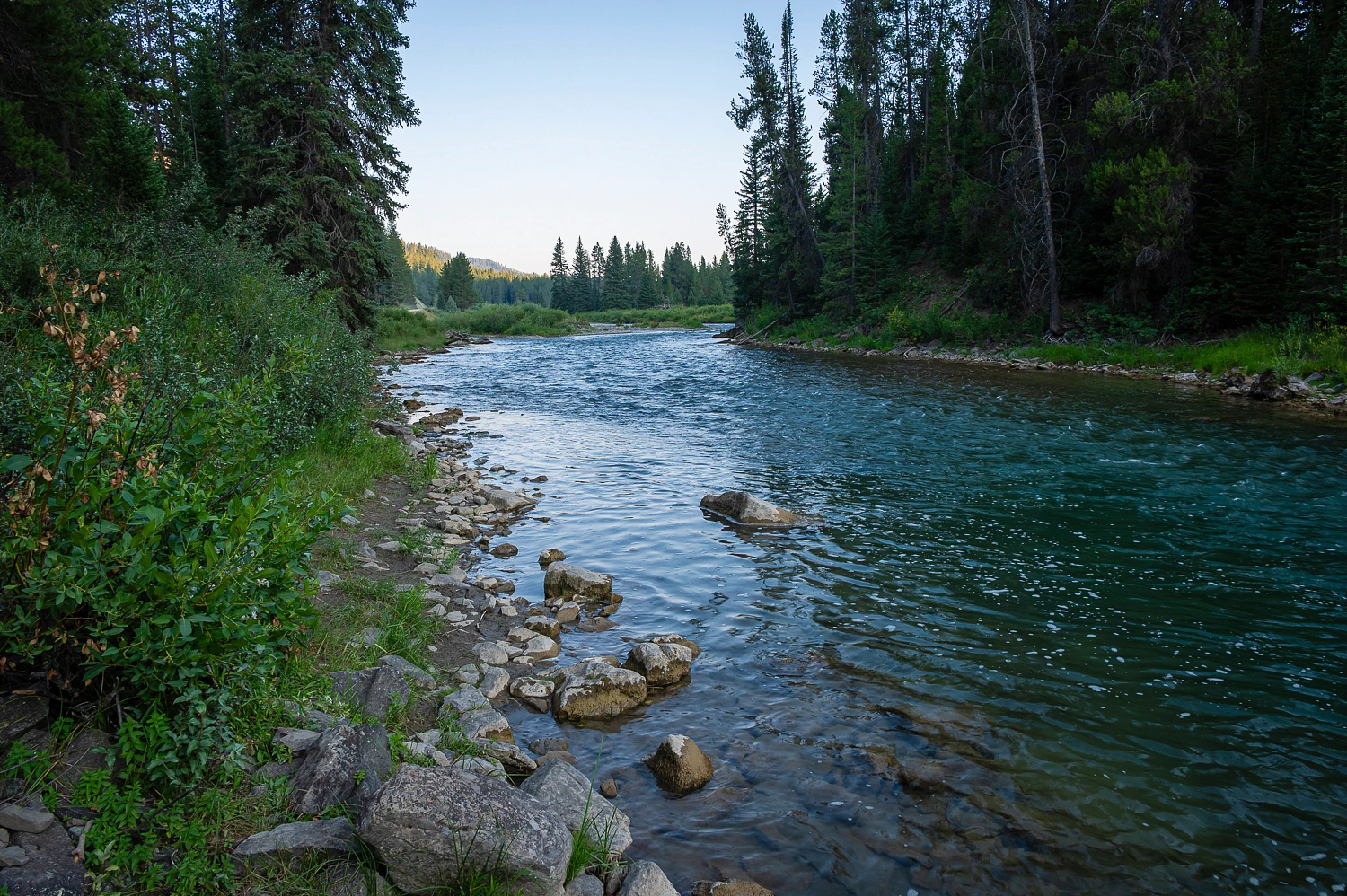
Very tired of the continuous road noise, traffic, and dust - and large camping trailers and fifth wheels were filling the sites near us - we decided to test Lizzy’s advice that the fishing got better upriver. We packed up camp and found a secluded spot more than 40 miles up.
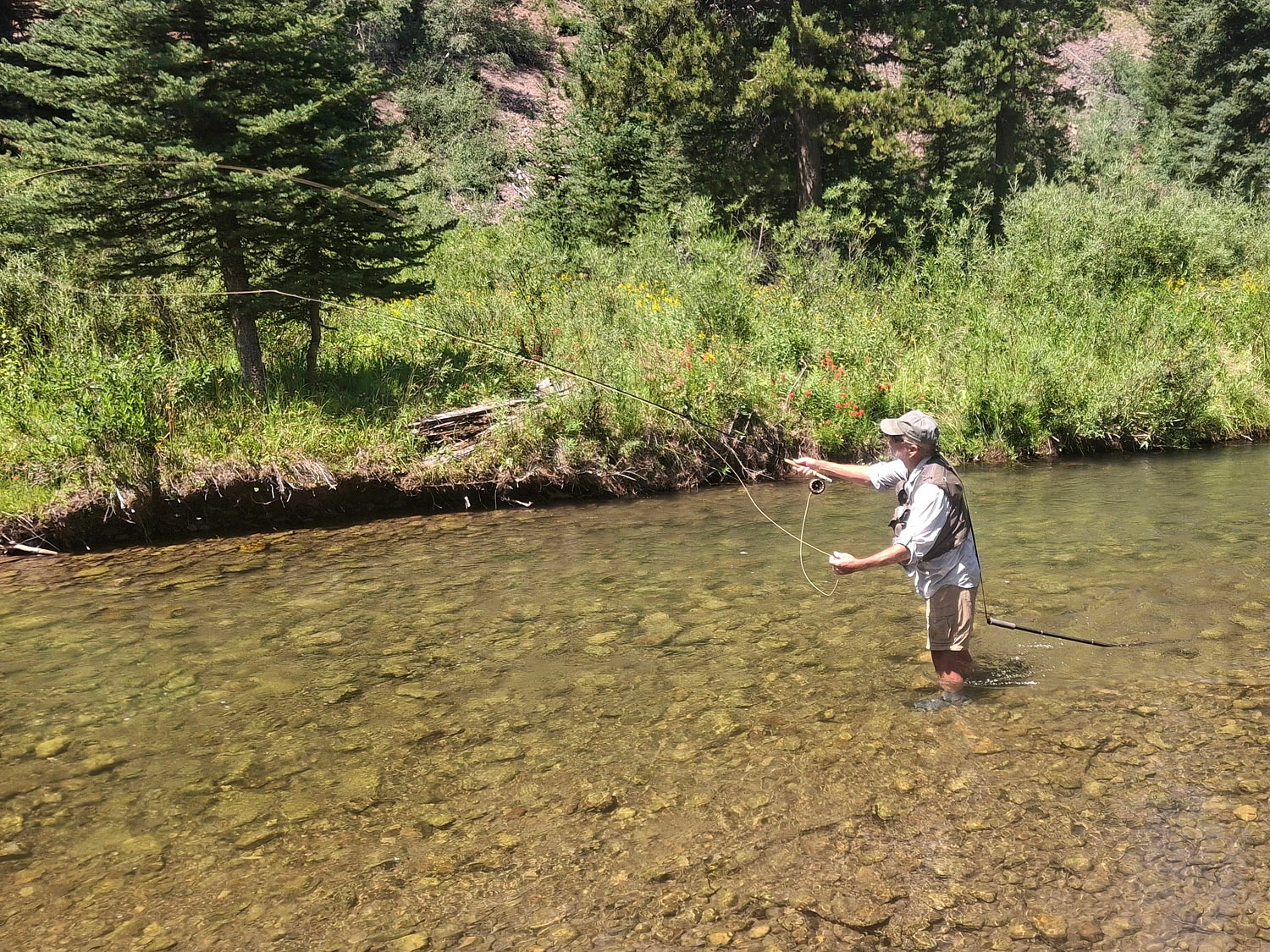
The river was much smaller but we fished all the possible lies. We ran into a group of three men - very well to do based on their ultra luxury SUV - fly fishing. The Lady talked with the fellow wearing a cowboy hat as I switched to terrestrials and worked the shaded run below.
“Dinks, all I’ve caught is a couple a dinks,” he reported.
I caught one or two small fine-spotted cutthroats up here. Dinks. We neglected to take photos as we thought we'd pick up a larger trout to photograph. Overall fishing action was slow.
“The girl in the fly shop said the river was fishing good,” one fly caster told us.
“She told us the same,” the Lady confirmed.
He also told the story that, "20 years ago Field & Stream did a story on the Greys River and it just ruined this place."
It was much quieter up here traffic wise. The road had narrowed enough to inhibit larger rigs. It was beautiful country. We enjoyed the quiet evening and took a long walk up a side road into an upper basin.
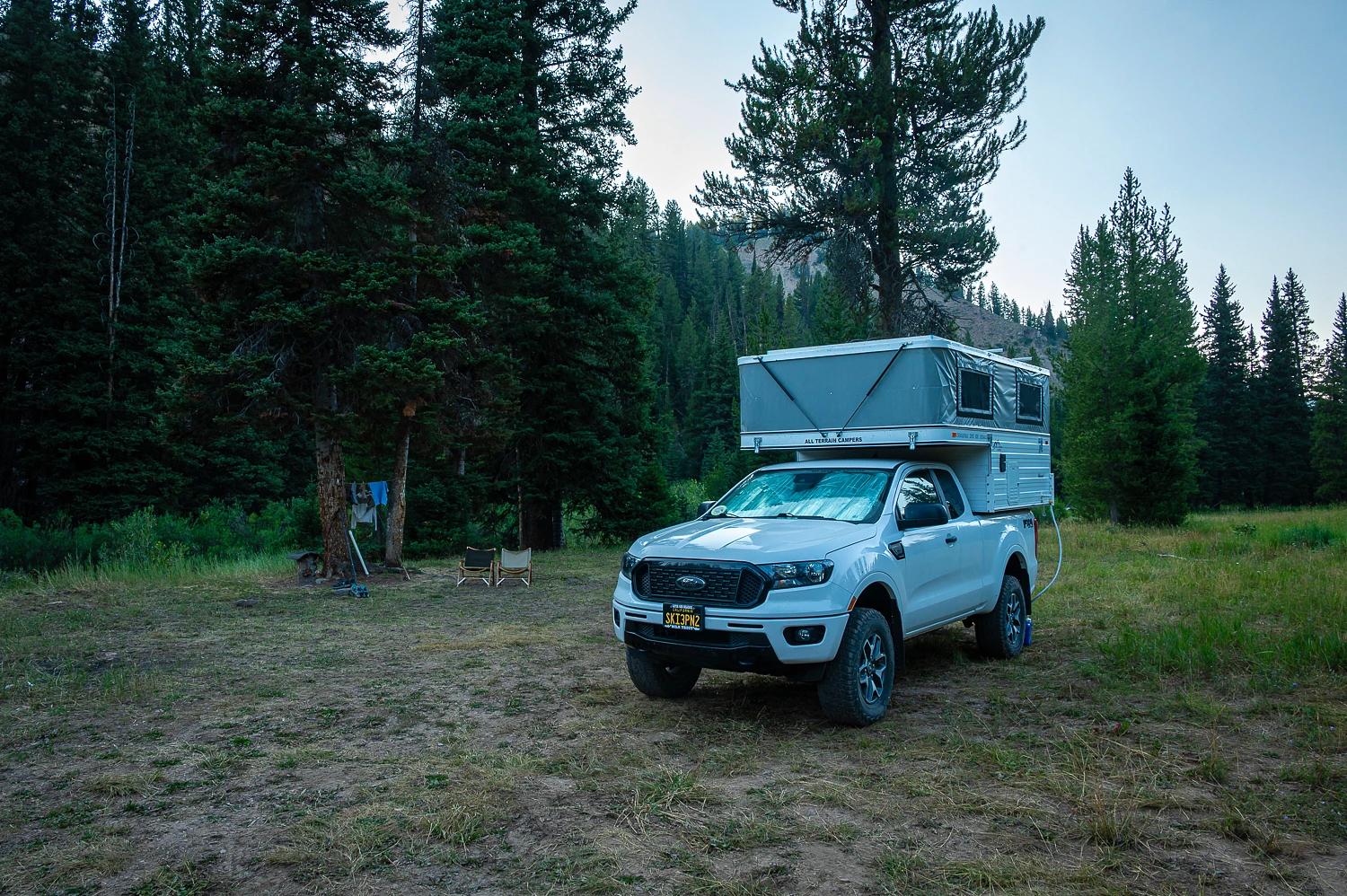
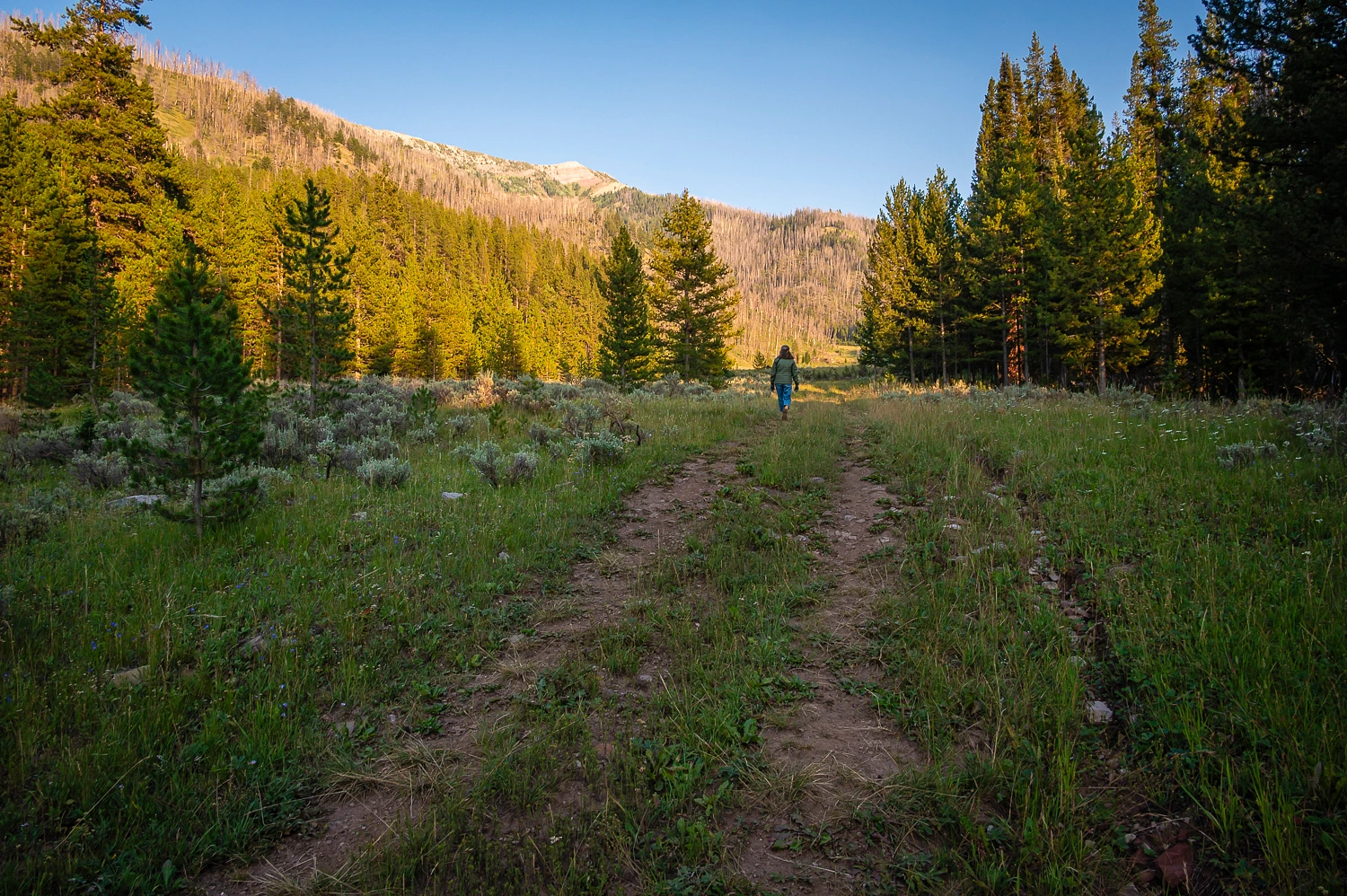
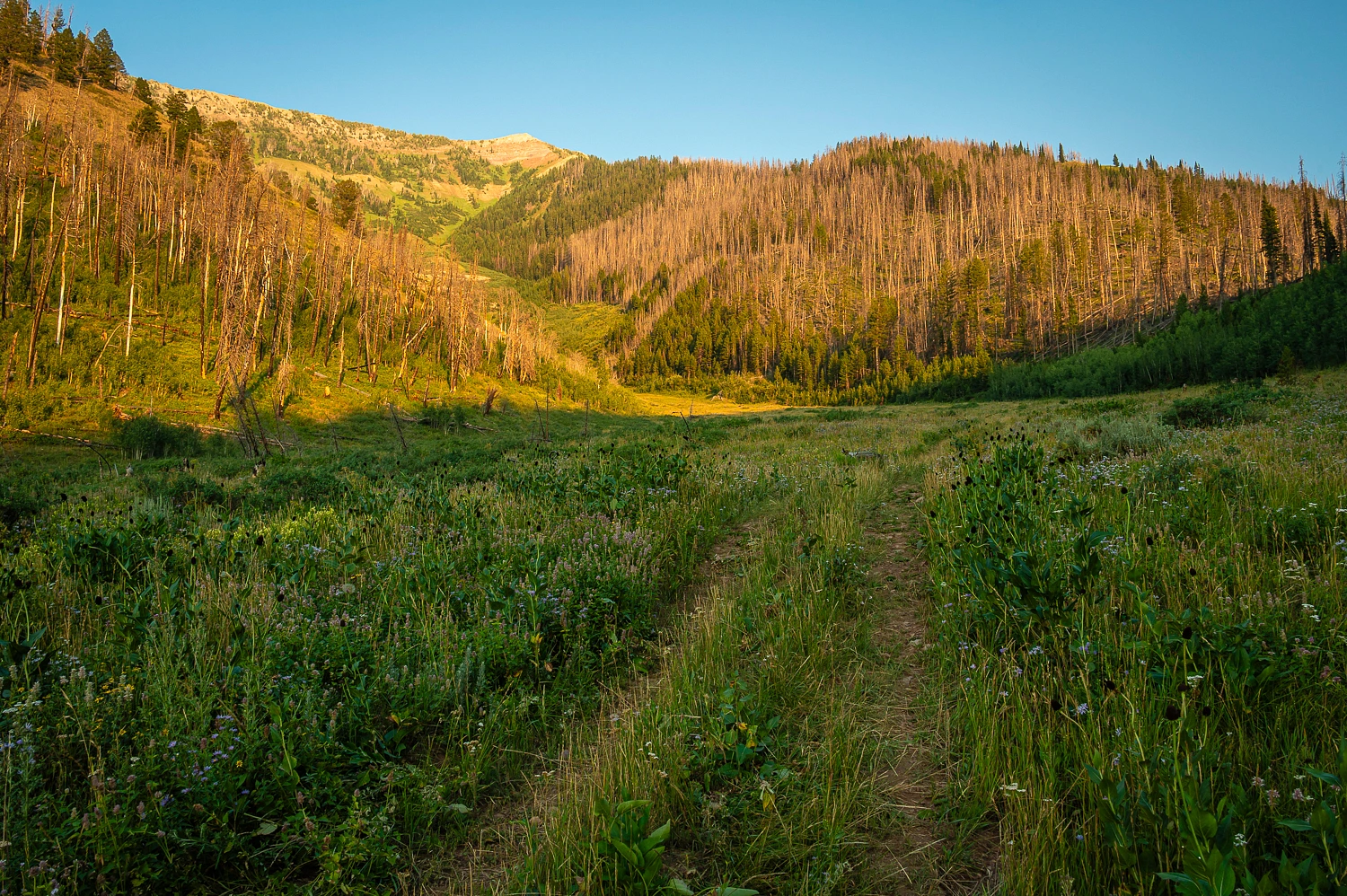
Although it had been generally clear, smoke moved in from the north.
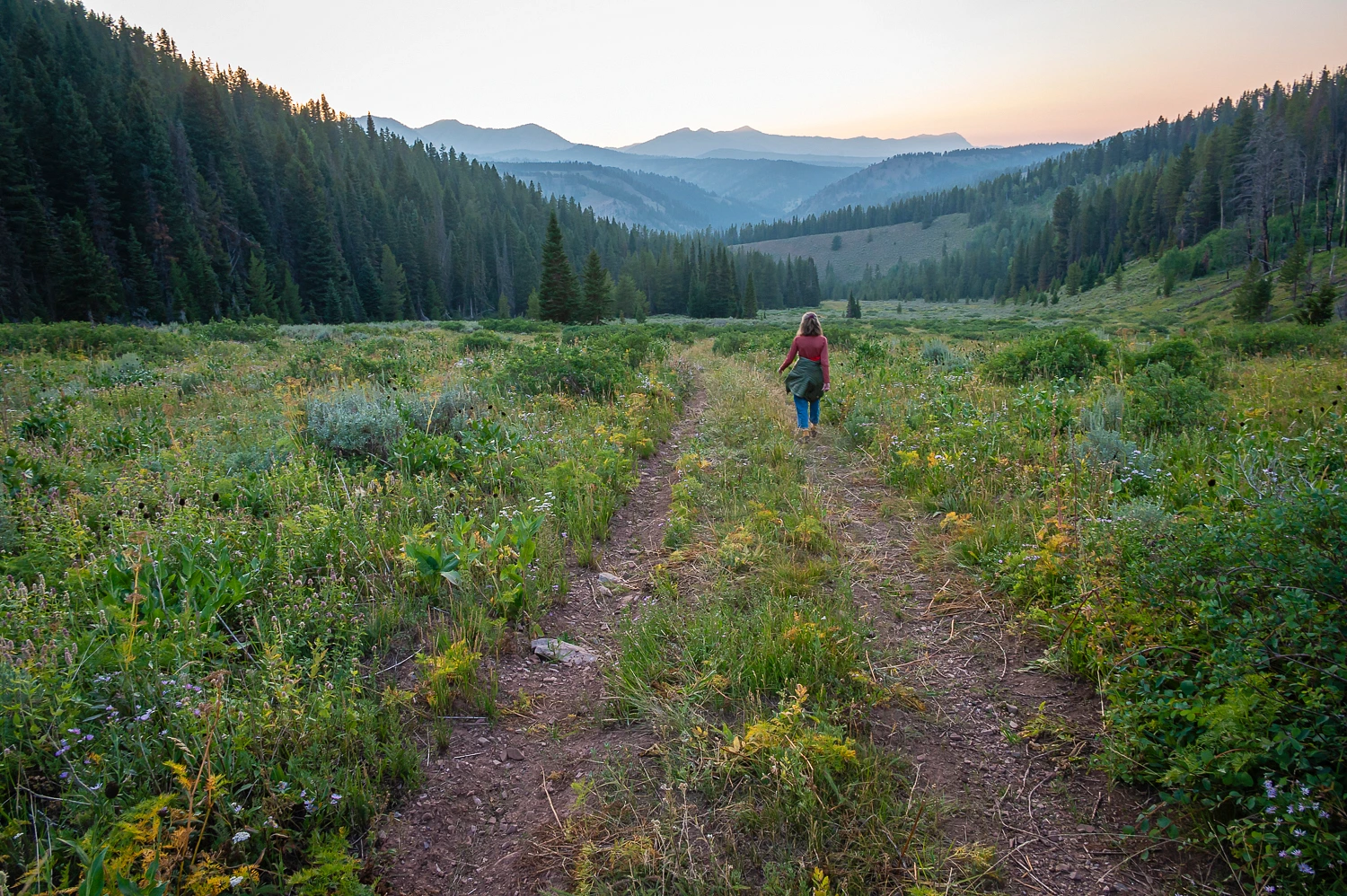
“Let’s get going on the rivers we came to Wyoming to fish.” we both agreed the next morning. We continued our drive up the Greys River. We had to stop for the moose. The Lady loves moose.
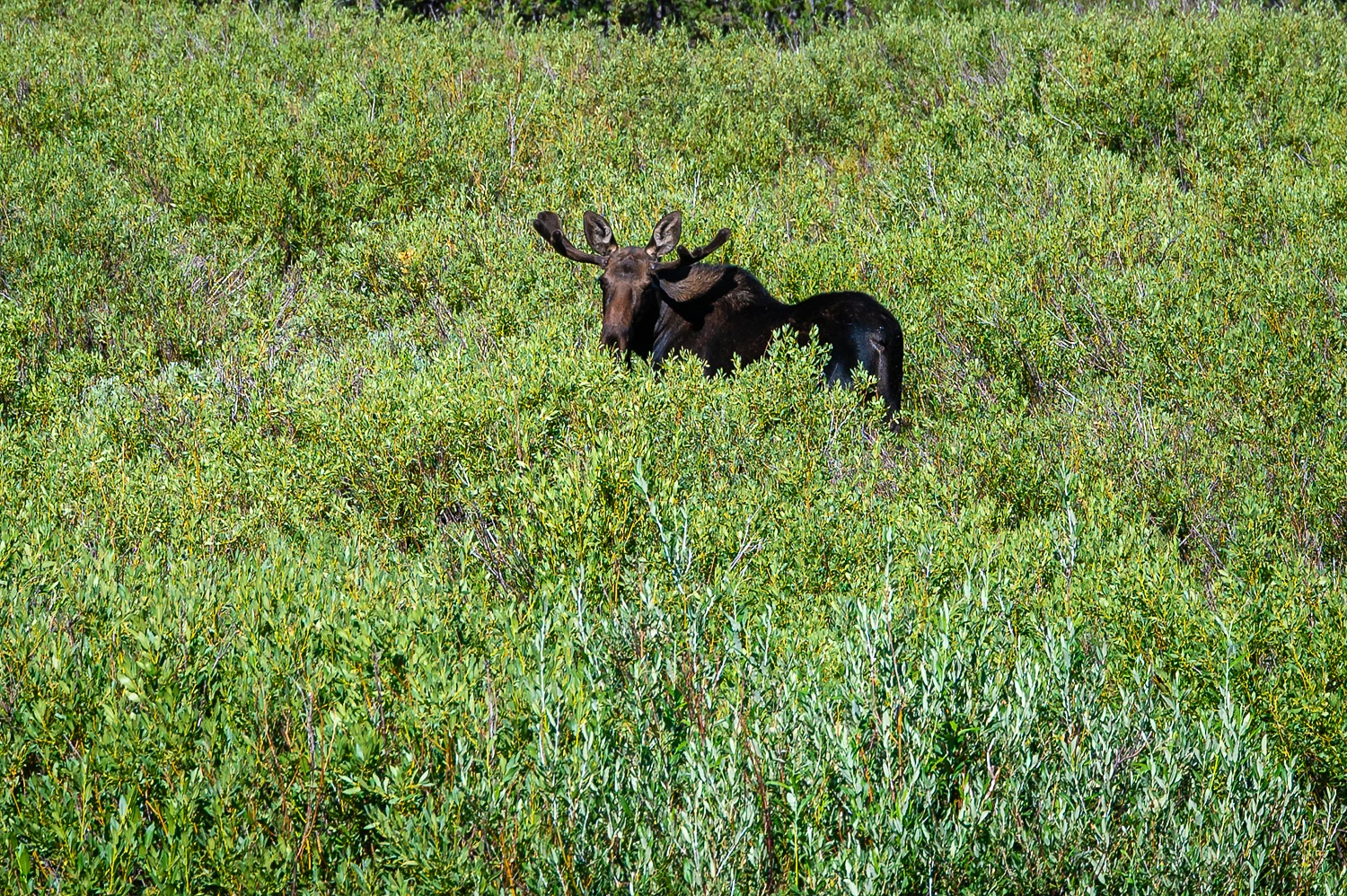
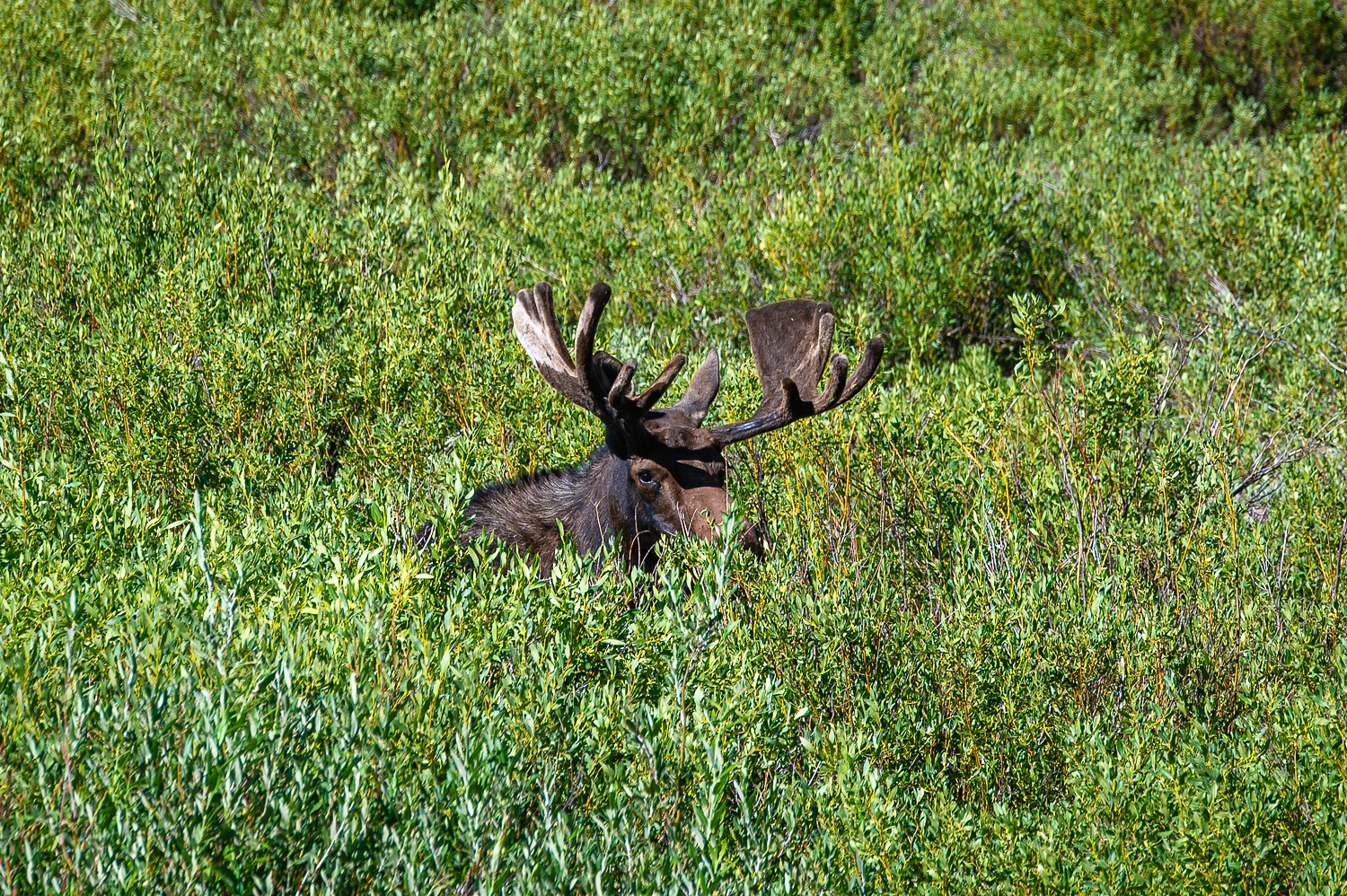
The road continues along the entire 61 miles length of Greys River.
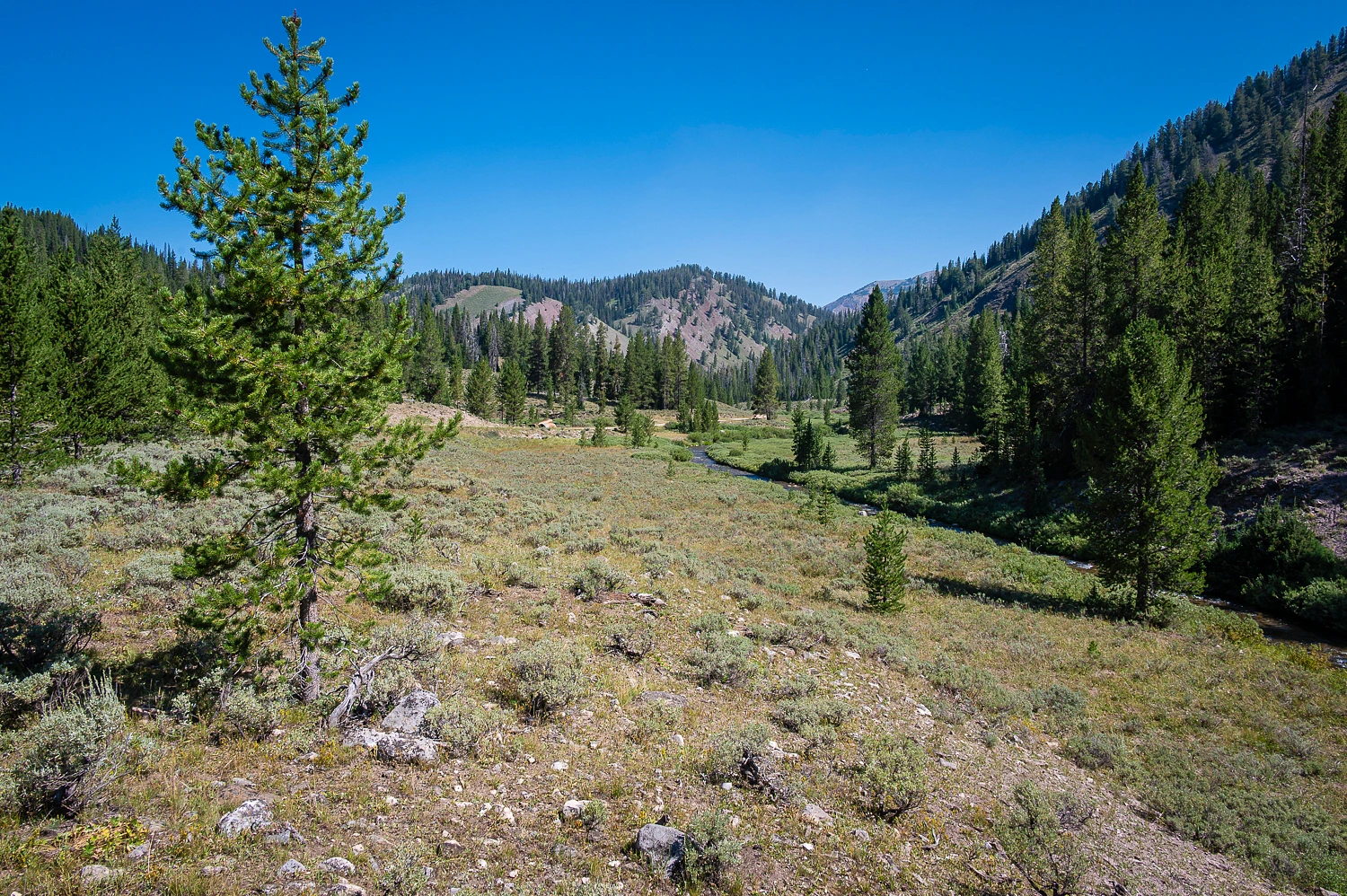
There a fun sign at the divide where the Greys River is a mere trickle.
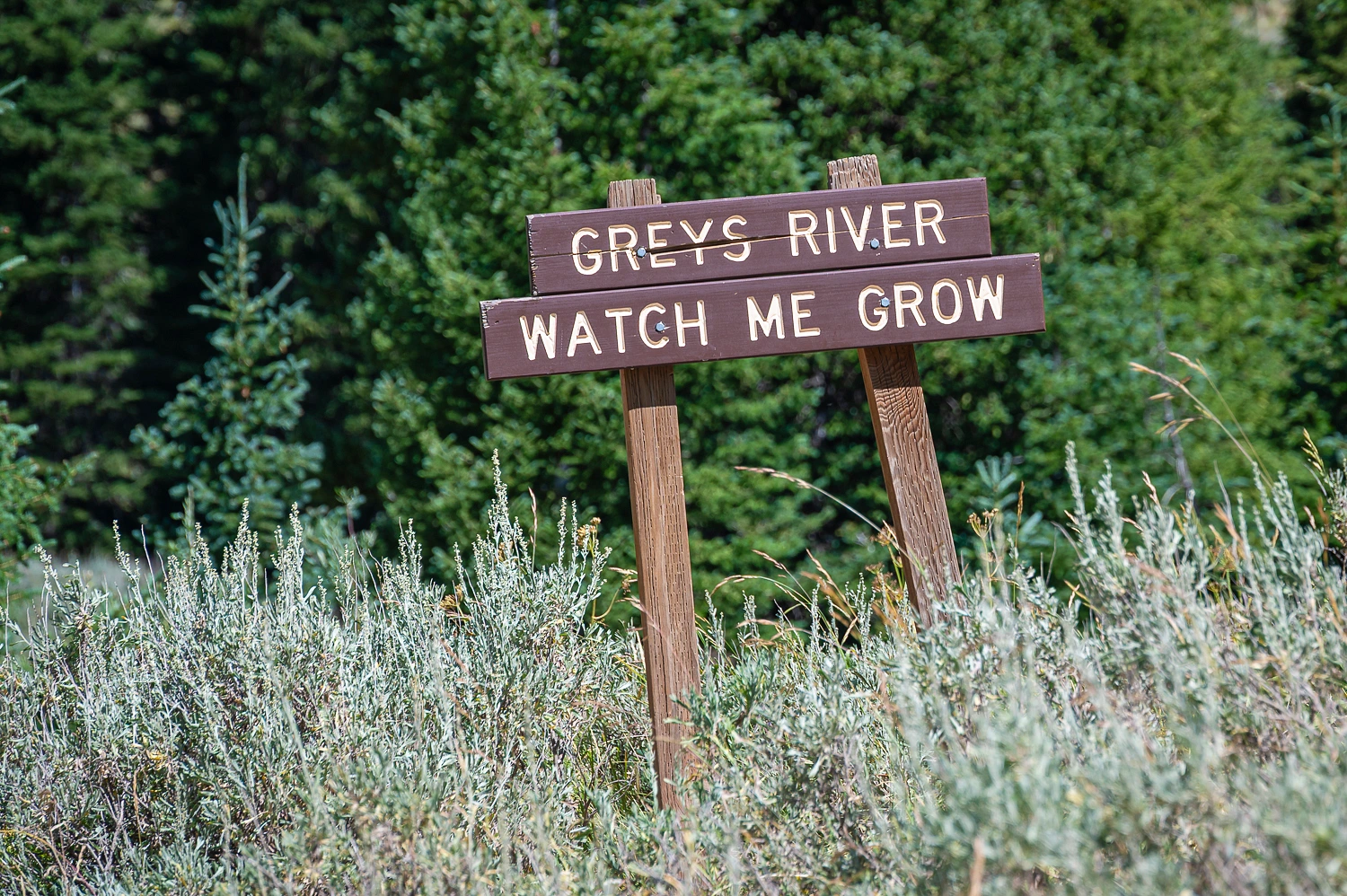
At the top is Tri Basin Divide, an amazing geographic place.
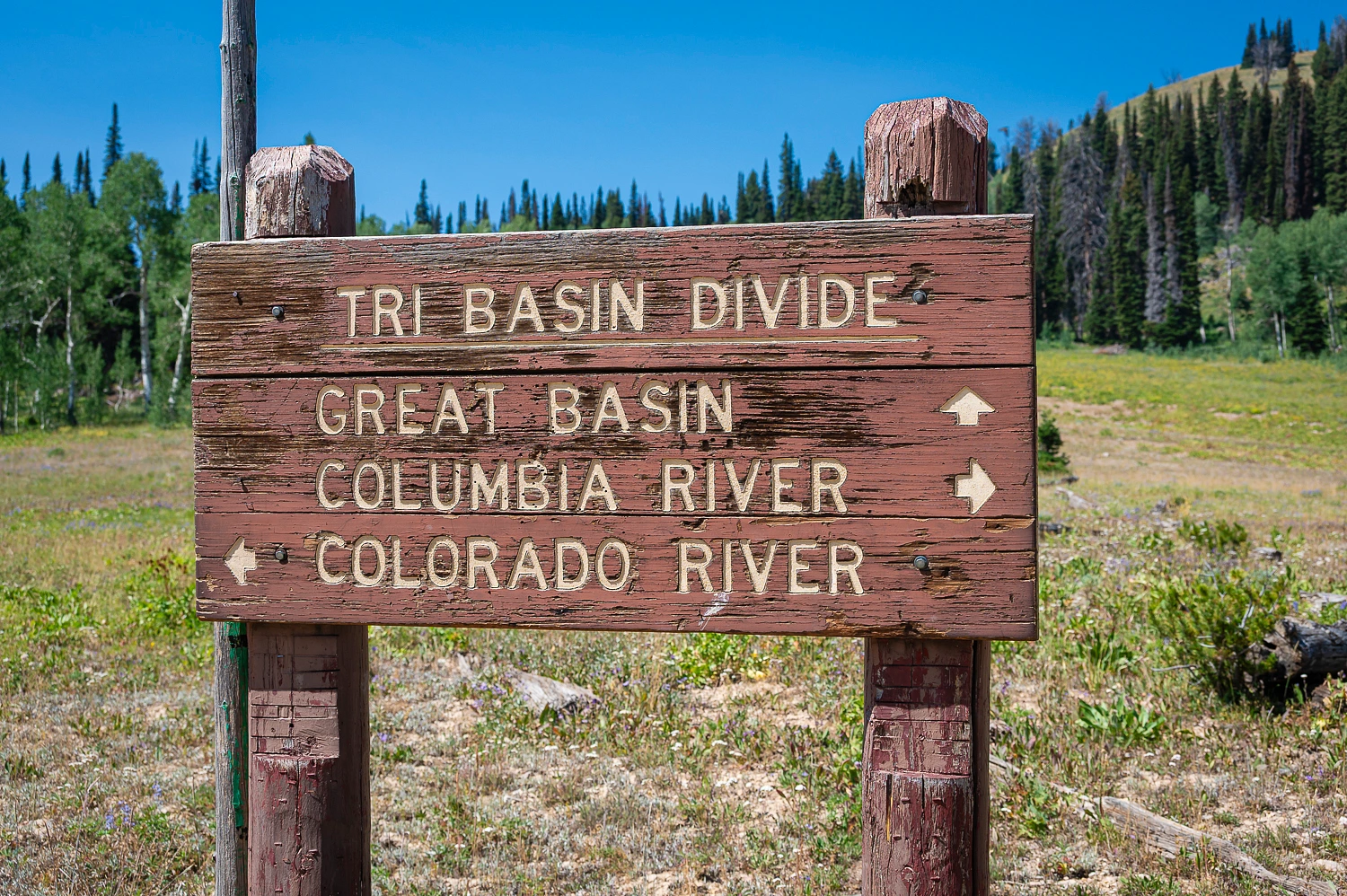
Greys River connects to the Snake River and flows into the Columbia. La Barge Creeks flows into the Green River and on to the Colorado. Smith Fork flows into the Bear River and on into the Great Salt Lake - the Great Basin.
Now's the time for a discussion on cutthroat trout, the native trout of the west. It is a fascinating story that continues to evolve. And it can get incredibly complicated as the science and research improves. Although I can be obsessed with the details of the evolution of the cutthroat trout, I’ll try, I really will, to keep this simple - and please remember I’m a stumbling amateur prone to mistakes and you ought not believe what you read on the internet. Here goes -
First the earth cooled and the dinosaurs came. Then Captain William Clark of the Corps of Discovery made the first scientific description of the cutthroat trout. It was originally thought all the cutthroat throughout the West were the same. But changing geography and geology had a way of isolating populations and with time these populations evolved into different species and subspecies. These different species of cutthroat are directly connected to the geographic watersheds they inhabit. Now, I hope, you see why the Tri Basin Divide is so special.
Greys River (and other headwater tributaries to the Snake River) is home to the Snake River Fine-spotted Cutthroat.
Smith Fork (and it’s tributaries) is home to the Bonneville Cutthroat.
La Barge Creek is home to the Colorado River Cutthroat.
All cutthroat trout have a shared issue. They are in danger and now inhabit only a small faction of their historic ranges. Two contributing factors are habitat loss and stocking of non-native trout.
And as with our public lands, the Lady and I want to experience these native trout in their home waters before they are gone.
We dropped into the La Barge Creek drainage. As is our natures, we got distracted by history.
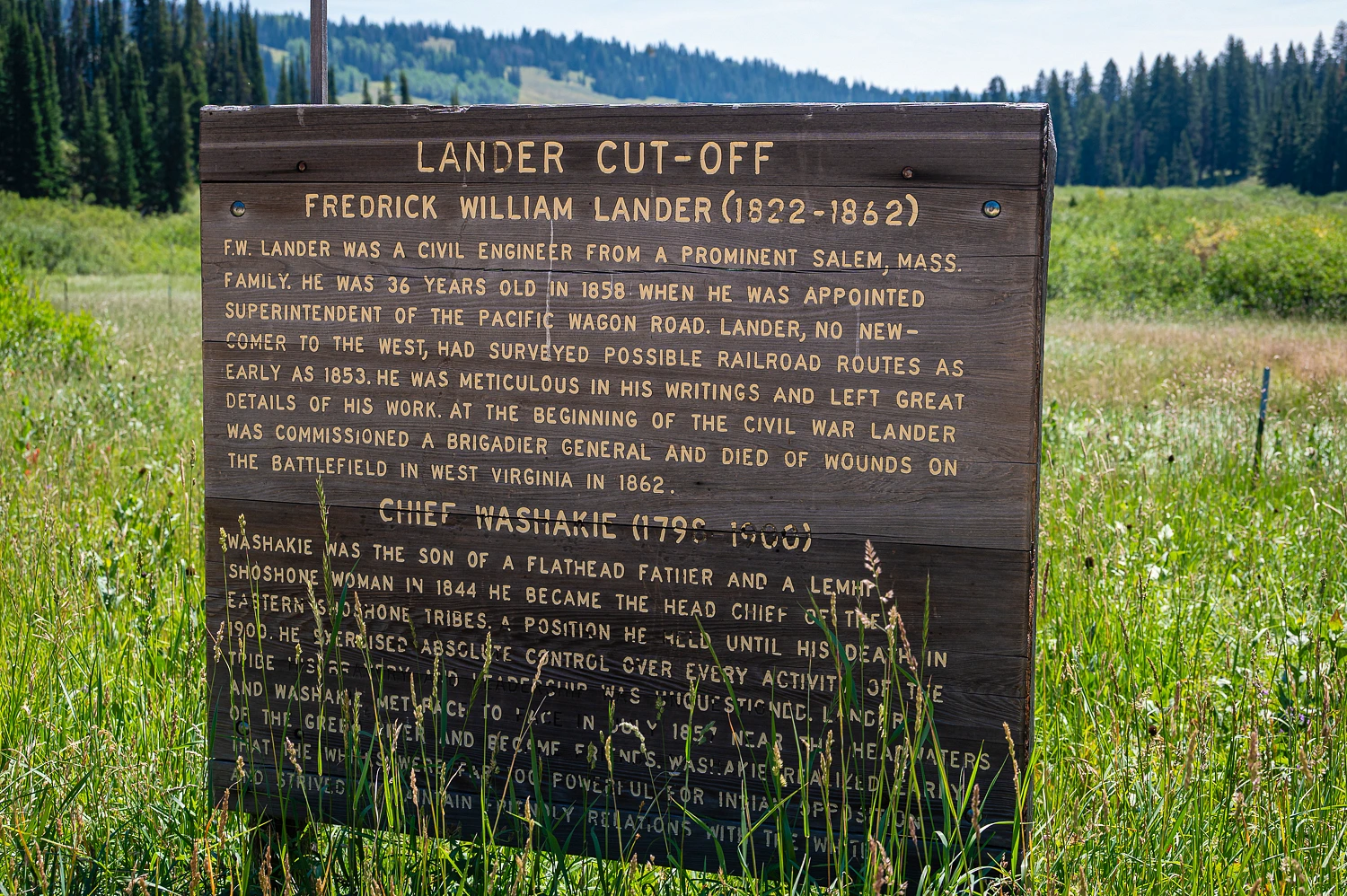
We’ve spent time on the Lander Cutoff along the Wind River Range, so it was exciting for us to find where the historic overland trail crossed over the Wyoming Range.
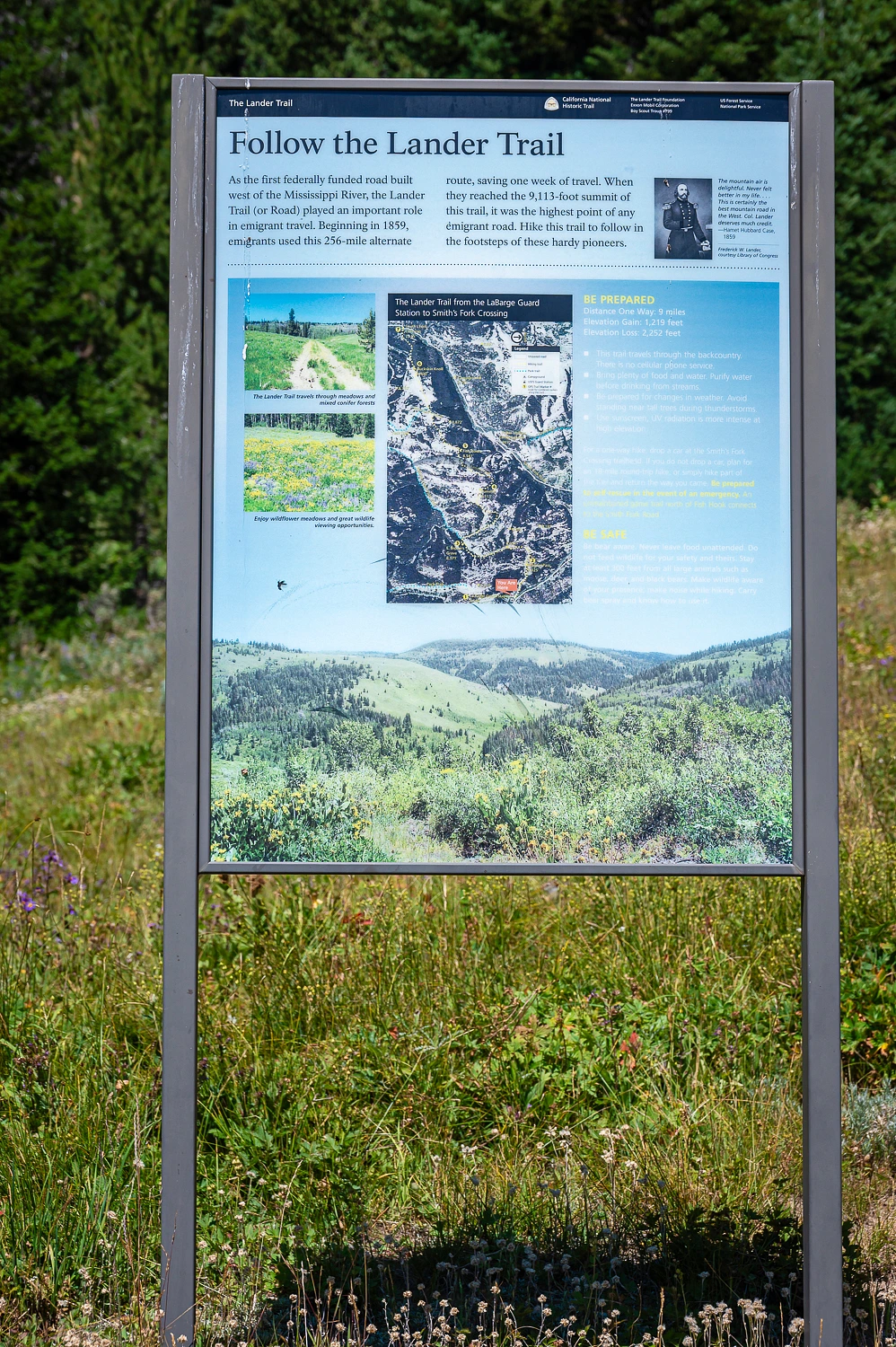
We also stopped at the La Barge Creek Guard Station, now available to rent by the public.
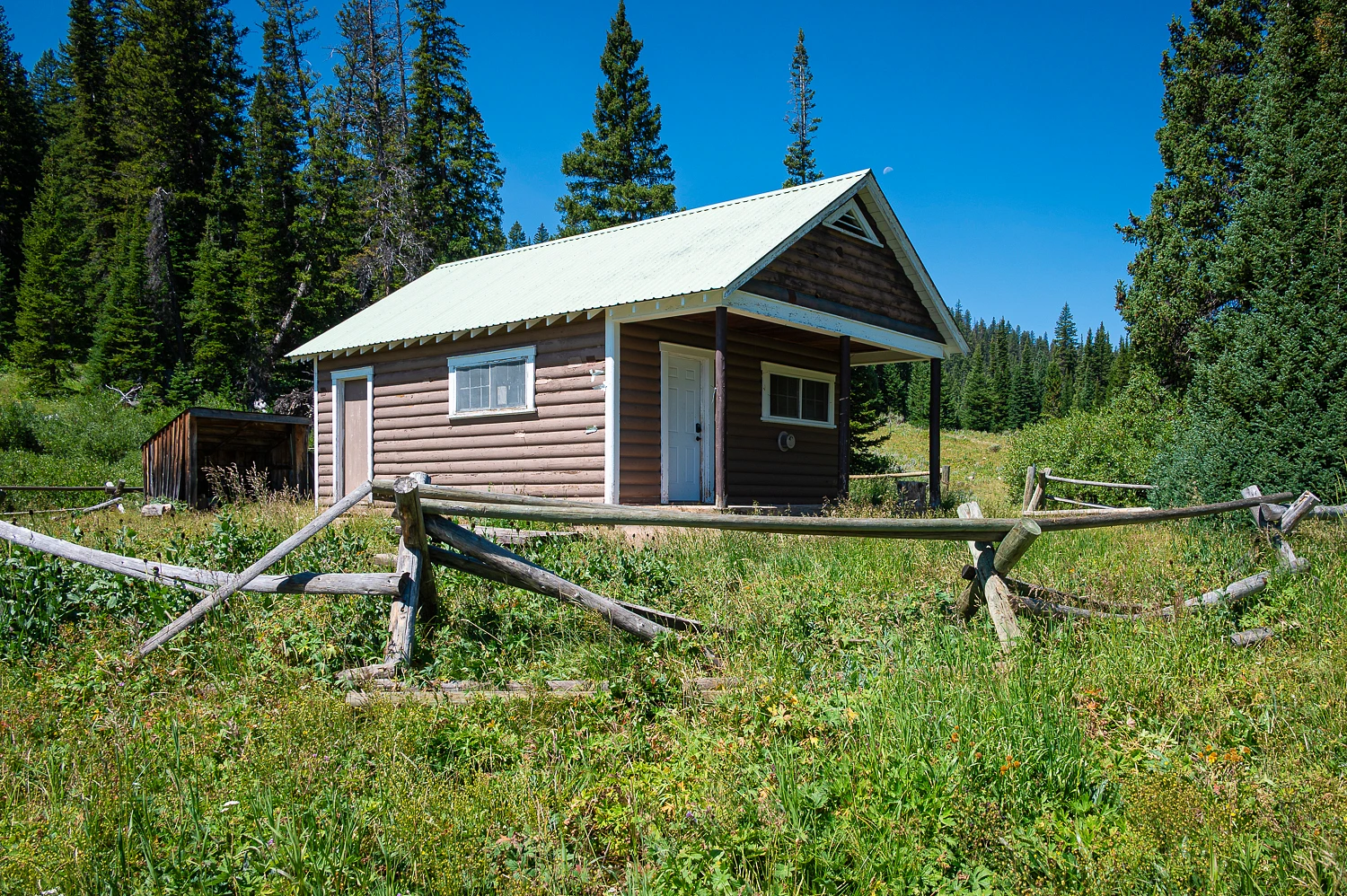
Want to stay up in the headwaters of of La Barge Creek?
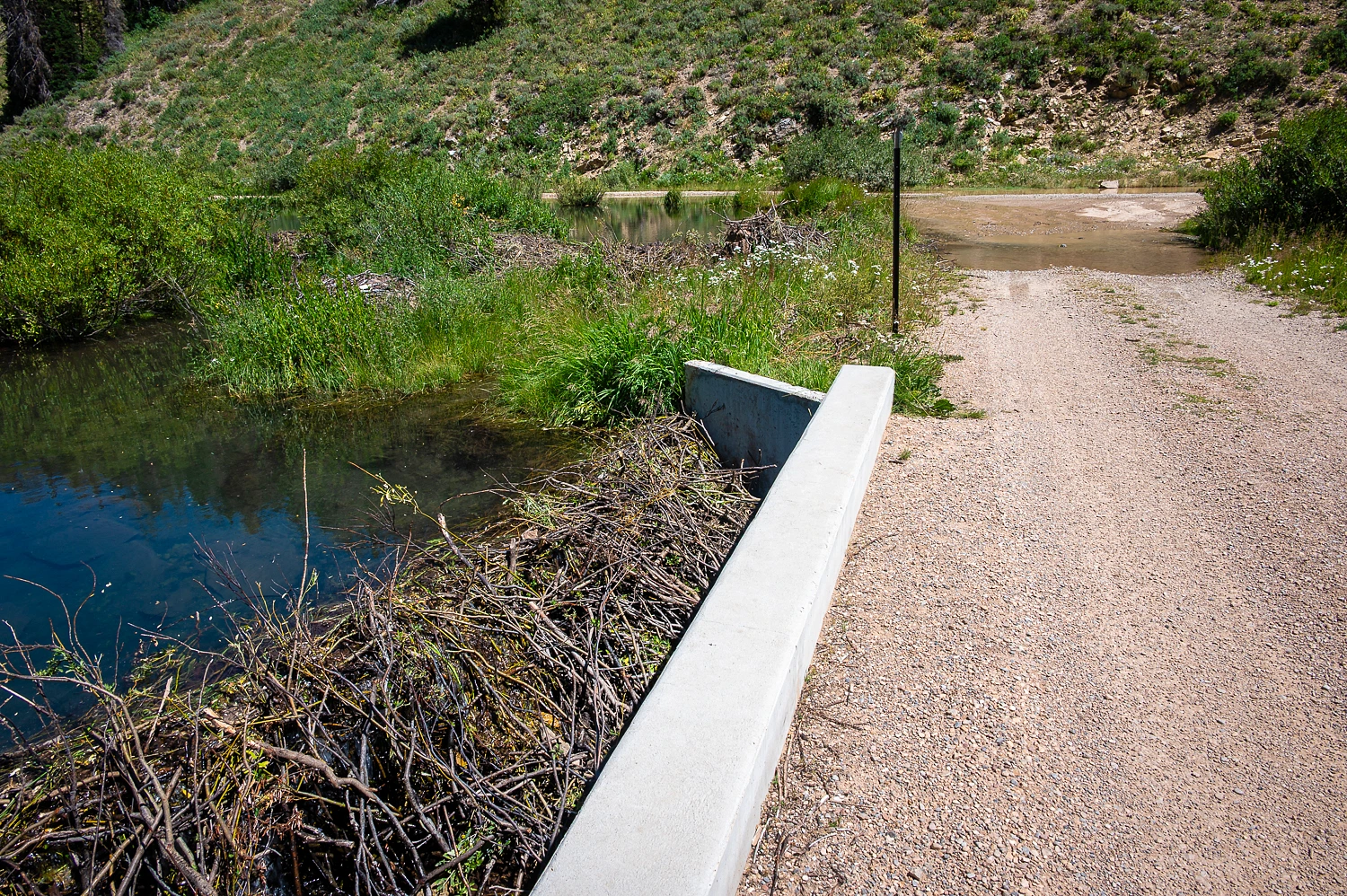
We chuckled at the busy beaver that built its dam right above and clogging the bridge over La Barge Creek.
Our history distraction satisfied, we drove over the saddle and down into the Smith Fork. We headed further down and then up to fish a tributary of the Smith Fork, Hobble Creek. In seeking out information on access to Hobble Creek, one author wrote, “This is worst road I ever driven in my life.” As we made our way in, the Lady noted, “We’re in the right place!”
The ford across the Smith Fork was a steep mud climb up the opposite bank so we stopped and camped before the crossing. It was a great spot.
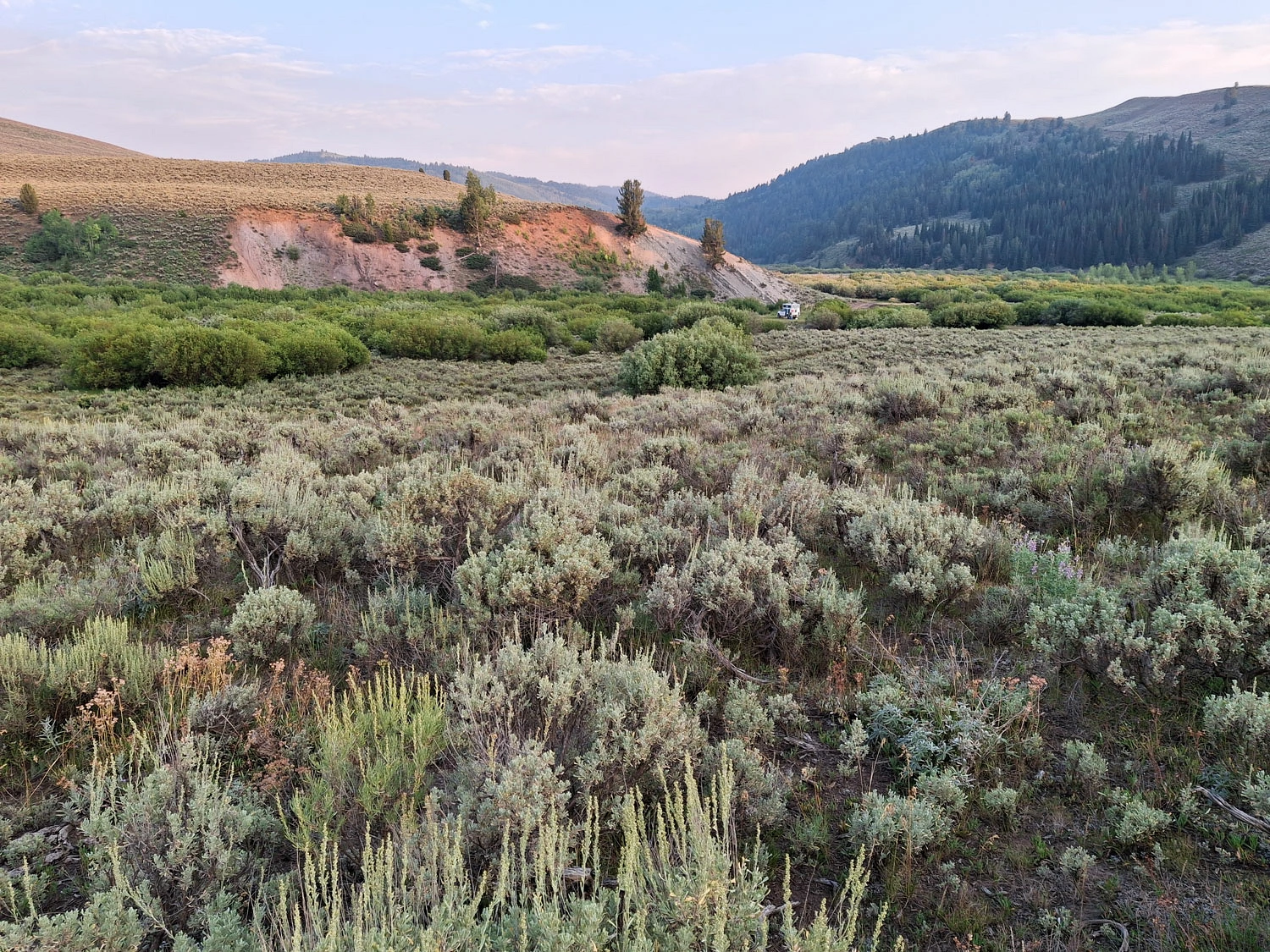
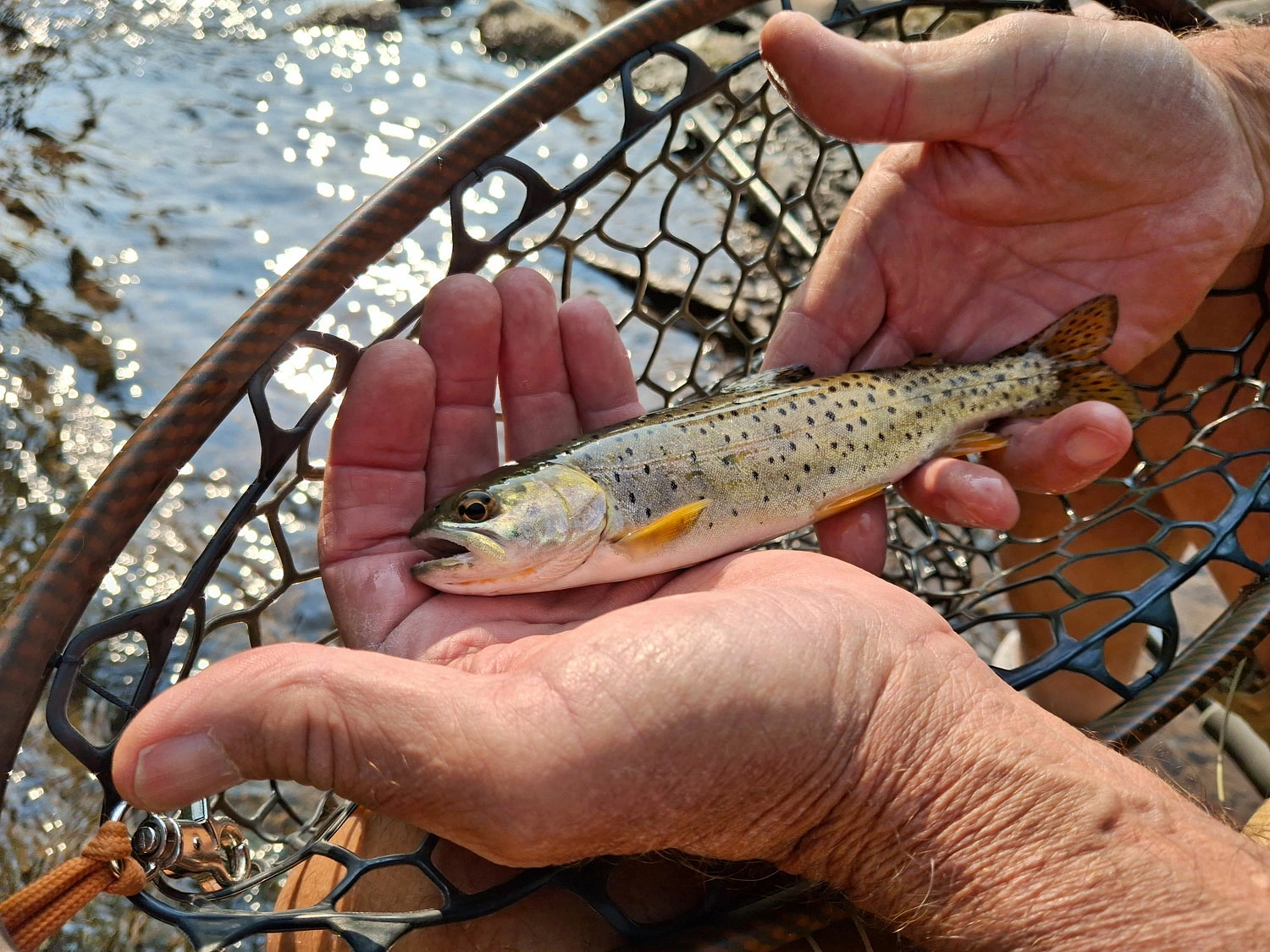
We looked at the access up Hobble Creek and caught and released our first native Bonneville Cutthroat. This was a good start.
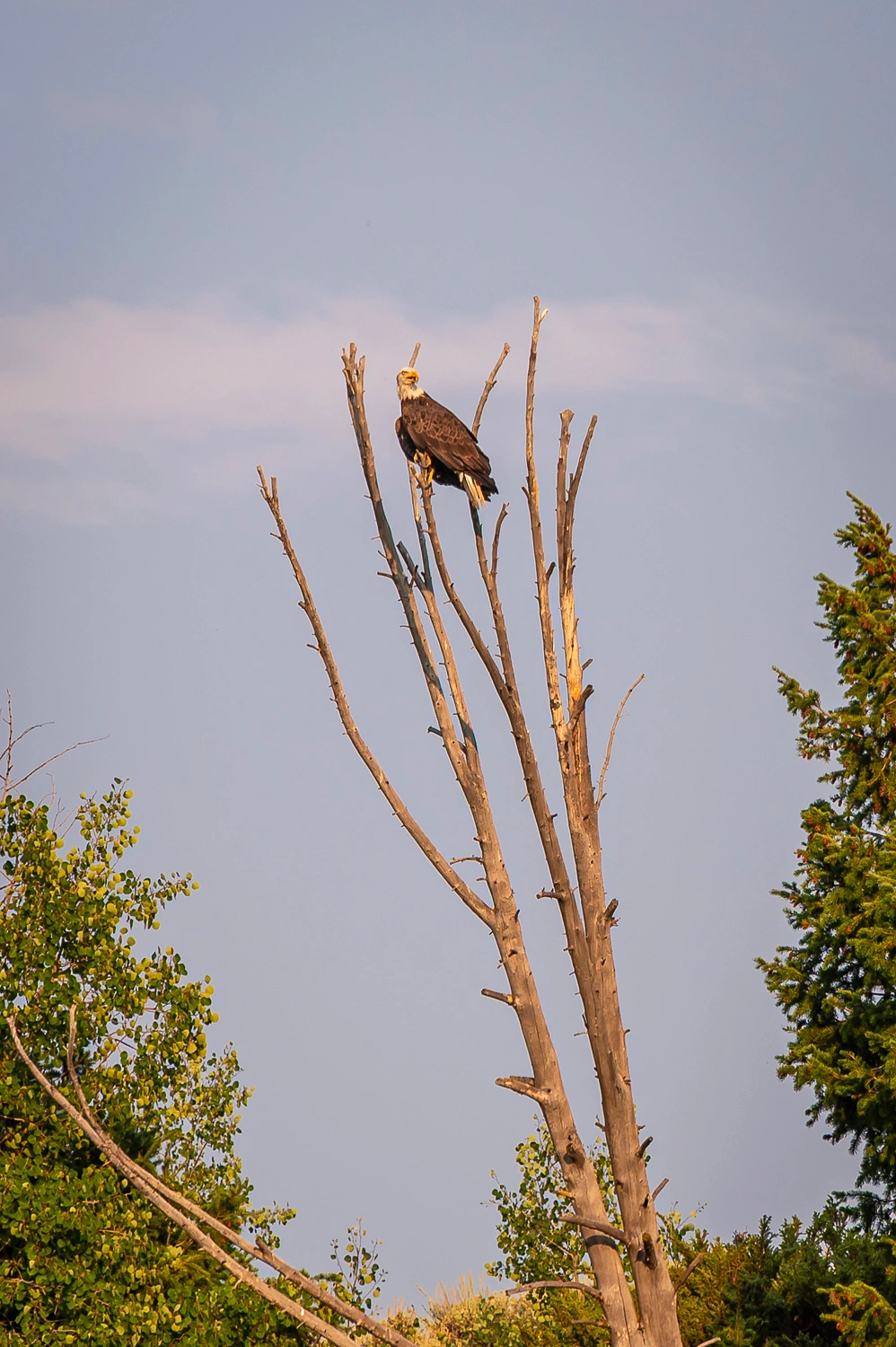
Also, a good omen was the bald eagle that perched on the bluff above as we ate dinner.
The next day - wildfire smoke had drifted into the area - we hiked a couple of miles up the use trail and climbed down into the willow choked meadow Hobble Creek meandered through. We had the creek all to ourselves - damn lucky it turned out.
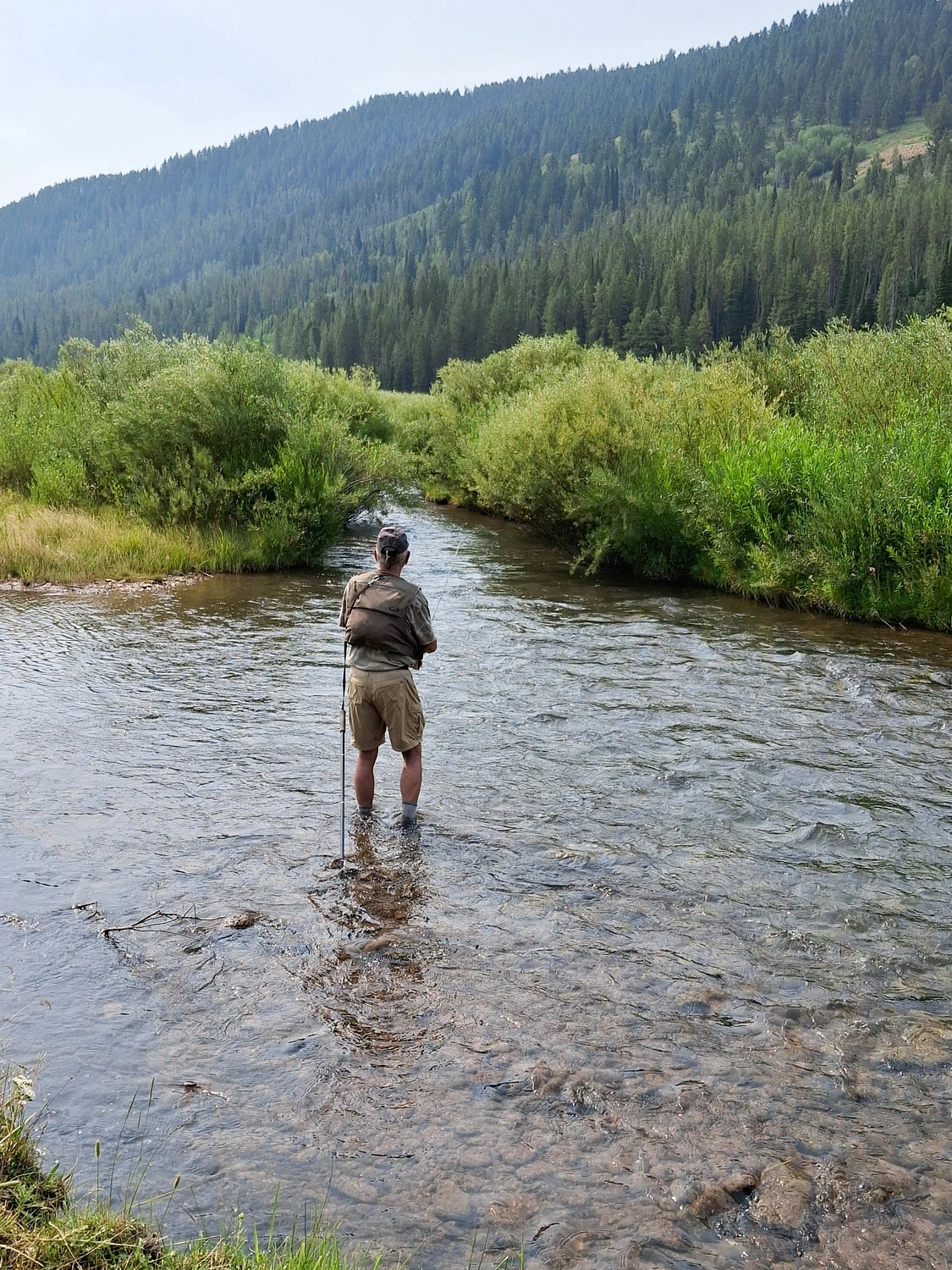
Around a bend was a perfect, deep hole with a cut bank under willow branches. I floated a large dry fly repeatedly down the current.
“I’m going with a different dry,” I told the Lady as I backed out of the water. “And I’m adding a nymph dropper.”
We sat together as I replaced the tippet and tied on the flies, showing and explaining the process to my little fly fishing guide. Since the retinal detachment repair and other eye surgeries, I get by but sure miss the good old days. I carry 3.5x readers to tie on flies and the Lady holds my left hand still - essential tremor - so I can get the tippet through the eye of the hook. There’s nothing like trying to hit a moving target.
“I know there’s a nice Bonnie in here,” I said as I reentered the water and explained to the Lady where I thought a trout was holding and how I’d place my cast for a good drift.
It could not have been better. A trout rose and took the dry.
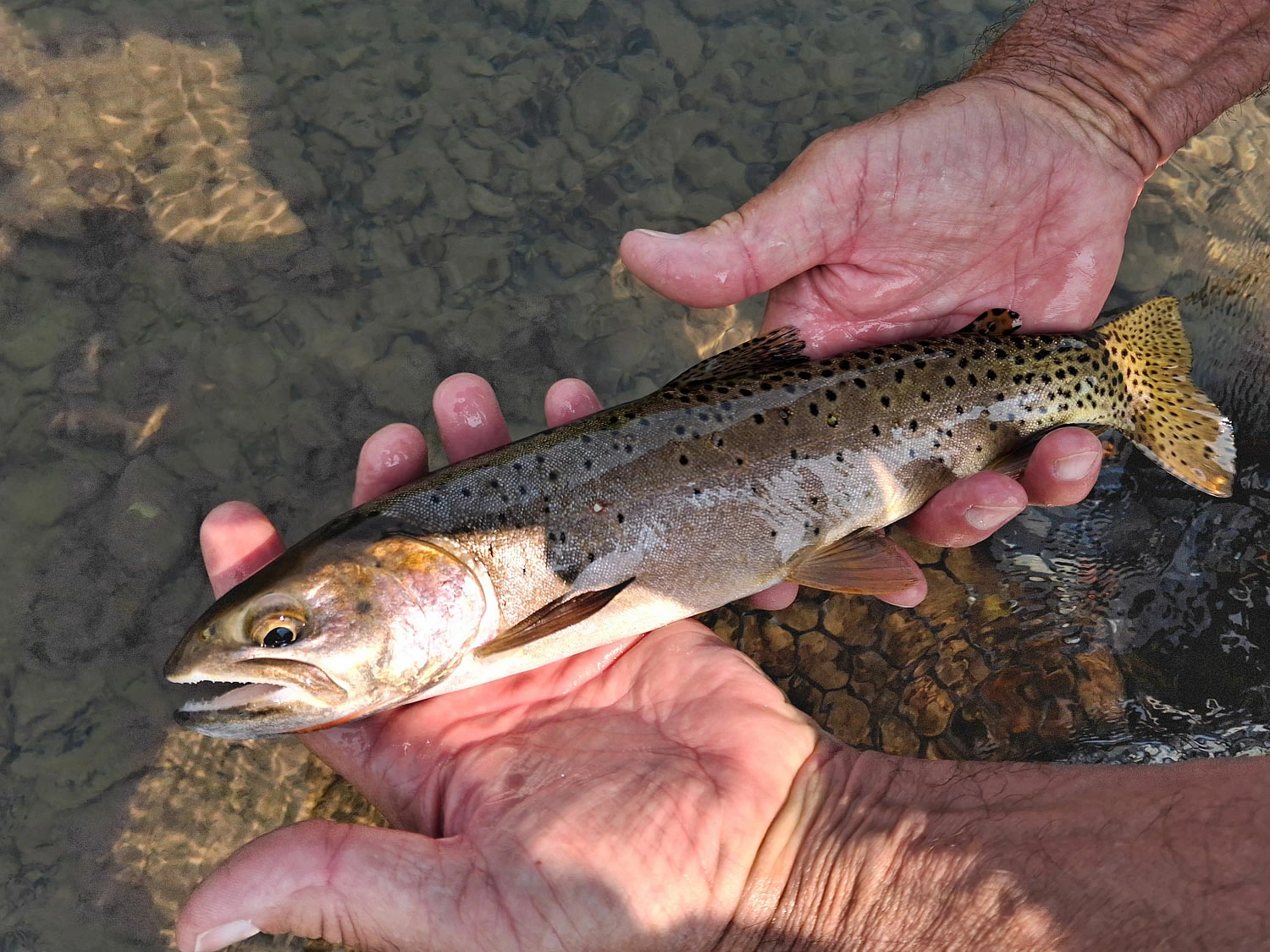
The Lady watched it all and was thrilled. She took over - except for handling the fly rod - as my guide.
“That a good spot there where the current runs into deeper water.”
“That’s a good cast!”
“Next time a little closer to the bank.”
“A little tug. Don’t let the fly go under the branches.”
“Watch your backcast here.”
“A roll cast might be better.”
Also, when a fly gets snagged, in the river or in a tree, she is determined to retrieve it. We did not lose any flies this entire adventure - except for the one the large trout carried away in Angel Lake.
I followed directions and this was the most productive day (and creek) in our quest for the native cutthroat of Wyoming.
Although beautiful trout, the Bonnies are, perhaps, the least colorful of the cutthroat subspecies.
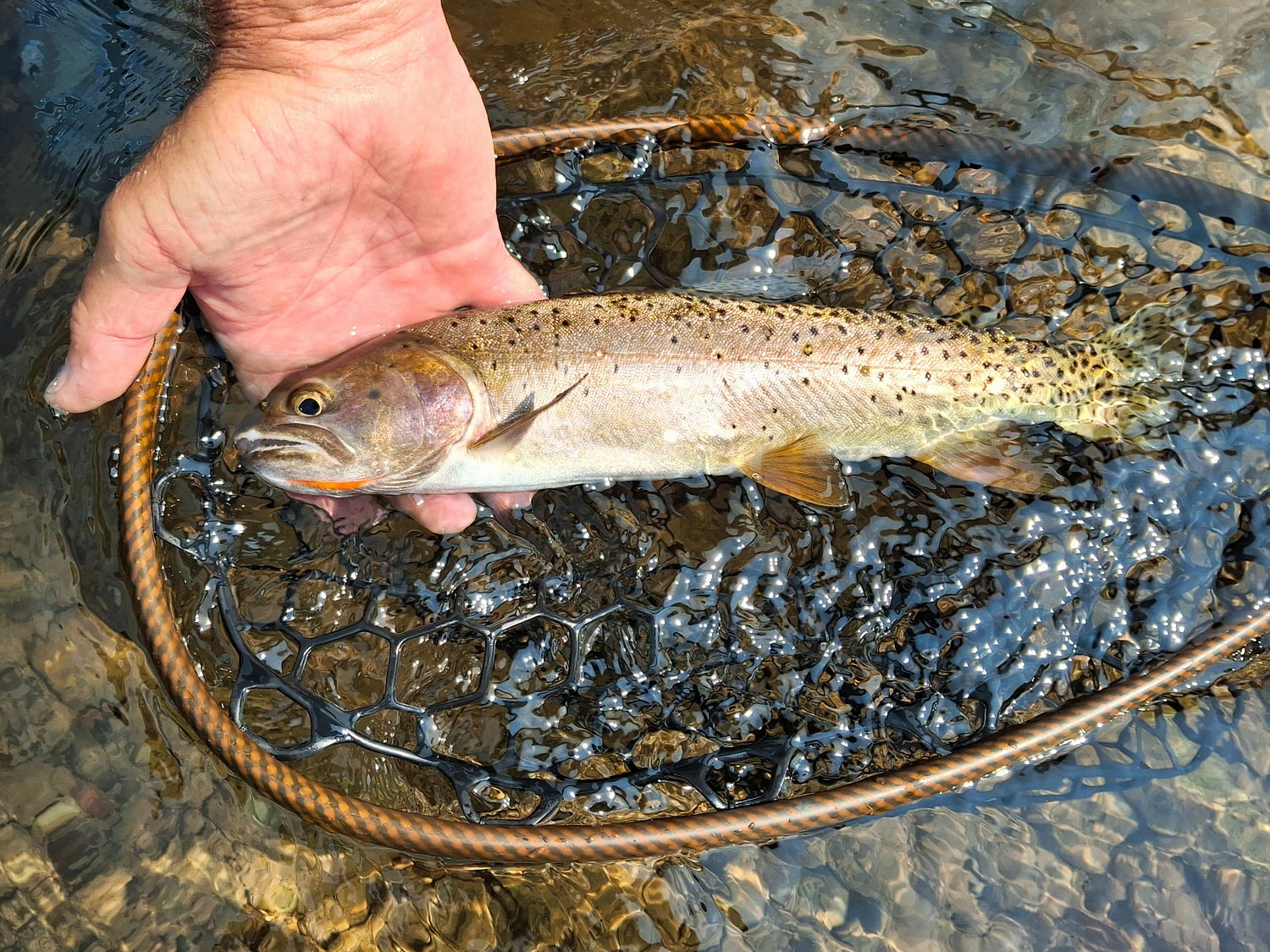
This final 16 inch cutt was my favorite. There was a deep channel. I saw it appear as it rose from the depths and looked at the dry fly on the surface. It disappeared back into its hiding place. I cast again to drift the fly in the current seam directly above it. I told the Lady to watch also. It slowly rose and sucked in the fly. It was perfect and we both were thrilled.
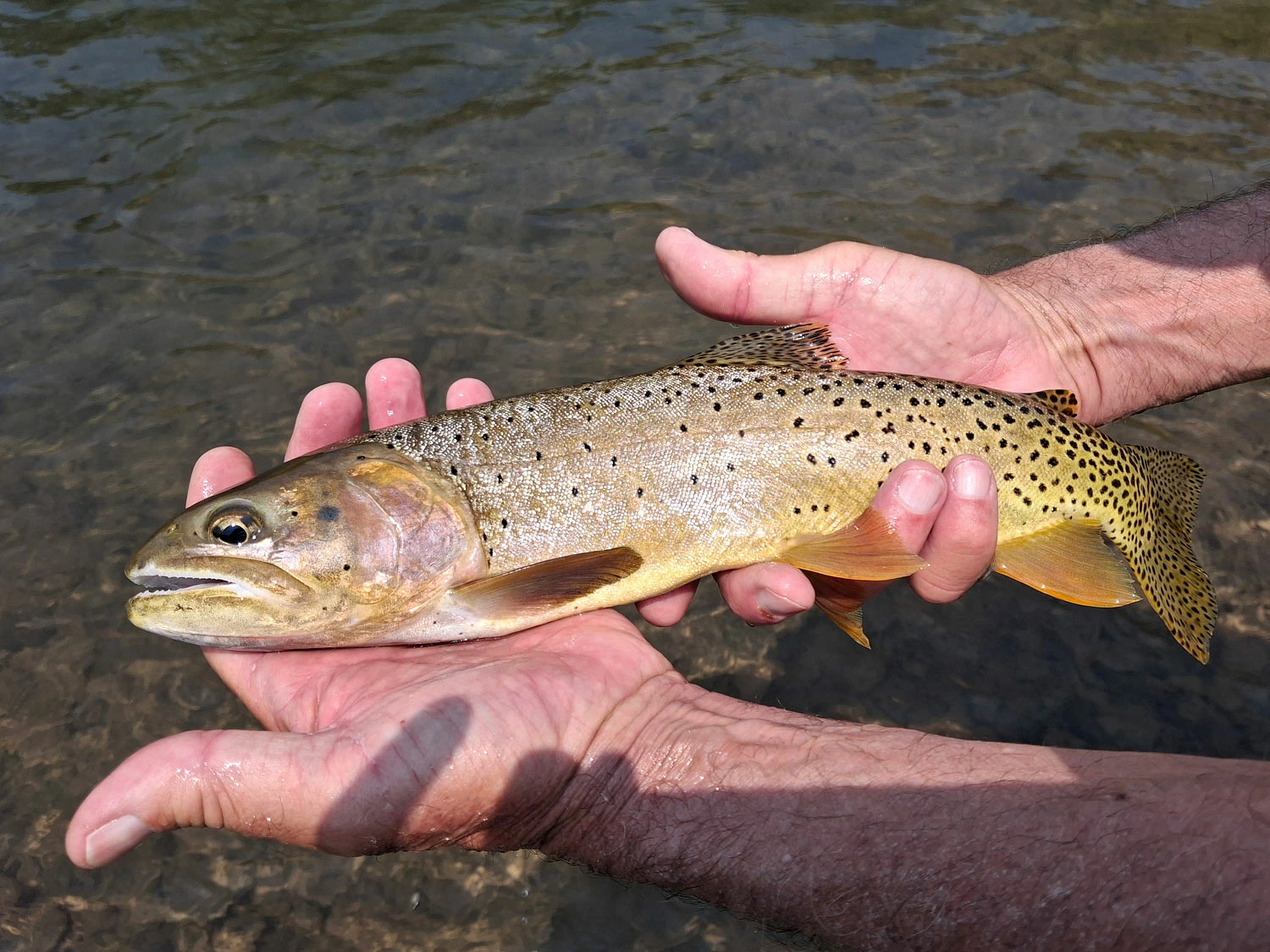
Yes, we had a great time fly fishing, but this was work. Casts and presentation needed to be spot on and working through the tangled willows and difficult water to wade was a chore.
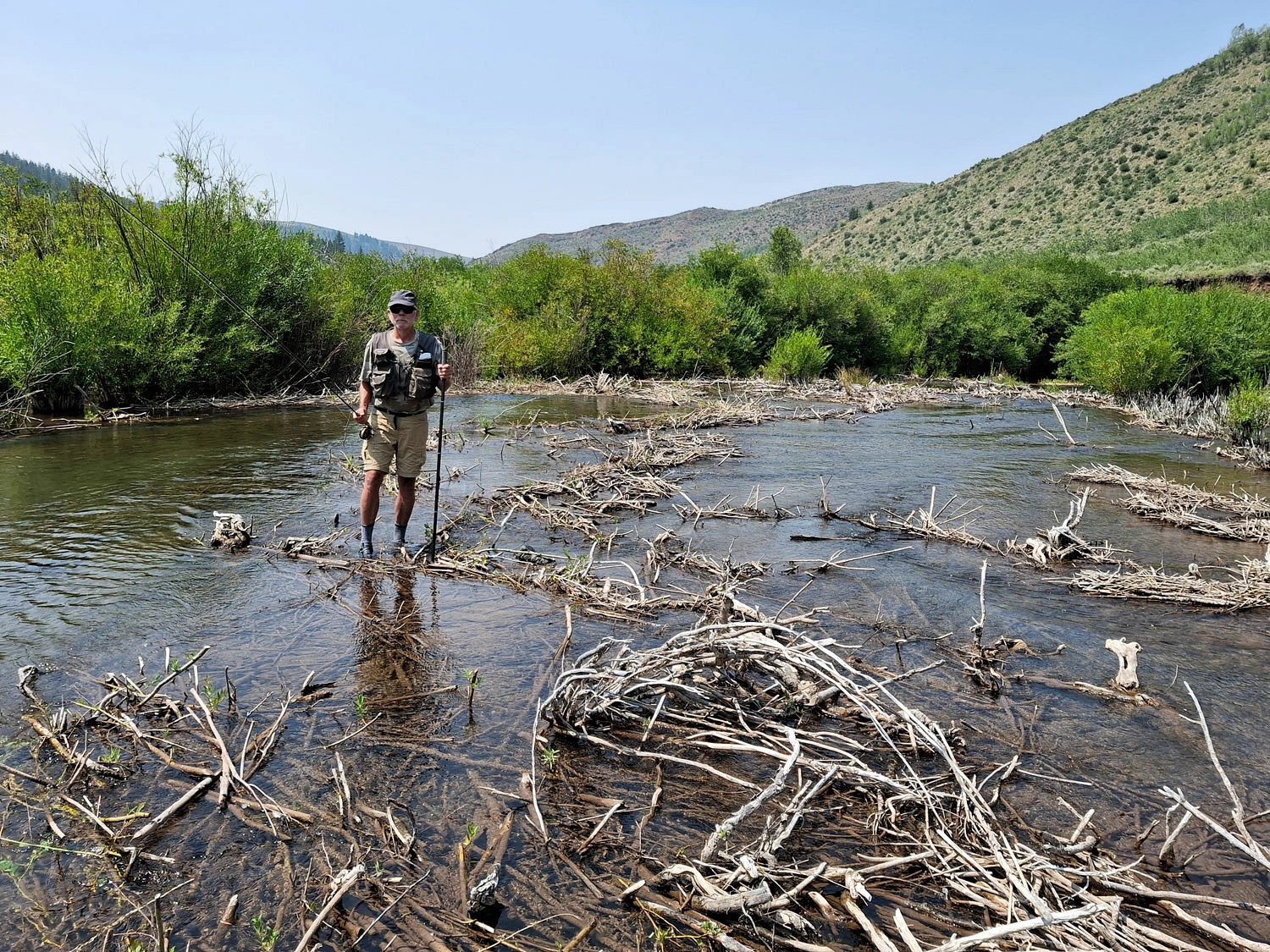
But what a great workout and day!
We hiked back to camp. This was a weekday and still the vehicles started to stream in. A group of two vehicles drove by, crossed the Smith Fork, and headed to the end of the road. An hour later two more vehicles drove in. The first driver was upset to hear the other two vehicles were ahead. We talked with the couple in the vehicle behind.
“This is quite the rig you two have,” I commented.
“Yes!” the fellow said with obvious pride. “I built it so I could go fishing at Hobble Creek!”
“You can find a place to camp at the old building about halfway to the end of the road. That would be far enough away from the other people up there,” I offered.
“Yeah, we’ll try there.”
The two vehicles successfully made it across the river.
On our evening walk we found another camp set up a short distance up the Smith Fork. They’d come in while we were fishing.
This place is no secret and it gets a lot of fly fishing pressure.
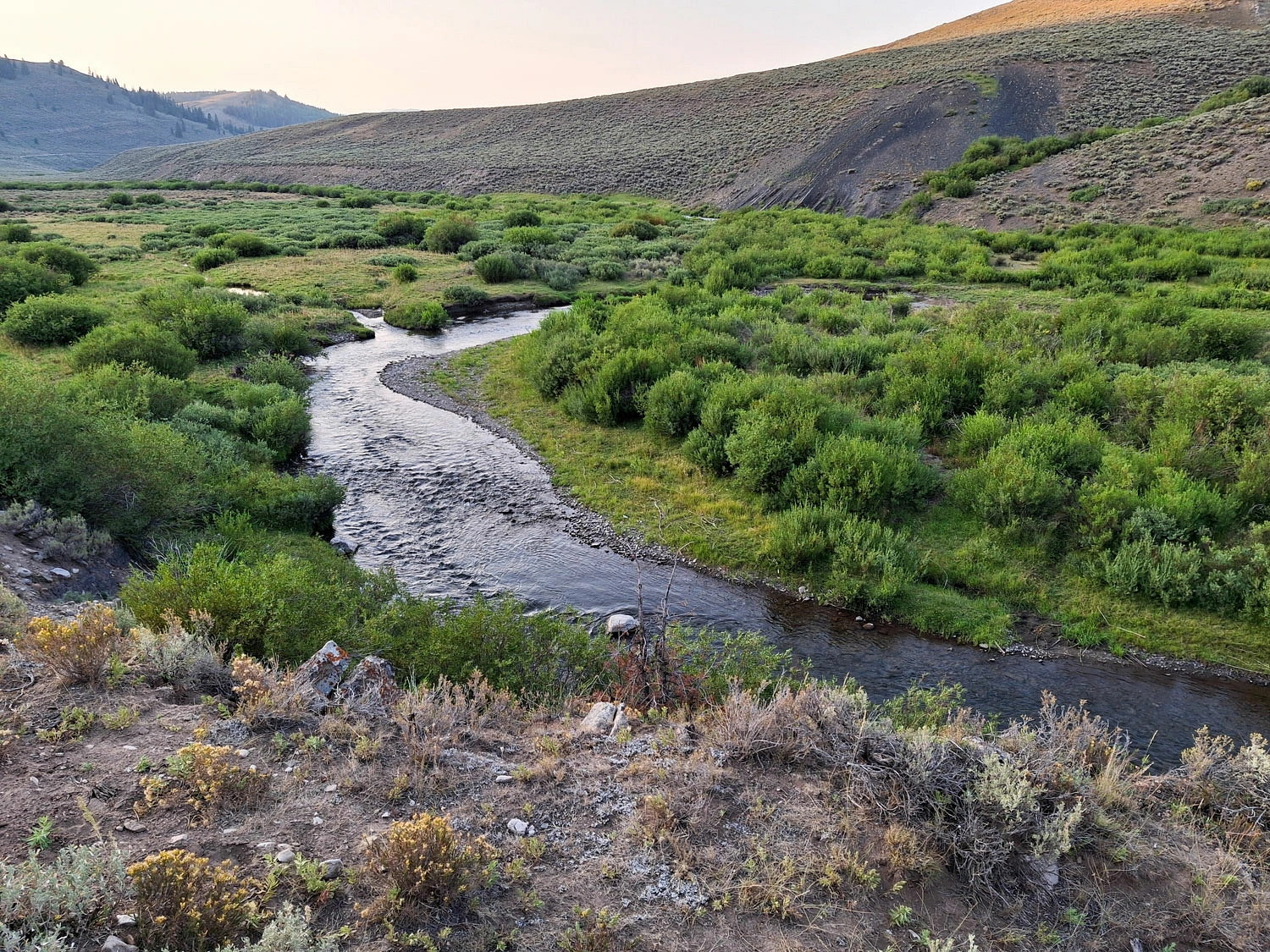
We retraced our driving route back to the headwaters of La Barge Creek. We stopped at the prominent signage.
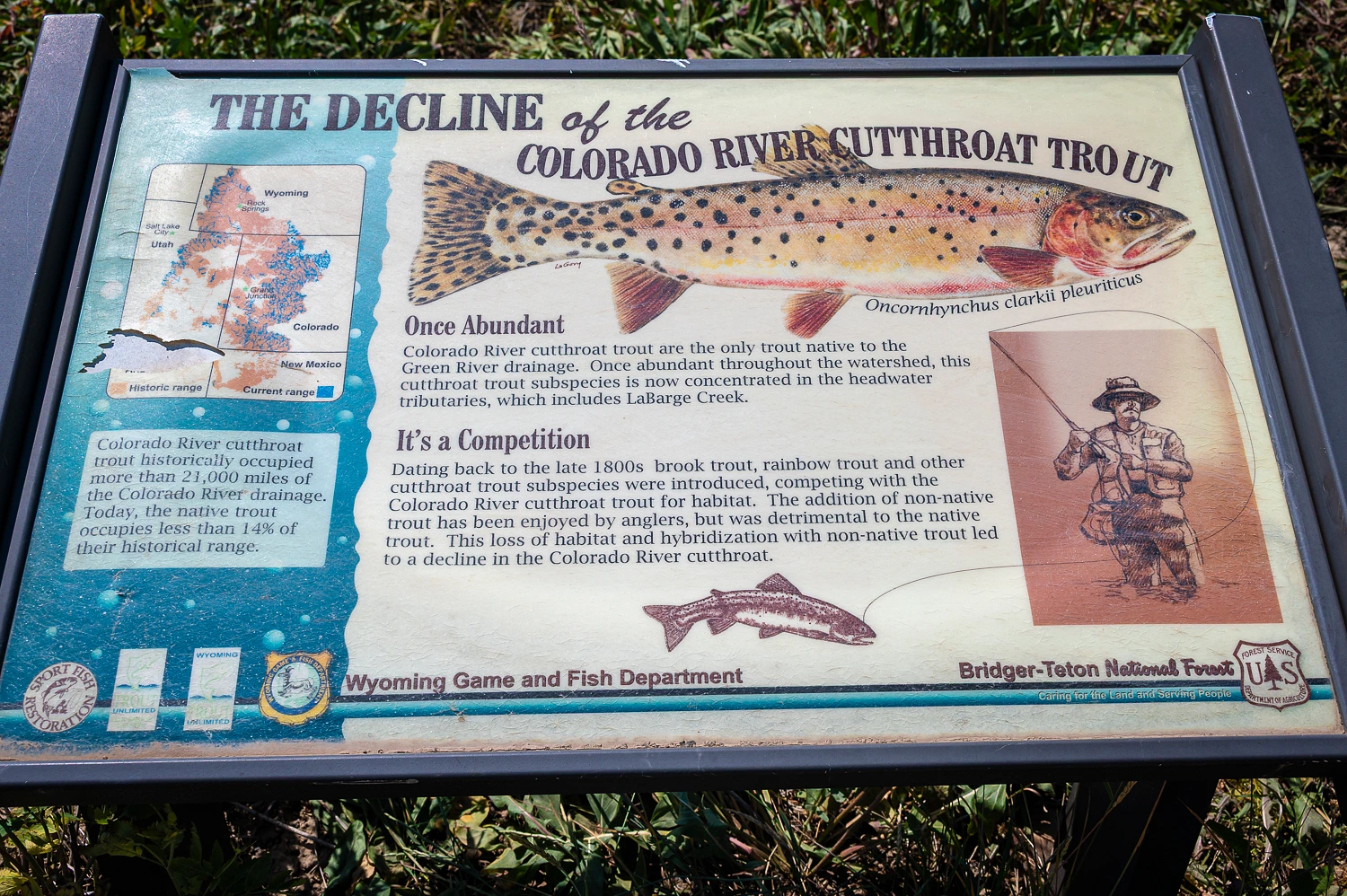
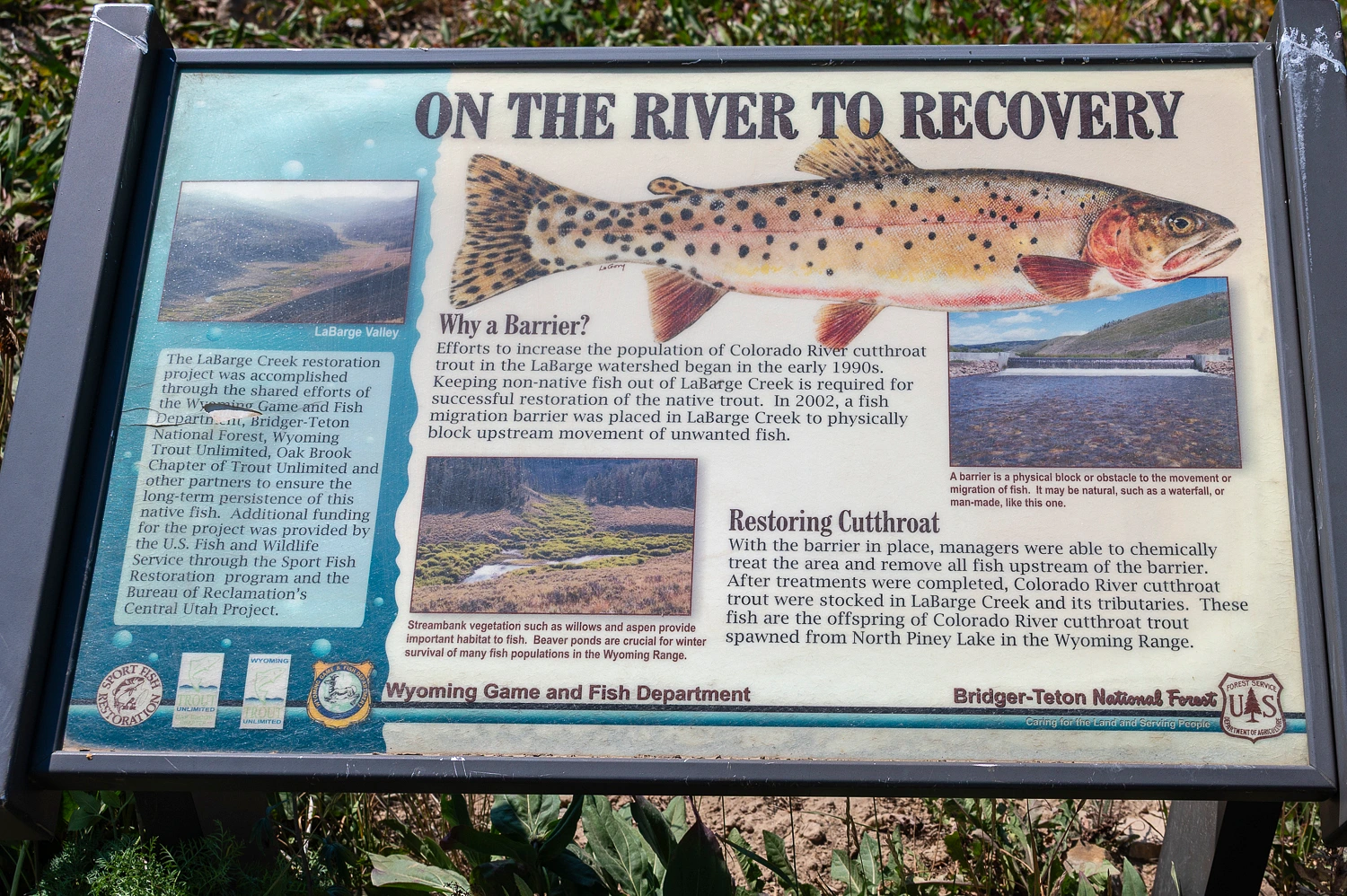
La Barge Creek was one of the remaining holdouts for the declining Colorado River Cutthroat, but the trout were interbreeding with introduced rainbow trout (creating “cuttbows”) coming up from downstream. A restoration project was started in 2002. A barrier dam was put into place to stop upstream migration of non-natives. The watershed upstream from the barrier was treated and all fish removed. It was restocked with pure strain Colorado River Cutthroats, special fishing regulations were put in place, and La Barge Creek is now a refuge for its native trout.
We continued looking for a nice section of creek to fish with an associated dispersed site to camp. On the way, again, history distracted us.
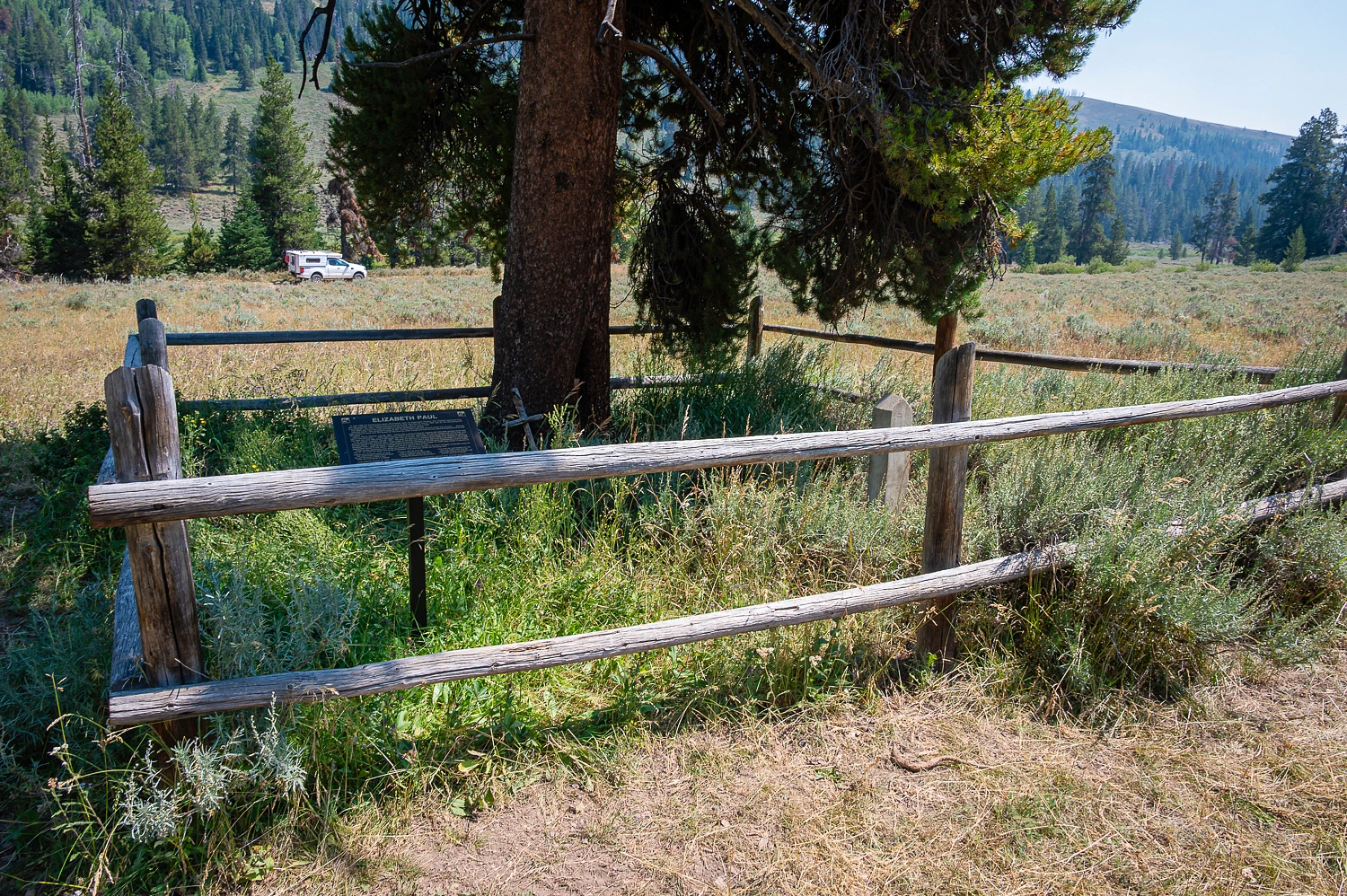
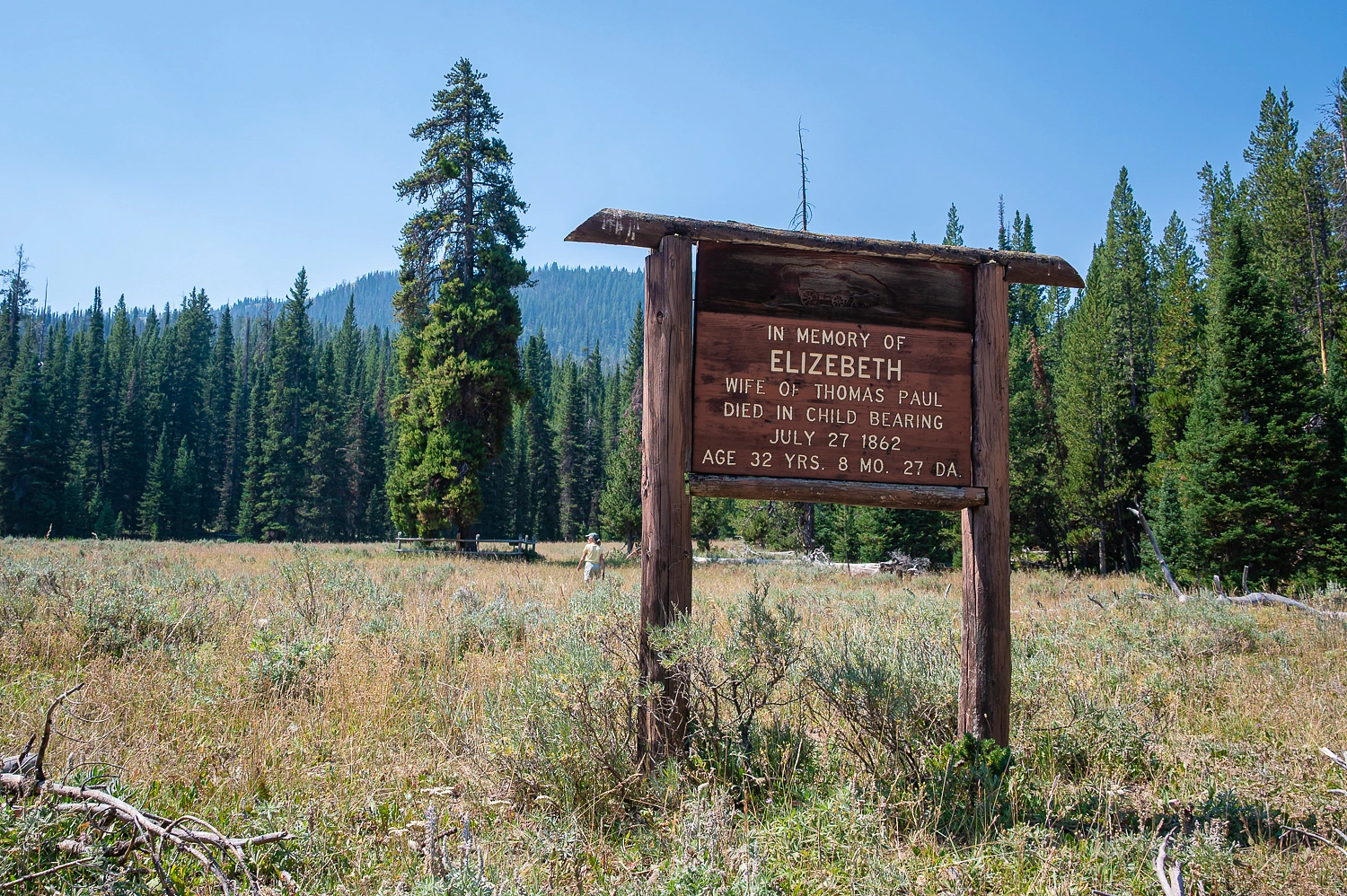
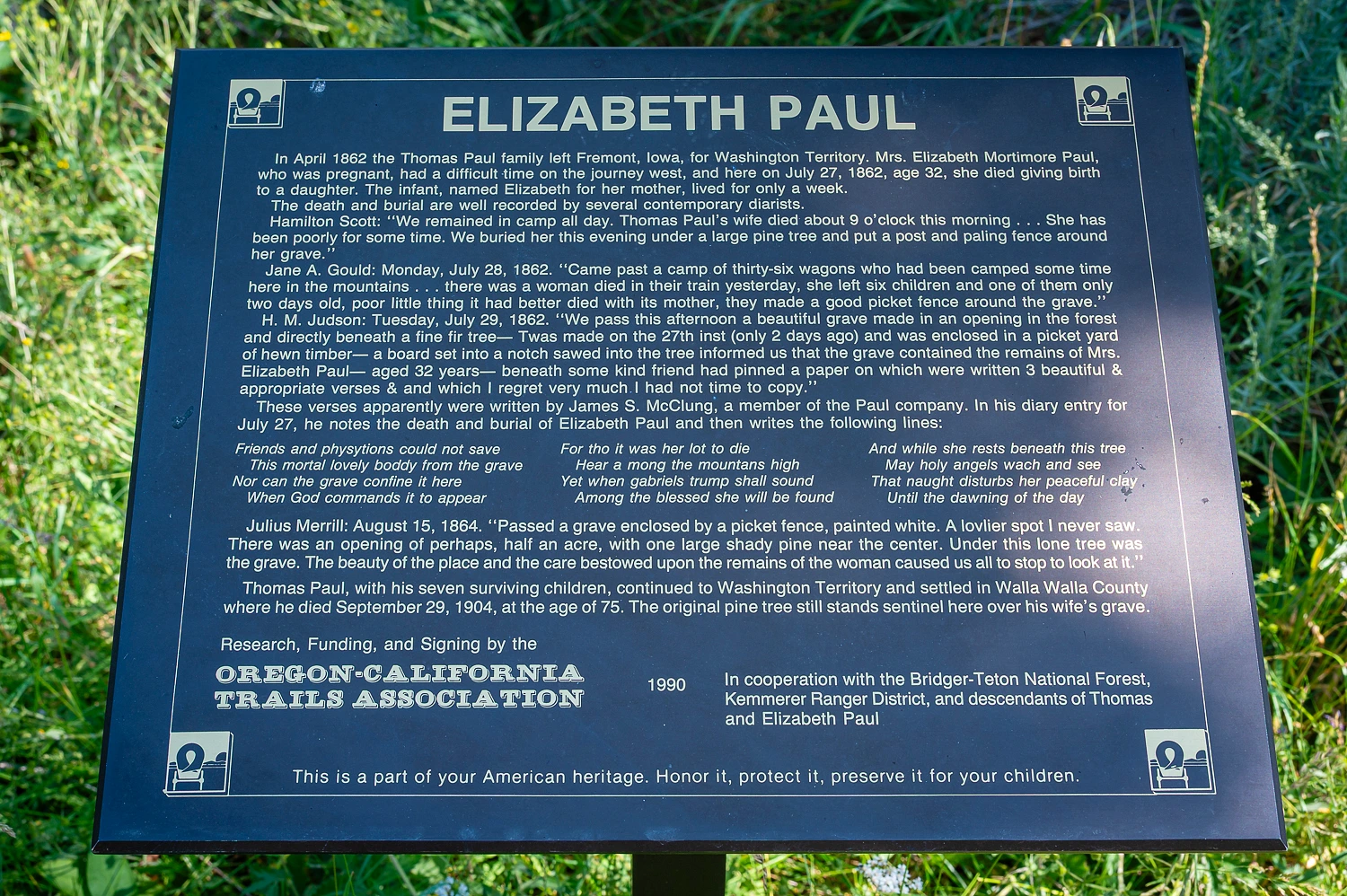
This is along the Lander Cutoff.
We found a nice spot up from the barrier dam.
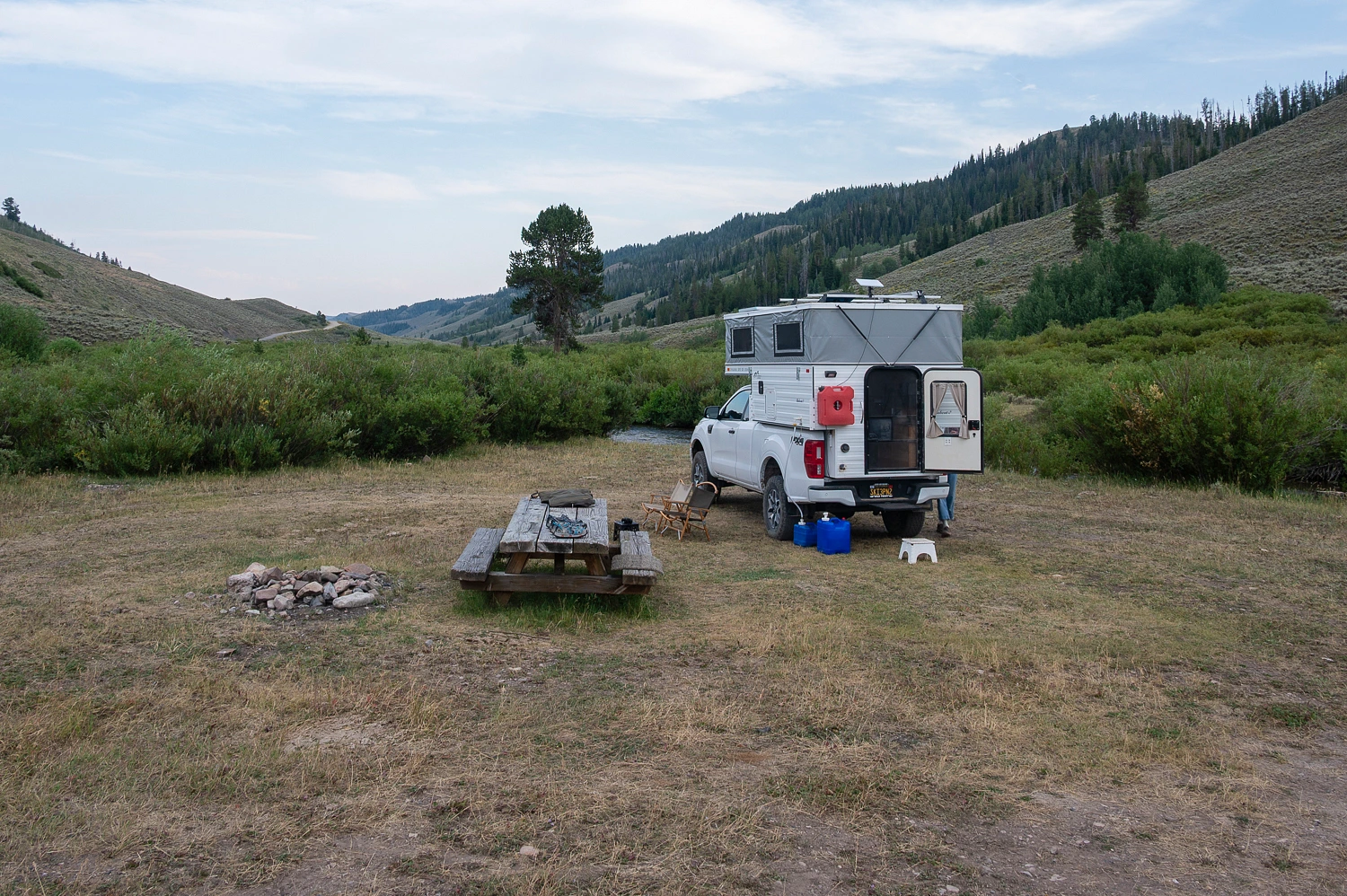
The next morning we geared up.
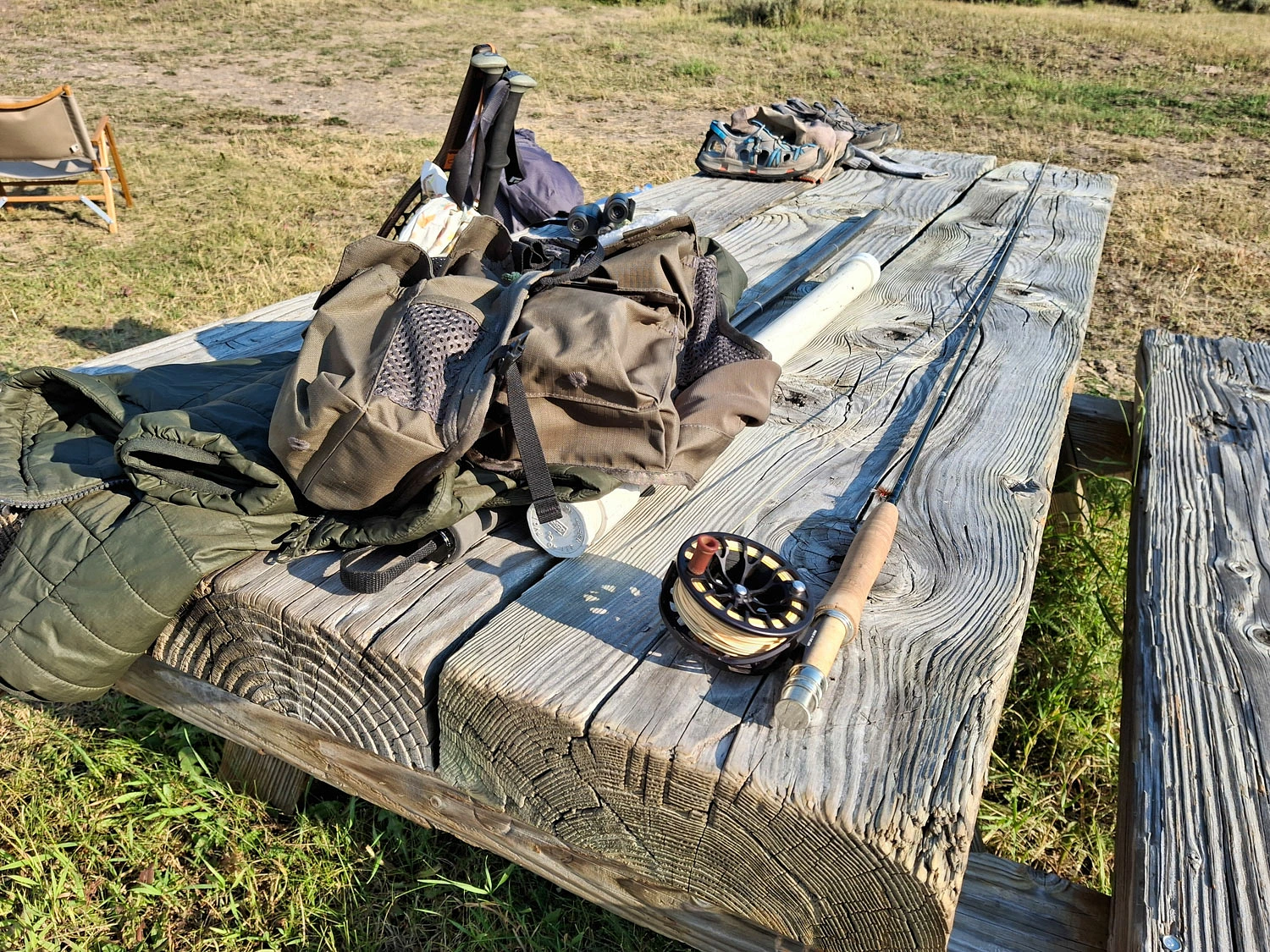
I’ll mention for those of you that remember all our slipping and sliding wading on our Oregon trip in June. We both now have studded vibram soles on our Korker scandals that work great.
Water was low and crystal clear. Very few fish were visible.
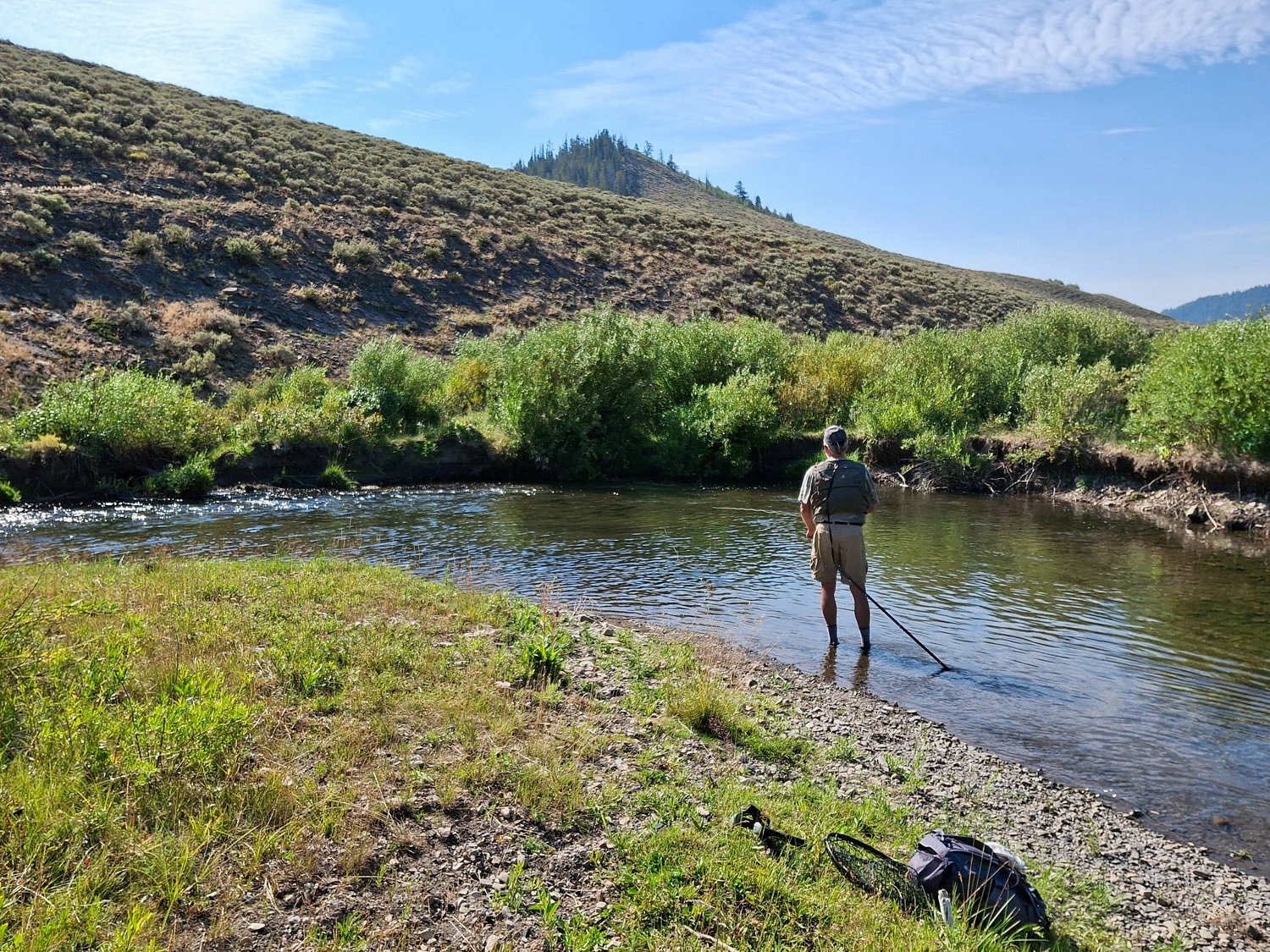
It was challenging, but we kept at it.
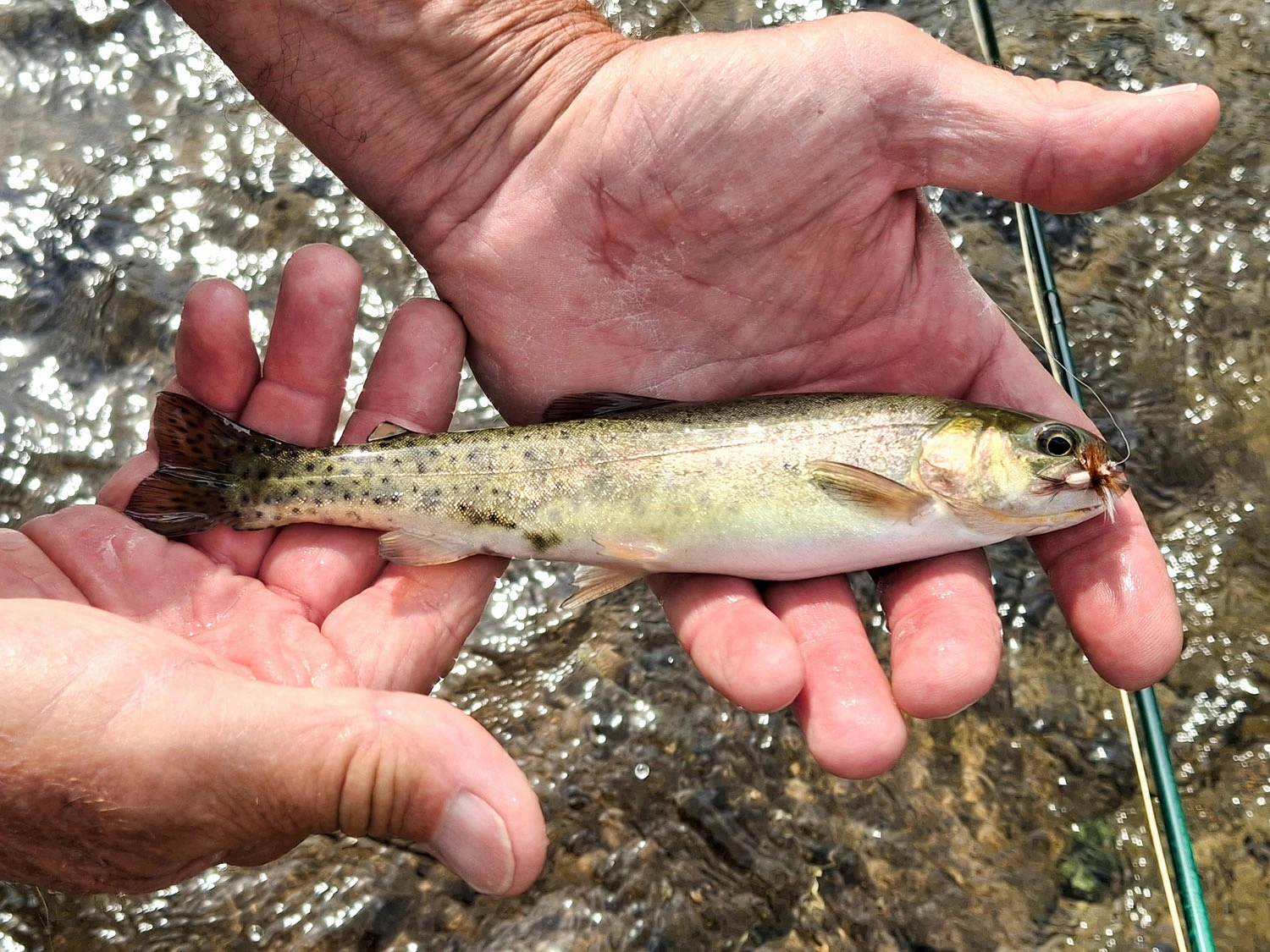
A small Colorado River Cutthroat taken on a size 16 humpy that I tied around 25 years ago.
I’ll add an observation. With all the work and expense of this project to recreate this refuge of the native cutthroat in its home waters, why are there cows still in the creek?
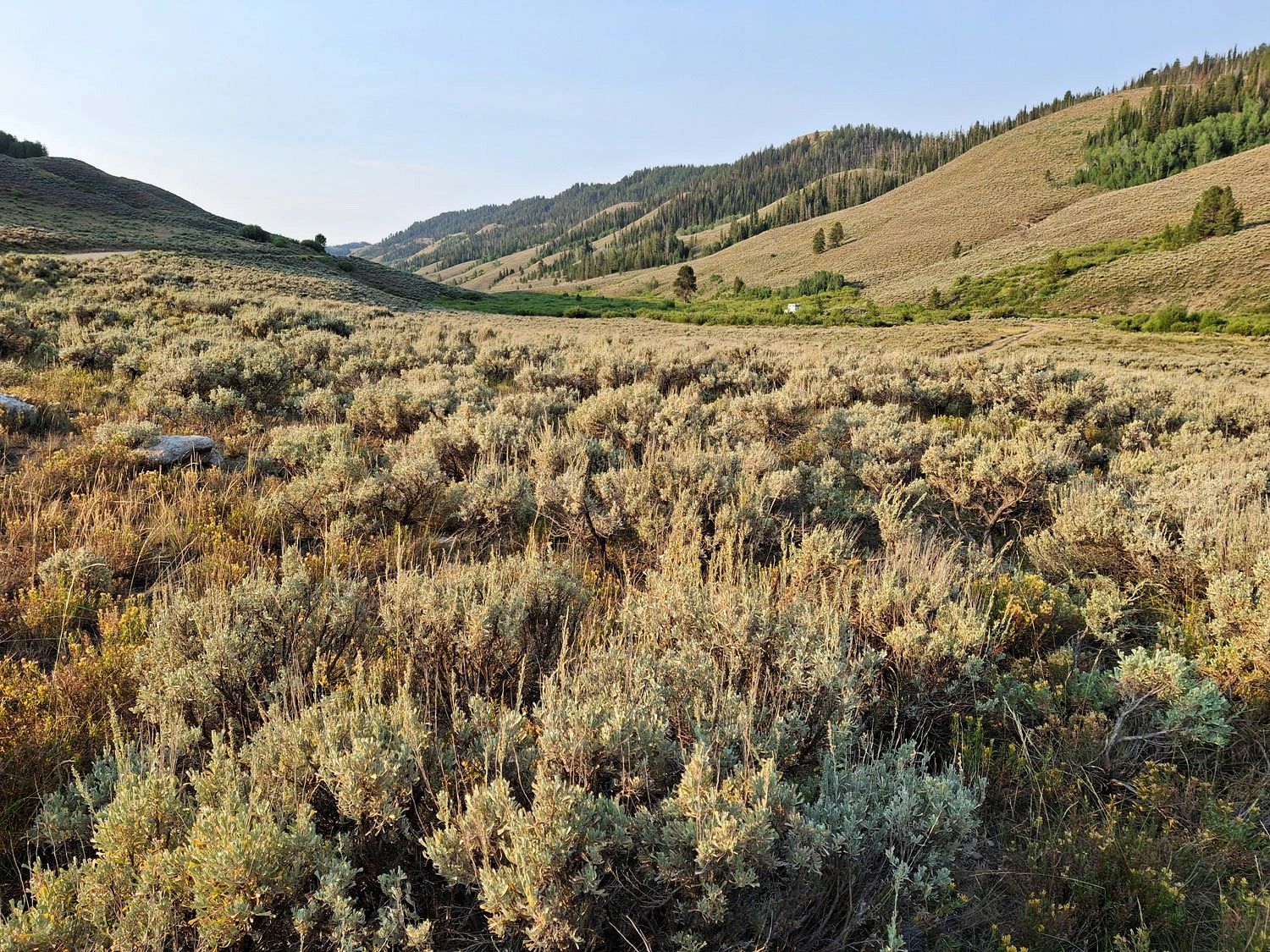
Light hit our camp the following morning
“It’s time to get groceries and do laundry,” the Lady stated, always on top of trip plans. “How ‘bout we stay at a KOA or some place like that where we can do it all at once?”
I put my mind to work and gave the idea some thought. That damn StarStink, again, was handy to have.
“How about staying at the Log Cabin Motel in Pinedale for a night? Remember we stayed there in 2006? I just checked and a surprise, they have one cabin available.”
We booked the cabin. With laundry done, groceries restocked in the camper, and after a root beer float in the park, we checked into our cozy old cabin.
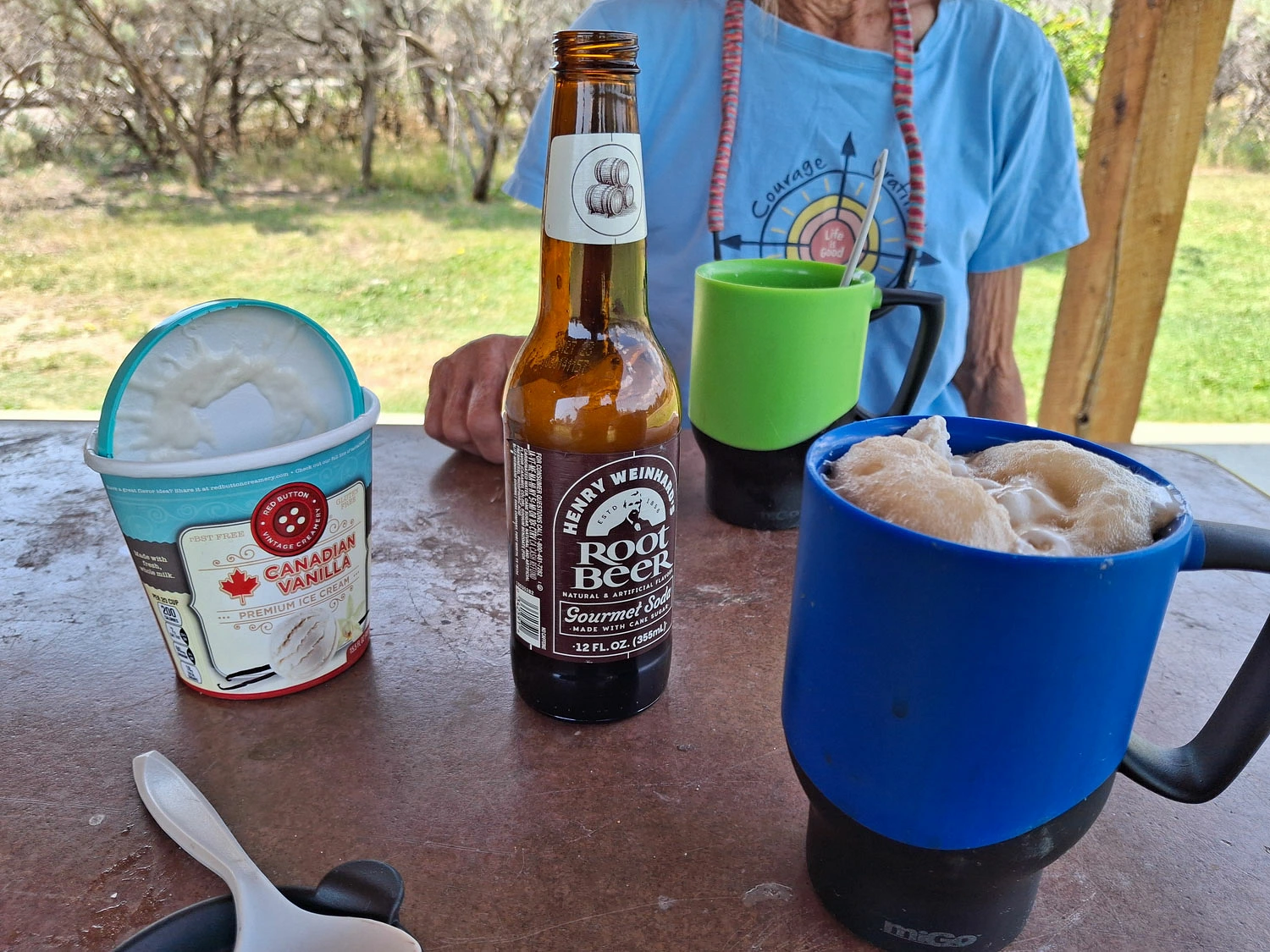
Note: this was back when we could get Canadian ice cream.
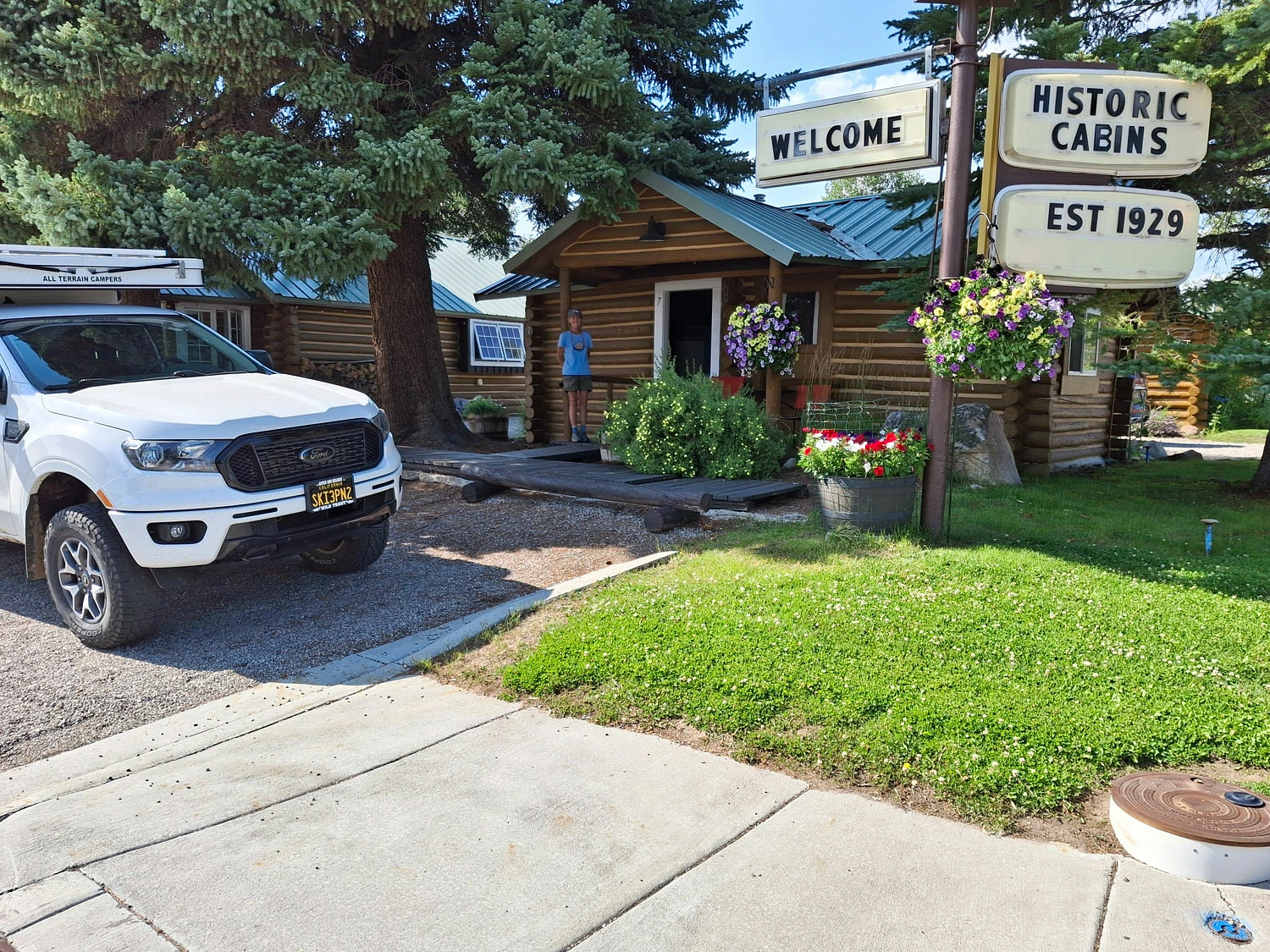
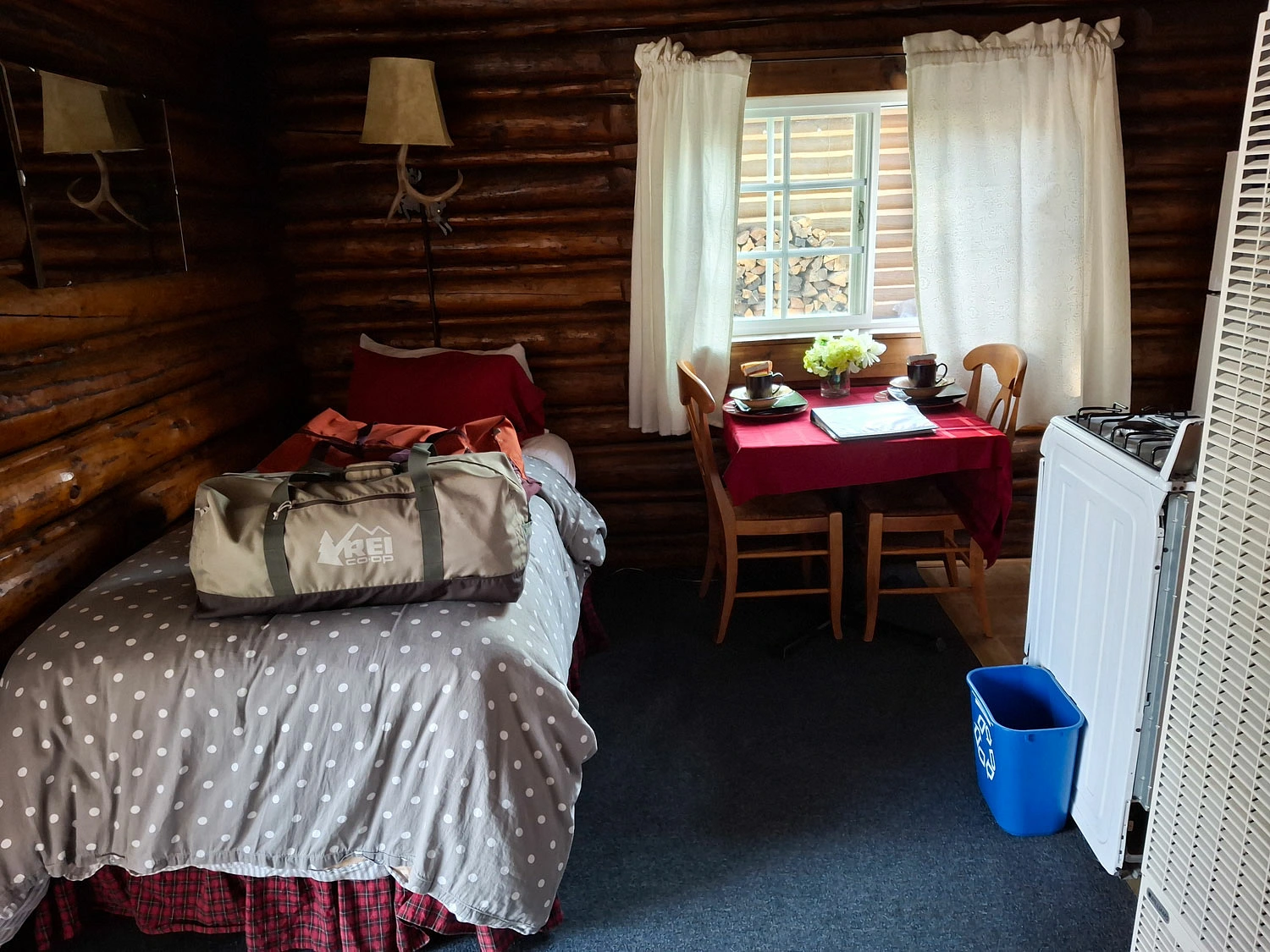
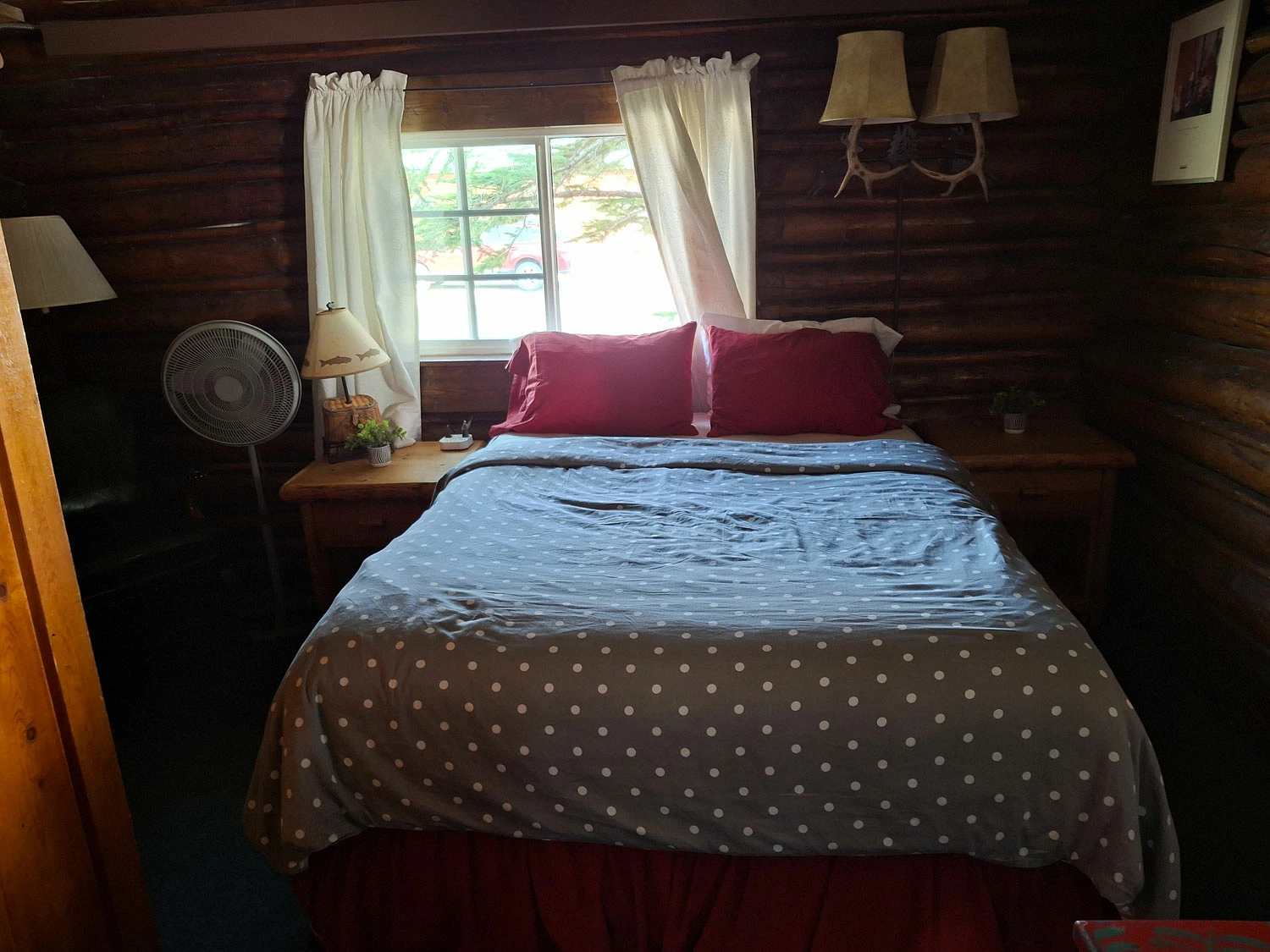
This was a delightful way to get our chores done.
We had a lot more fly fishing and cutthroat trout to get after. Our adventure continues in the upcoming Part Two.

No comments:
Post a Comment